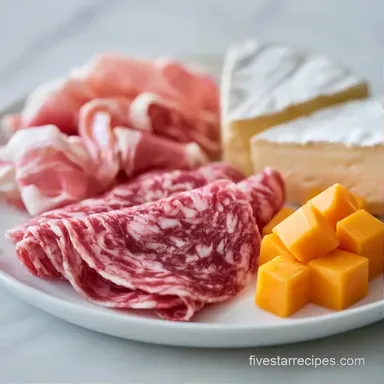
Charcuterie Board with Salami and Cheese
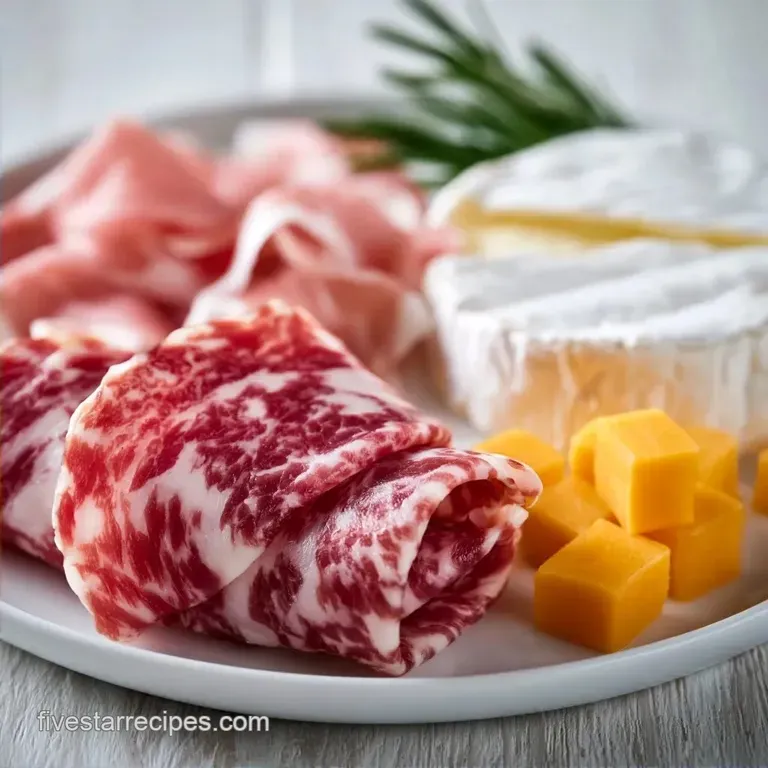
- Time:15 minutes active + 0 minutes chilling = Total 15 minutes
- Flavor/Texture Hook: Shatter crisp crackers paired with velvety Brie and salty ribbons of prosciutto
- Perfect for: Last minute guests, holiday parties, or a fancy date night in
Imagine walking into a small village market in the Auvergne region of France. The air is thick with the scent of cured pork, the sharp tang of aged goat cheese, and the sweet aroma of ripening grapes. In France, charcuterie isn't just a tray of snacks; it's a cultural ritual.
It's about the art of preservation and the joy of sharing a board that represents the best of the land.
I remember the first time I tried to put one together for a party. I just dumped everything on a plate, and it looked like a cafeteria tray. I realized then that the magic isn't in the ingredients alone, but in how they play off each other.
This 15 Minute Charcuterie Board with Salami and Cheese is the perfect quick and easy appetizer because it uses a specific layout strategy to look high end without the stress.
You don't need to be a professional to nail this. We're going to focus on "anchors" and "rivers" to make the board look full and curated. Trust me on this, once you see how the colors and textures interact, you'll never go back to the random pile method. Let's crack on.
15 Minute Charcuterie Board with Salami and Cheese
The secret to a board that actually looks professional is avoiding the "empty space panic." Most people just keep adding things randomly until the board is full, but that leads to a cluttered mess. Instead, we use a structural approach. We place the bowls first to create a foundation, then build the food around them.
Another trick is the temperature. If you pull your cheese straight from the fridge and serve it, you're missing out on half the flavor. According to the experts at Serious Eats, cheese develops a much more complex aroma and a velvety texture when it reaches room temperature. I usually set my cheeses out about 30 minutes before the guests arrive, but if you're in a rush, even 10 minutes makes a difference.
Right then, let's talk about the flavor wheel. You need salt (salami), fat (Brie), acid (cornichons), and sweetness (honey and apricots). When you have all four, every bite feels balanced. If it feels too salty, a dip of honey fixes it. If it feels too heavy, a cornichon cuts through the fat.
It's a simple system that ensures nobody gets "palate fatigue."
The Secret to Stunning Boards
Flavor Balancing: High fat cheeses need acidic or sweet counterparts to reset the taste buds.
Visual Anchoring: Heavy items like bowls create focal points, preventing the board from looking flat.
Textural Contrast: Pairing a "shatter" crunch with a "silky" spread creates a more satisfying eating experience.
Airy Volume: Folding meats instead of laying them flat adds height and makes the board look more abundant.
| Guest Count | Board Size | Meat Quantity | Cheese Quantity |
|---|---|---|---|
| 2-4 People | Small (12" x 12") | 6-8 oz | 8-10 oz |
| 5-10 People | Medium (18" x 12") | 12-16 oz | 16-20 oz |
| 11-20 People | Large (24" x 18") | 20-24 oz | 24-30 oz |
This serving size calculator helps you avoid overbuying. There's nothing worse than having two pounds of leftover Soppressata in the fridge. For a standard gathering, aim for about 2-3 oz of meat and cheese per person.
Choosing Your Ingredients
When you're picking your components, don't just grab the first thing you see. You want a mix of textures. I always go for one soft cheese, one hard cheese, and one funky cheese. In this recipe, we've got Brie (soft), Aged Cheddar (hard), and Goat Cheese (funky/tangy).
Component Analysis
| Ingredient | Science Role | Pro Secret |
|---|---|---|
| Prosciutto | Salt/Umami | Tear into ribbons for more surface area and "fluff" |
| Brie | Creamy Fat | Leave the rind on for structural support |
| Cornichons | Acidity | These act as "palate cleansers" between rich cheeses |
| Honey | Sweetness | Use a drizzle to bind salty and creamy flavors |
For the meats, the combination of Genoa Salami, Soppressata, and Prosciutto gives you a range of spices and textures. The Genoa is mild, the Soppressata has a bit more kick, and the Prosciutto is buttery and melts on the tongue.
The Essentials
- 4 oz Genoa Salami, thinly sliced Why this? Mild, classic base flavor (Sub: Pepperoni for more spice)
- 4 oz Soppressata, thinly sliced Why this? Adds a bold, peppery note (Sub: Chorizo)
- 3 oz Prosciutto, torn into ribbons Why this? Silky texture, high salt (Sub: Serrano ham)
- 4 oz Brie Why this? Velvety, buttery richness (Sub: Camembert)
- 4 oz Aged Cheddar, cubed Why this? Sharp, firm contrast (Sub: Manchego)
- 4 oz Goat Cheese Why this? Tangy, creamy profile (Sub: Feta)
- 6 oz Assorted crackers Why this? Neutral vessel for flavors (Sub: Rice crackers)
- 1 baguette, sliced into rounds Why this? Hearty, chewy base (Sub: Crostini)
- 1/2 cup seedless grapes Why this? Fresh, juicy burst (Sub: Blueberries)
- 1/2 cup dried apricots Why this? Concentrated sweetness (Sub: Dried figs)
- 1/4 cup cornichons Why this? Vinegar punch (Sub: Olives)
- 2 tbsp honey Why this? Floral sweetness (Sub: Fig jam)
The Essential Gear
You don't need a fancy kit, but a few things make it easier. A wooden board or a slate platter is the standard, but honestly, a large ceramic plate works too. I prefer wood because it doesn't get as cold as stone, which helps keep the cheese at that ideal room temperature.
I also recommend a small set of cheese knives. If you don't have those, just use your sharpest kitchen knife and a small spoon for the honey. If you're doing a massive board, a pair of kitchen shears is great for quickly trimming the baguette.
Chef's Note: To get those perfect baguette rounds, slice them on a slight diagonal. It increases the surface area for the cheese and just looks more "restaurant style."
Assembling Your Board
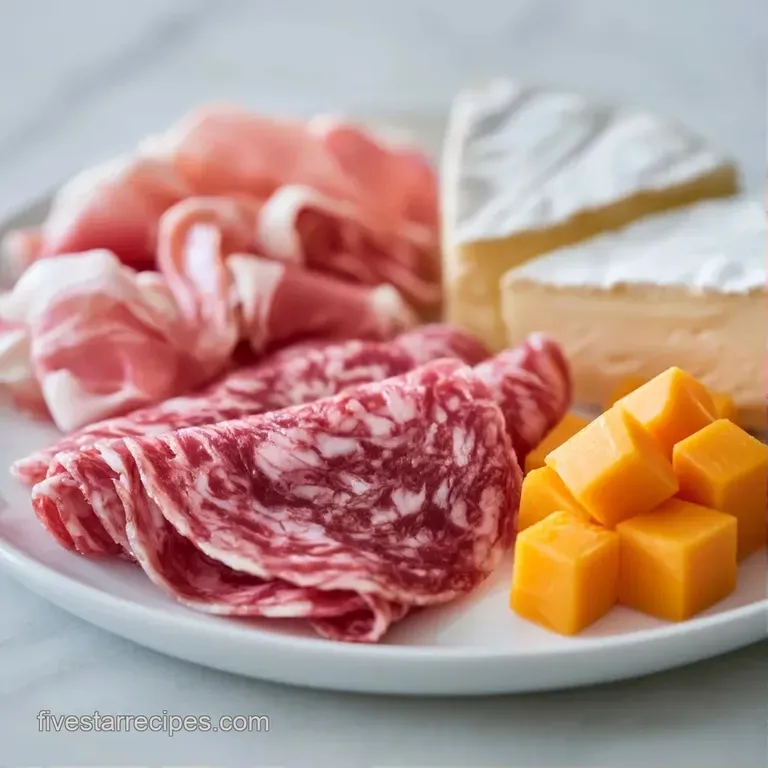
Let's get into the flow. The goal is to move from the largest, most stable items to the smallest, most delicate ones.
Phase 1: Setting the Anchors
Place three small bowls on the board in a triangular formation. Fill one with cornichons, one with olives (if substituting), and one with honey or jam. Note: These bowls act as the structural anchors that keep everything else from sliding around.
Phase 2: Placing the Cheese
Position the cheeses in the gaps between the bowls. Keep the Brie whole to create a visual weight, place the cubed cheddar in a concentrated pile, and arrange the goat cheese in a small cluster. Check: The cheese should be placed within 5 minutes of starting.
Phase 3: Folding the Meats
Create rivers of meat winding around the bowls and cheeses. Fold salami into quarters or rolls to add height, bunch prosciutto into airy ribbons, and overlap soppressata in a fan shape. Note: Overlapping the meat creates a sense of movement on the board.
Phase 4: Filling the Gaps
Tuck crackers and baguette slices into the remaining gaps. Fill any small holes with grapes and dried apricots for a full, curated look. Check: No part of the board should show the bottom surface.
Final Touch: The Drizzle
Drizzle the honey over the goat cheese or place it in the bowl for dipping. Check: Final board should be completed in exactly 15 minutes.
Fixing Board Blunders
The biggest issue people have is a "flat" board. If everything is just lying flat, it looks boring. The fix is volume. I once made a board for a wedding shower and it looked like a puzzle. I had to go back and fold the salami into "roses" and bunch the prosciutto to give it that 3D effect.
Why Your Board Looks Flat
This happens when you lay meats and crackers in straight lines. To fix it, use the "S curve" method, winding your meats in a wave pattern across the board.
To Prevent Sweaty Cheese
Cheese "sweats" when it's moved too quickly from a very cold fridge to a hot room. The fix is to let it sit out slowly or pat the surface gently with a paper towel.
To Stop Overwhelming Saltiness
If your board feels like a salt bomb, it's because you're missing the acid and sugar. Add more grapes or a few extra cornichons to break up the salt.
| Problem | Root Cause | Solution |
|---|---|---|
| Board looks sparse | Not enough "filler" | Add nuts or more dried fruit |
| Meat is sliding | Too flat layout | Fold meats into rolls or ribbons |
| Cheese is too hard | Served too cold | Leave out 30 mins before serving |
Common Mistakes Checklist
- ✓ Don't overcrowd the bowls; leave room for the spoon.
- ✓ Avoid using only one type of cracker; variety is key.
- ✓ Don't slice the Brie too thin; leave it in a wedge.
- ✓ Ensure the honey doesn't touch the cornichons.
- ✓ Keep the colors separated (don't put grapes next to green olives).
Creative Board Variations
If you want to switch things up, you can change the theme entirely. For a Mediterranean vibe, swap the cheddar for Manchego and the salami for Chorizo. Add some kalamata olives and a dollop of hummus in one of the bowls.
If you're looking for something a bit more substantial, try adding a hot element. I love pairing this board with my stuffed mushrooms to give the guests something warm to munch on. It adds a different dimension to the meal.
For a low lactose option, focus on extra aged cheeses like a 24 month Parmesan or a sharp aged cheddar, as these naturally have very little lactose. Pair them with a variety of nuts like marcona almonds or candied walnuts to keep the richness high.
Decision Shortcut
- If you want a "Wow" factor: Fold meats into roses and use a slate board.
- If you're in a rush: Use pre sliced meats and pre cubed cheese.
- If you're on a budget: Focus on one premium cheese and fill the rest with seasonal fruits.
Keeping Leftovers Fresh
Since this is a cold assembly, storage is pretty straightforward. If you have leftovers, don't leave them on the board. Move the cheeses and meats into airtight containers.
Storage Guidelines
- Cheese: Fridge for 5-7 days. Wrap tightly in parchment paper to prevent drying.
- Cured Meats: Fridge for 3-5 days.
- Crackers/Baguette: Store in a sealed bag; if the baguette goes stale, you can toast it in the oven for 5 minutes.
Zero Waste Tips Don't toss those leftover cheese rinds! Hard cheese rinds (like cheddar or parmesan) can be simmered in a pot of vegetable soup to add a deep, savory richness. If you have leftover grapes or apricots, toss them into a morning yogurt bowl or a salad.
Perfect Drink Pairings
The drinks you choose can either highlight or hide the flavors of your 15 Minute Charcuterie Board with Salami and Cheese. Since we have a lot of salt and fat, you want something that cuts through that richness.
A crisp white wine, like a Sauvignon Blanc, is a classic choice because the acidity matches the cornichons. If you prefer something non alcoholic, a sparkling water with a squeeze of fresh lime does the trick.
For a bold, international twist, I highly recommend a classic margarita. The lime and tequila provide a sharp, zesty contrast to the buttery Brie and salty prosciutto, making every bite feel fresh again. It's a stunning combination that always impresses guests.
Recipe FAQs
How to make a charcuterie board?
Place three small bowls on the board in a triangular formation to act as structural anchors. Fill these with cornichons and honey to ground the layout before adding meats and cheeses.
What kind of cheese goes well with salami?
Brie, aged cheddar, and goat cheese are ideal. These provide a balance of creamy, sharp, and tangy profiles that cut through the richness of Genoa salami.
How to make a last minute charcuterie board?
Assemble using a structural layout to finish in 15 minutes. Start with bowls, add cheeses in the gaps, wind meats into rivers, and fill the remaining space with crackers and fruit.
What are some pro-tips for a good charcuterie board?
Avoid "empty space panic" by tucking grapes and dried apricots into any remaining small holes for a curated look. If you enjoyed mastering this layout technique, see how it works in our meat and cheese board.
What is the 3 3 3 3 3 charcuterie rule?
A simplified formula for balance, suggesting three types each of meat, cheese, starch, fruit, and condiments. This recipe follows this by pairing three cured meats with three distinct cheeses.
What are 5 things to avoid on a charcuterie board?
Avoid random piling, excessive empty space, a lack of acidic contrast, overlapping ingredients that bleed, and using only one cheese texture.
What are your favorite items to put on a charcuterie board?
Salty cured meats and honey create the best flavor contrast. Pairing prosciutto ribbons with seedless grapes and dried apricots adds necessary sweetness and texture.
Salami and Cheese Board in 15 Minutes