Raspberry Thumbprint Cookies: Buttery and Crisp
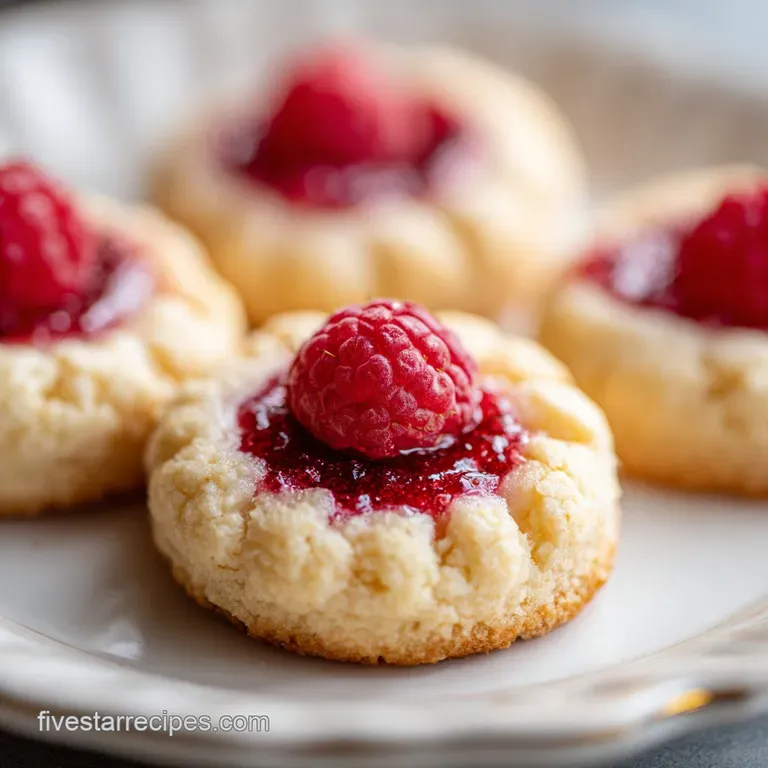
- Time: Active 50 minutes, Passive 12 minutes, Total 62 minutes
- Flavor/Texture Hook: Buttery, floral almond notes with a tart, jammy center and a crisp, sandy finish
- Perfect for: Holiday gift boxes, afternoon tea, or beginner bakers looking for a professional grade result
- Defining the Perfect Texture Specs
- Component Analysis of Gourmet Ingredients
- Essential Tools for Professional Success
- Executing the Foolproof Baking Sequence
- Fixing Common Shortbread Failures Fast
- Alternative Flavor and Texture Profiles
- Preserving Freshness and Crisp Texture
- Presentation for a Five Star Finish
- Recipe FAQs
- 📝 Recipe Card
Defining the Perfect Texture Specs
When we talk about this thumbprint cookies easy raspberry recipe, we are really talking about the mechanics of shortbread. The term "short" in baking refers to the high fat content that "shortens" gluten strands.
In this specific version, we are using a 1:2:3 ratio of sugar to butter to flour, but with a few strategic tweaks. The inclusion of cornstarch acts as a gluten interrupter, which is why these cookies don't feel tough or bread like. Instead, they have that sought after velvety snap.
Another critical checkpoint is the moisture management. Raspberry jam is naturally high in pectin and sugar, which can cause it to bubble over and ruin the cookie's aesthetics if not handled correctly.
By whisking in a small amount of lemon juice, we are slightly adjusting the acidity and thinning the jam just enough to let it settle into the indentation during the bake without erupting. This is the difference between a messy kitchen project and a professional grade pastry.
The One Step Most People Skip: The 30 minute chill after shaping is the non negotiable anchor of this recipe. This allows the butter molecules to re solidify into a stable crystal structure, ensuring the cookies keep their height and that the "thumbprint" well doesn't disappear into a flat disc once the heat hits.
| Thickness | Internal Temp | Rest Time | Visual Cue |
|---|---|---|---|
| 1/2 inch | 175°F (final) | 10 mins | Bottoms turn pale gold |
| 3/4 inch | 175°F (final) | 12 mins | Edges feel dry to touch |
| 1 inch | 175°F (final) | 15 mins | Surface looks matte/dull |
Establishing these visual and tactile cues is vital because home ovens vary wildly. You aren't looking for a dark brown cookie; that would indicate the sugars have caramelized too much, which makes shortbread bitter and hard.
You want a pale, sophisticated finish that highlights the vibrant red of the raspberry filling.
Component Analysis of Gourmet Ingredients
Precision in your shopping list is the first step toward a five star result. We are working with a very short list of ingredients, which means the quality of each one is amplified. I always recommend using a high-quality unsalted butter with at least 80% butterfat.
Since we are adding our own fine sea salt, using unsalted butter gives us total control over the flavor profile, preventing the cookies from tasting overly "grocery store" salty.
The extracts are where the magic happens. While vanilla is the backbone, the almond extract is the secret weapon. It provides a cherry like, floral depth that pairs naturally with the tartness of the raspberry. If you've ever had a Vanilla Buttercream Frosting and wondered why it tasted "fancy," it was likely a tiny hint of almond extract working behind the scenes.
| Ingredient | Science Role | Pro Secret |
|---|---|---|
| 1 cup Unsalted Butter | Provides lipid structure and "melt" | Must be 60-65°F (cool room temp) for optimal aeration |
| 2 tbsp Cornstarch | Disrupts gluten for a tender crumb | Sift with flour to ensure zero lumps in the supple dough |
| 1/2 cup Raspberry Jam | Provides acidic contrast and moisture | Use seedless for a smooth, high clarity jewel finish |
Using granulated sugar instead of powdered sugar in the base dough is a deliberate choice here. Granulated sugar crystals help aerate the butter during the creaming stage, creating those tiny air pockets that expand in the oven.
Powdered sugar would result in a much denser, "meltaway" style cookie that lacks the structural integrity needed to hold a heavy jam center.
Chef's Tip: Freeze your butter for exactly 10 minutes before you start creaming. This ensures it stays "cool room temperature" even if your kitchen is warm, preventing the dough from becoming greasy.
Essential Tools for Professional Success
To achieve the precision required for this raspberry recipe, your toolkit matters. A stand mixer is your best friend here because it can beat the butter and sugar for the full 3 minutes without your arm falling off.
This duration is essential for "creaming," a process where the sugar edges cut into the butter to trap air. Without this, your cookies will be leaden and heavy.
I also swear by a 1 tablespoon cookie scoop. Consistency isn't just about looks, it's about thermodynamics. If your cookies are all different sizes, the small ones will overbake and become brittle before the large ones are even set in the middle.
Using a scoop ensures every cookie reaches that 175°F internal temperature at the exact same time.
- Stand Mixer or Hand Mixer: Essential for aerating the butter.
- Parchment Paper or Silicone Mats: Prevents the delicate bottoms from sticking.
- 1 tablespoon Cookie Scoop: For uniform size and even baking.
- Small Round Measuring Spoon (1/2 tsp): Creates a cleaner well than a thumb.
- Fine Mesh Sieve: For sifting the dry ingredients to prevent flour clumps.
Executing the Foolproof Baking Sequence
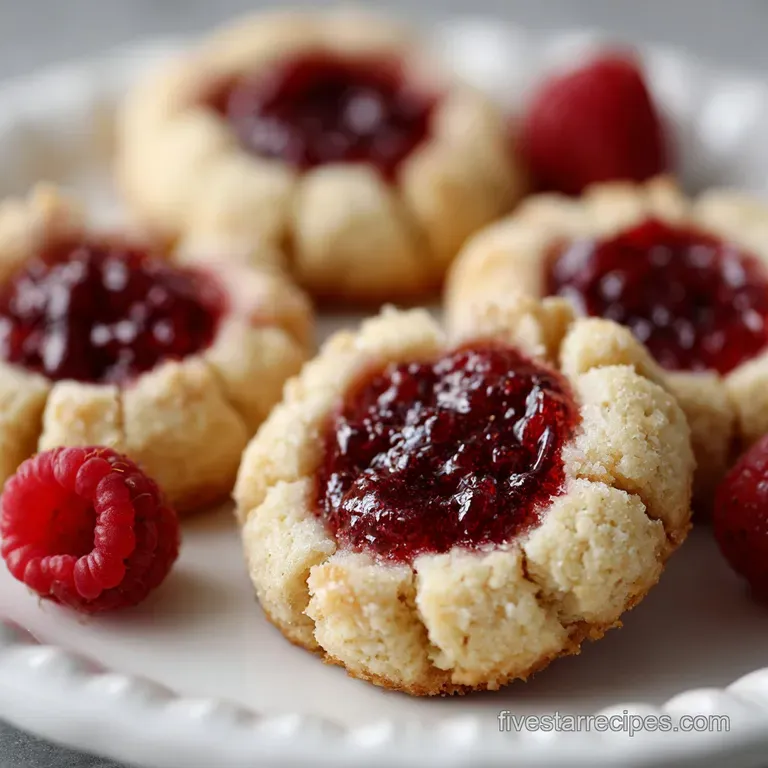
This is the part where we bring the science into the physical world. Follow these steps exactly, and you'll avoid the common pitfalls of homemade jam thumbprint cookies.
- Cream the Base. Beat 1 cup cool room temperature butter and 2/3 cup granulated sugar for 3 minutes until pale and noticeably fluffy. Note: This creates the aeration needed for a light texture.
- Incorporate Aromatics. Mix in 1 tsp vanilla extract and 1/2 tsp almond extract. until fully combined.
- Sift Dry Ingredients. Combine 2 cups all purpose flour, 2 tbsp cornstarch, and 1/4 tsp fine sea salt. Note: Sifting prevents "flour pockets" in the shortbread.
- Form the Dough. Gradually add flour to the butter on low speed until a supple, non sticky dough forms.
- Scoop and Roll. Portion 1 tablespoon balls and roll between your palms until perfectly smooth and glossy.
- Create Indentations. Press a 1/2 tsp measuring spoon into each ball. until a deep well is formed. Note: If the edges crack, gently smooth them with a warm finger.
- The Critical Chill. Freeze or refrigerate the tray for 30 minutes. until the dough feels cold and firm.
- Prepare the Filling. Whisk 1/2 cup raspberry jam with 1/2 tsp lemon juice until smooth and pourable.
- Fill and Bake. Place 1/2 to 1 tsp jam in each well. Bake at 350°F (175°C) for 12 minutes until the edges are matte and the bottoms are pale gold.
- Glaze and Set. Whisk 1/2 cup powdered sugar, 2 tsp cream, and 1/4 tsp almond extract. Drizzle over cooled cookies until a decorative pattern is achieved.
When you're rolling the dough, the warmth of your hands is actually a tool. It slightly softens the outer surface, making it easier to press the indentation without the dough "shattering." If you find the dough is too cold and cracking excessively, just hold the ball in your closed fist for five seconds before rolling.
This is a subtle trick that keeps the surface tension high and the finish professional.
Fixing Common Shortbread Failures Fast
Even with the best intentions, baking is a game of variables. The most common issue with this thumbprint cookies easy raspberry recipe is the dough cracking during the indentation phase.
This usually happens if the flour was packed too tightly into the measuring cup (adding too much weight) or if the butter wasn't creamed long enough to provide elasticity.
Another hurdle is the jam "skin." Sometimes the jam can become rubbery if baked too long. By whisking it with a bit of lemon juice beforehand, we lower the sugar concentration slightly and introduce acid, which keeps the jam velvety and bright even after its trip through the oven.
Why Your Cookies Spread Too Much
If your cookies come out looking like thin pancakes, the culprit is almost always the butter temperature. If the butter was too soft (approaching a "greasy" state) when you started, or if you skipped the 30 minute chilling period, the fat will melt before the flour structure has time to set.
Shortbread relies on a race between the starch gelatinizing and the fat melting; the chill gives the starch a head start.
| Problem | Root Cause | Solution |
|---|---|---|
| Excessive Cracking | Dough is too dry or cold | Roll balls longer in palms to warm the surface |
| Jam Leaking | Well was too shallow | Use a measuring spoon to press deeper indents |
| Tough Texture | Over mixing after adding flour | Mix on low speed just until streaks disappear |
In the world of shortbread, the "cool room temperature" butter is non negotiable. You should be able to press your finger into it and leave a dent, but the butter should not look shiny or feel oily. If it's too soft, the emulsion is already breaking down, and you've lost your chance at that five star, sandy texture.
Common Mistakes Checklist
- ✓ Never use "tub" butter; the water content is too high for shortbread.
- ✓ Avoid over measuring flour; use the spoon and level method or a scale (250g).
- ✓ Don't skip the lemon juice in the jam; it keeps the filling vibrant and "jammy."
- ✓ Preheat the oven for at least 20 minutes to ensure a consistent 350°F.
- ✓ Allow cookies to cool completely on the tray before moving to a wire rack.
Alternative Flavor and Texture Profiles
While the classic raspberry thumbprint cookies are iconic, the base dough is a versatile canvas. You can easily adapt this raspberry filled shortbread cookies recipe to suit different seasons or flavor preferences.
For instance, swapping the raspberry jam for apricot or blackberry creates a totally different profile while using the exact same science.
If you're a fan of different textures, you might want to explore how these compare to other classics. For a more robust, nutty experience, you could look at my soft peanut butter cookies which use a completely different leavening system but share that satisfying "snap."
- Lemon Blueberry: Use blueberry jam and swap the almond extract for lemon zest in the dough.
- Chocolate Drizzle: Replace the almond glaze with a simple ganache made of equal parts dark chocolate and heavy cream.
- Spiced Holiday: Add 1/2 tsp of ground cinnamon and a pinch of cloves to the flour mixture for a warm, autumnal version.
Decision Shortcut: Which Jam Should You Choose? If you want a clean, professional look, go with seedless raspberry jam. If you want a rustic, homemade feel, use a high-quality preserve with seeds and fruit chunks.
If you want a tarter finish, choose a red currant jelly or a sharp plum jam.
Preserving Freshness and Crisp Texture
Shortbread is one of the few baked goods that actually tastes better on day two. As the cookies sit, the moisture from the jam slightly migrates into the surrounding shortbread, creating a tender ring of dough immediately around the center while the outer edges remain crisp.
This makes the easy raspberry thumbprint cookies a perfect candidate for holiday baking where you need to prep in advance.
To maintain that "shatter" factor, storage is key. Moisture is the enemy of shortbread. If you store them in a completely airtight container while they are still even slightly warm, the residual steam will turn your crisp cookies into soft, soggy discs.
Always wait until the icing is completely dry to the touch before packing them away.
- Room Temp
- Store in a tin with a loose fitting lid for up to 5 days.
- Fridge
- Not recommended, as the humidity can soften the shortbread and make the jam sticky.
- Freezer
- These freeze beautifully. Store in a single layer in a freezer bag for up to 3 months. Thaw at room temperature for 20 minutes before serving.
Zero Waste Tip: If you find yourself with extra raspberry jam and lemon mixture, don't toss it. Stir it into a bit of Greek yogurt or drizzle it over vanilla ice cream for a quick, gourmet treat that mirrors the flavors of your cookies.
Presentation for a Five Star Finish
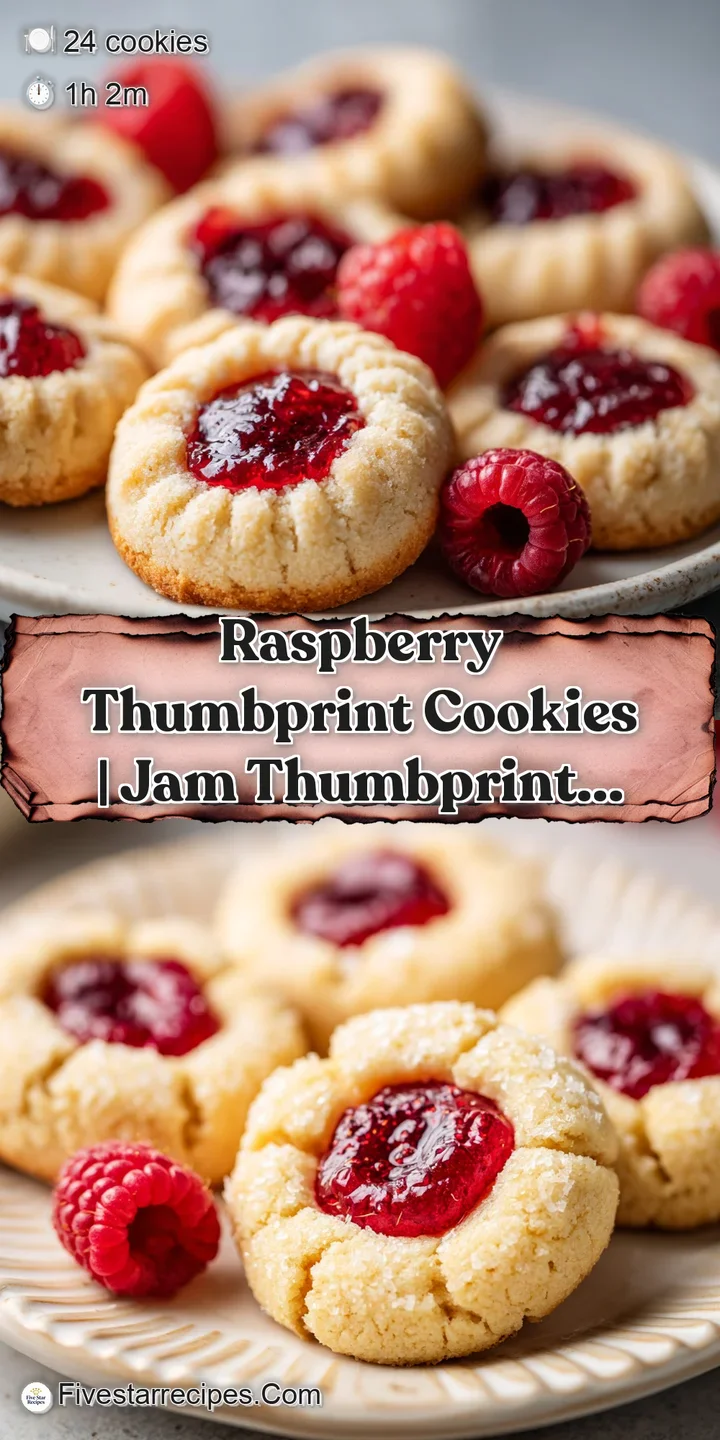
When it's time to serve these classic thumbprint cookies, the visual appeal is almost as important as the taste. The contrast between the matte, pale cookie and the glossy, ruby red jam is naturally beautiful, but the almond glaze is what ties it all together. For a professional look, don't just "pour" the glaze.
Use a small piping bag or even a plastic sandwich bag with a tiny corner snipped off to create thin, uniform zig zags across the top.
If you are hosting a formal tea or a holiday party, try arranging them on a dark platter. The light color of the shortbread pops against a slate or dark ceramic background. If you really want to go the extra mile, a very light dusting of extra powdered sugar before the jam filling is added can give them a snowy, sophisticated appearance.
The beauty of this simple thumbprint cookies recipe lies in its restraint. It doesn't need heavy frosting or complex decorations. The simple drizzle tells the eater that this is a refined treat, flavored with intent.
Whether you're making these for a quiet afternoon with coffee or as part of a massive cookie swap, that distinct almond raspberry aroma will always draw people in. Trust the science of the chill, respect the cool room temp butter, and you'll have a foolproof result every single time.
Right then, let's get those trays ready you're about to make the best batch of cookies your kitchen has ever seen. Enjoy the process, and more importantly, enjoy that first buttery, jam filled bite. It's brilliant.
Recipe FAQs
Why is it necessary to chill the dough balls for 30 minutes?
Chilling prevents the cookies from spreading. This inactivity period keeps the butter firm so the cookies maintain their shape and hold the jam indentation perfectly during the 12-minute bake.
How to keep the edges from cracking when pressing the center?
Use the warmth of your finger to smooth any cracks immediately after pressing. If you enjoyed mastering this precise dough handling technique, you will find it equally important for creating clean, professional looking edges on other delicate baked goods.
Can I use a different type of fruit jam?
Yes, you can substitute the raspberry jam. Apricot or blackberry preserves work beautifully as a direct replacement using the exact same measurement and preparation method.
Is it true that I can bake these at a higher temperature to save time?
No, this is a common misconception. Baking at 350°F is critical for shortbread style cookies; a higher temperature would brown the edges before the center sets, ruining the required tender texture.
How to tell when the cookies are finished baking?
Look for lightly browned bottoms and pale, set edges. The cookies should not take on significant color, as they are meant to remain soft and tender throughout.
How to ensure the butter and sugar mixture reaches the right consistency?
Beat the ingredients for approximately 3 minutes until the mixture is visibly pale and aerated. This step is vital to provide the lift needed for the desired cookie crumb.
Can I decorate the cookies while they are still warm?
No, wait until the cookies are completely cool. Applying the powdered sugar and cream glaze to warm cookies will cause it to melt and run off instead of setting in a nice pattern.
Easy Raspberry Thumbprint Cookies
Ingredients:
Instructions:
Nutrition Facts:
| Calories | 155 kcal |
|---|---|
| Protein | 1.2 g |
| Fat | 7.8 g |
| Carbs | 21.2 g |
| Fiber | 0.5 g |
| Sugar | 12.8 g |
| Sodium | 25 mg |
