Texas Roadhouse Rolls: Fluffy and Buttery Copycat
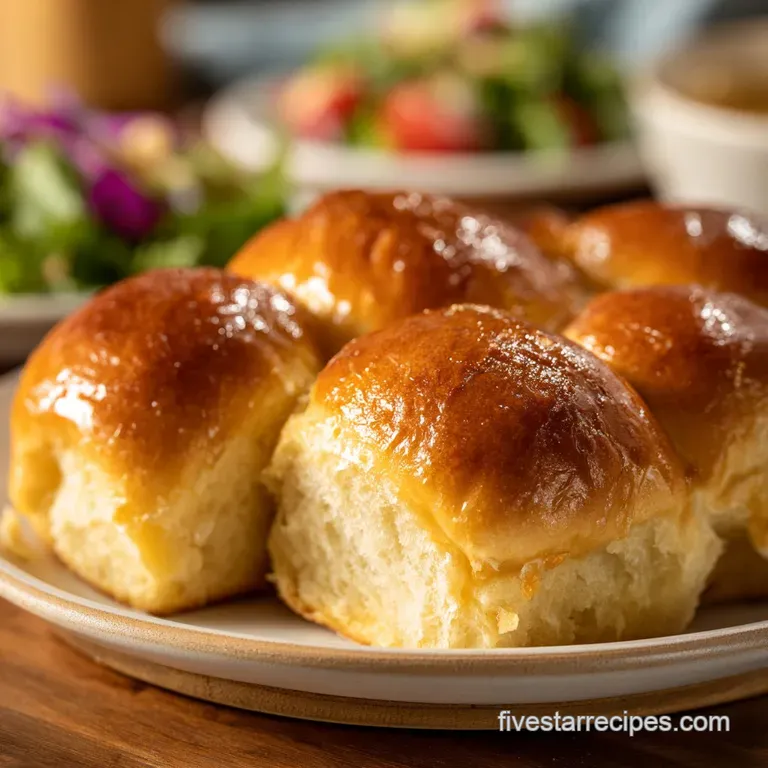
- Time: Active 80 minutes, Passive 12 minutes, Total 92 minutes
- Flavor/Texture Hook: Velvety, pillow soft crumb with a sweet, cinnamon kissed finish
- Perfect for: Holiday gatherings, Sunday dinners, or mimicking a high end steakhouse experience at home
- Mastering the Science Behind This Texas Roadhouse Rolls Recipe Copycat
- Essential Numeric Milestones for Foolproof Fluffy Yeast Rolls
- Selecting the Best Ingredients for That Signature Sweet Crumb
- The Precision Tools Required for Professional Bakery Results
- Step by Step Guide to Achieving the Perfect Rise
- Solving Common Dough Disasters and Texture Mishaps
- Creative Variations for Your Sweet Dinner Rolls Recipe
- Storing and Reheating Tips to Keep Rolls Soft
- Pairing Your Buttery Dinner Rolls with the Perfect Feast
- Troubleshooting Common Issues
- Recipe FAQs
- 📝 Recipe Card
Mastering the Science Behind This Texas Roadhouse Rolls Recipe Copycat
The moment you walk into that steakhouse, the first thing that hits you isn't the meat, it's the intoxicating aroma of yeast and warm honey. I remember sitting in those oversized booths, watching the baskets of warm, square shaped rolls disappear faster than the appetizers could arrive.
For years, I tried to replicate that exact texture, the kind that feels like a warm hug for your taste buds. Most home versions end up too dense or bread like, missing that ethereal lightness that makes you reach for "just one more."
The real hero of this texas roadhouse rolls recipe copycat is the clover honey. While many bakers reach for standard granulated sugar, it's the specific moisture attracting properties of clover honey that keep these rolls incredibly soft for days.
Sugar is just sweet, but honey is a humectant, meaning it literally pulls moisture from the air and traps it within the gluten structure of the dough. This creates a crumb that is tender rather than chewy, giving you that melt in-the mouth sensation that is so hard to find in a standard dinner roll.
We're going to focus on precision here. Baking isn't just about mixing ingredients; it's about managing a living ecosystem of yeast and flour. If the milk is too hot, the yeast dies. If the milk is too cold, the dough takes hours to rise, leading to a sour, over fermented flavor.
We are aiming for that sweet spot of 110°F (43°C), which is the laboratory standard "happy place" for active dry yeast. When you nail this temperature, the yeast wakes up with enthusiasm, producing the carbon dioxide bubbles needed to lift the heavy, enriched dough into the light as-air squares we crave.
The Scalded Milk Secret: Scalding milk to just below boiling denatures certain whey proteins that can otherwise weaken gluten, leading to a much higher, fluffier rise.
Hygroscopic Softening: The honey doesn't just add sweetness; it interferes with gluten formation just enough to ensure the final product is velvety rather than bread like.
The Double Fold Mechanism: Folding the dough rectangle in half before cutting creates a built in "fault line" that allows the rolls to expand upward rather than outward, resulting in the iconic height.
Lipid Interference: Using room temperature eggs and melted butter ensures the fats are evenly distributed, coating the flour particles to prevent a tough, rubbery texture.
| Servings | Ingredient Adjustments | Pan Size | Total Bake Time |
|---|---|---|---|
| 12 Rolls | Half all quantities; use 1/2 a beaten egg | 8x8 inch square | 12 minutes |
| 24 Rolls | Standard recipe (1 cup milk, 4 cups flour) | 13x18 inch rimmed sheet | 12 minutes |
| 48 Rolls | Double recipe; use 2 large eggs | Two 13x18 inch sheets | 15 minutes (rotate pans) |
Getting the serving size right is essential for ensuring even heat distribution. If you overcrowd a small pan with 24 rolls, the centers will stay doughy while the edges over brown.
Always leave about 1 inch of space between each dough square during the final rise to allow for that characteristic "kissing" effect where the sides touch just enough to stay soft.
Essential Numeric Milestones for Foolproof Fluffy Yeast Rolls
To achieve five star results, we need to look at the differences between this gourmet approach and the shortcuts many people take. While using a pre made dough mix or store-bought rolls might save time, you lose the specific chemical reactions that occur when you control the honey to yeast ratio yourself.
A store-bought roll often relies on preservatives to stay soft, whereas our recipe uses fat and sugar to achieve that goal naturally.
| Feature | Fresh Homemade Version | Shortcut/store-bought |
|---|---|---|
| Texture | Shatter soft crust with velvety interior | Chewy, bread like, or overly airy |
| Aroma | Floral clover honey and toasted yeast | Artificial butter or generic bread smell |
| Shelf Life | 3 days (due to honey moisture) | 1 day or requires heavy preservatives |
Notice the difference in the crumb structure. When you make this recipe copycat from scratch, the air bubbles are small and uniform, which creates that "pillowy" feeling. Shortcut versions often have large, irregular holes, which makes them feel dry when they hit your tongue.
Selecting the Best Ingredients for That Signature Sweet Crumb
When gathering your supplies for this rolls recipe copycat, the quality of your flour and honey will dictate the final outcome. I've found that using a high-quality all purpose flour with a protein content around 10-11% is the sweet spot.
Bread flour can sometimes make these a bit too resilient or "snappy," whereas we want them to yield easily to a bite.
| Component | Science Role | Pro Secret |
|---|---|---|
| Clover Honey | Primary humectant and yeast fuel | Use clover honey specifically for the mild, floral notes that won't overpower the butter. |
| Whole Milk | Fat and lactose for browning | Always scald and then cool to 110°F to neutralize gluten inhibiting enzymes. |
| Large Egg | Emulsifier and structure builder | Ensure it is room temperature so it doesn't seize the melted butter in the dough. |
| Salted Butter | Flavor and "shortening" effect | Use high fat European style butter for the cinnamon honey butter to get a silkier finish. |
In the world of baking, small substitutions can shift the entire profile of the dish. If you don't have clover honey, you can use wildflower honey, but realize the flavor will be much more assertive.
I've also found that sea salt provides a cleaner salty "pop" than standard table salt, which can sometimes have a metallic aftertaste.
| Original Ingredient | Substitute | Why It Works |
|---|---|---|
| Whole Milk (1 cup) | Buttermilk (1 cup) | Adds a slight tang. Note: You may need 1/4 tsp extra baking soda to balance acidity. |
| Clover Honey (0.25 cup) | Light Agave Nectar | Similar viscosity and sweetness. Note: Lacks the floral aroma of honey. |
| All Purpose Flour (4 cups) | Bread Flour (4 cups) | Creates a stronger gluten net. Note: Rolls will be chewier and less "cake like." |
| Unsalted Butter | Salted Butter | Use the same amount. Note: Reduce the added sea salt to 1/2 tsp. |
Using the right fat is just as important as the flour. While some people try to use oil to save time, butter provides the flavor and the "short" texture that makes this texas roadhouse rolls recipe copycat truly authentic. Oil based rolls tend to feel greasy, while butter based rolls feel rich and luxurious.
The Precision Tools Required for Professional Bakery Results
You don't need a professional kitchen to make these, but a few specific tools will make your life significantly easier. A stand mixer, like a KitchenAid, is almost a requirement for the 5 minute kneading phase.
Doing it by hand is possible, but it’s difficult to achieve the same level of gluten development without adding too much extra flour, which can lead to a dense roll.
A bench scraper is another "must have." This tool allows you to cut the dough into those perfect, clean squares without squishing the air out of the edges. If you use a dull knife, you'll seal the sides of the dough, preventing them from rising upward in the oven.
Think of the bench scraper as your precision scalpel for baking.
Finally,, an instant read thermometer is the only way to be 100% sure your milk is at the right temperature. I’ve seen so many bakers ruin a batch because their "warm" milk was actually 130°F, which effectively pasteurizes the yeast into oblivion.
Precision is the difference between a flat puck and a fluffy cloud.
step-by-step Guide to Achieving the Perfect Rise

Let's get into the process. The rhythm of baking is all about patience and observation. Don't rush the rising stages; they are where the flavor is built.
- Activate the yeast. Combine 1 cup scalded and cooled milk (110°F), 0.25 cup honey, and 1 packet of yeast in your mixer bowl. Note: The honey provides the immediate sugar the yeast needs to produce CO2.
- Wait for the bloom. Let the mixture sit for 5-10 minutes until a thick, foamy cap forms on the surface.
- Incorporate the enrichments. Add the 4 tbsp melted butter, the room temperature egg, and 1 tsp sea salt.
- Add the flour. Gradually add the 4 cups of all purpose flour, one cup at a time. Note: Stop adding flour as soon as the dough clears the sides of the bowl; it should still be slightly tacky.
- Knead for development. Knead with the dough hook for 5 minutes until the surface is smooth and it bounces back when poked.
- The first rise. Place in a greased bowl, cover with a damp cloth, and let rise for 45 minutes until it has doubled in volume.
- Shape for height. Roll the dough into a large rectangle (1/2 inch thick), then fold it in half. Note: This creates the internal layers that make the rolls pull apart easily.
- The final cut. Use a bench scraper to cut into 24 squares and place on a greased sheet.
- The second rise. Cover and let rise for another 15 minutes until the squares look puffy and soft.
- Bake and finish. Bake at 350°F (175°C) for 12 minutes until the tops are golden brown and sound hollow when tapped. Immediately brush with 2 tbsp melted butter.
While your rolls are in the oven, you can whip up the signature butter. Whip 0.5 cup salted butter, 0.25 cup powdered sugar, 0.25 cup honey, and 1 tsp cinnamon until it looks like a pale, fluffy cloud. If you are looking for a spicy kick before the main event, these baked jalapeno poppers are a staple in my house and provide a great contrast to the sweet rolls.
Solving Common Dough Disasters and Texture Mishaps
Even the most experienced bakers run into trouble. Yeast is a living organism, and it can be temperamental. If your rolls didn't turn out quite right, don't worry most issues can be traced back to temperature or hydration.
Why My Rolls Turned Out Dense
If your rolls feel like bricks, it's usually because the dough was either over floured or didn't rise enough. When you're adding flour, remember that the 4 cup measurement is a guide. If you live in a dry climate, you might only need 3.75 cups.
If the dough is too dry, the yeast doesn't have the mobility to expand the gluten walls.
Why the Dough Refused to Rise
If your dough is sitting in the bowl like a lump of clay after 45 minutes, your yeast was likely inactive. This happens if the milk was too hot or if the yeast was past its expiration date. Always check the bloom in step 2; if you don't see foam, stop and start over with fresh yeast.
It's better to waste a cup of milk and some honey than 4 cups of flour and an hour of your time.
| Problem | Root Cause | Solution |
|---|---|---|
| Rolls are pale and dry | Oven temperature too low | Increase to 350°F and ensure the oven is fully preheated for 20 minutes. |
| Bottoms are burnt, tops are raw | Pan is too thin or placed too low | Move the rack to the middle and use a heavy duty light colored baking sheet. |
| Butter won't fluff up | Butter was too cold or too melted | Ensure butter is "pliable" (65°F) before whipping with the sugar and honey. |
Common Mistakes Checklist
- ✓ Never skip the "bloom" phase ensure the yeast is bubbling before adding flour.
- ✓ Avoid over kneading; stop as soon as the dough is smooth to prevent a rubbery texture.
- ✓ Use a thermometer for the milk; 110°F is the non negotiable target.
- ✓ Don't use cold eggs; they will cause the melted butter to clump into tiny beads.
- ✓ Use a bench scraper for cutting to keep the "pores" of the dough open for rising.
Creative Variations for Your Sweet Dinner Rolls Recipe
Once you've mastered the classic texas roadhouse rolls recipe copycat, you can start experimenting. I personally love adding a pinch of freshly grated nutmeg to the dough for a deeper "holiday" flavor. It doesn't change the chemistry, but it adds a layer of sophistication that people can't quite put their finger on.
If you want a more savory version, you can swap the cinnamon honey butter for a garlic herb butter. Simply omit the honey and sugar from the butter recipe and add 2 cloves of minced garlic and a tablespoon of fresh parsley.
However, the classic sweet version is what most people are looking for when they request this recipe copycat.
For those who want to prepare ahead, you can do the first rise in the refrigerator. Cold fermentation actually slows down the yeast but allows the enzymes in the flour to break down more starches into sugars, resulting in a more complex flavor and a beautiful golden crust.
Just make sure to let the dough come back to room temperature before you try to roll and shape it.
Storing and Reheating Tips to Keep Rolls Soft
To keep these rolls in five star condition, you need to protect them from the air. Because of the high sugar and fat content, they stay soft longer than a standard baguette, but they will still go stale if left on the counter.
Storage: Once completely cooled, store them in a heavy duty Ziploc bag. They will stay fresh at room temperature for up to 3 days. If you keep them in the fridge, they will actually go stale faster due to a process called starch retrogradation, so avoid the refrigerator unless your kitchen is extremely hot and humid.
Freezing: These are excellent for meal prep. You can freeze the baked rolls for up to 2 months. To reheat, wrap them in foil and pop them in a 350°F (175°C) oven for 10 minutes.
This "refreshes" the starches and makes them taste like they just came out of the oven for the first time.
Zero Waste: If you have leftover rolls that have finally gone hard, don't toss them! They make the most incredible bread pudding or French toast. Because they are already enriched with honey and butter, they soak up custard like a sponge.
Pairing Your Buttery Dinner Rolls with the Perfect Feast
These rolls are the ultimate sidekick. While they are famously served at a steakhouse, they work beautifully with any meal that has a savory sauce to mop up. I love serving them with a thick beef stew or a roast chicken. They also work beautifully alongside savory stuffed mushrooms if you're hosting a big dinner party and want a variety of textures.
There is something truly special about the contrast between a salty, seared steak and the floral sweetness of the cinnamon honey butter. It hits every part of your palate. When you pull these out of the oven and that first cloud of steam hits your face, you'll realize that the 92 minutes of effort was entirely worth it.
It’s not just bread; it’s a centerpiece.
Troubleshooting Common Issues
| Issue | Solution |
|---|---|
| Why Is Milk Temperature So Precise | Yeast is a fungus, and like all living things, it has a narrow survival range. At 110°F, the yeast is active enough to ferment quickly but not so hot that it dies. If you go above 120°F, you risk dama |
| How Does Honey Change the Crumb | Honey is an invert sugar, which means it contains both glucose and fructose. These sugars are "hygroscopic," meaning they attract water. In the oven, this moisture creates steam that helps the rolls e |
| Shaping Really Affect the Taste | Actually, yes. The "fold" method creates a layered structure. As the rolls bake and the water turns to steam, those layers separate slightly. This increases the surface area for the butter to soak in, |
Debunking Kitchen Myths
One common myth is that you must use "bread flour" for all yeast recipes. For this specific copycat, that's actually false. Bread flour has too much protein, which creates a very strong gluten network.
While great for sourdough, it makes these rolls too "bouncy." All purpose flour is the key to that tender, melt in-your mouth feel.
Another myth is that you can't over knead by hand. While it's hard to do, over kneading in a stand mixer is very possible. If the dough starts to look "shredded" or loses its shine, you've gone too far. Stick to the 5 minute rule for a foolproof result.
Finally, many people think you can't freeze yeast dough. You absolutely can! You can freeze the shaped squares after the second rise. When you're ready to bake, just let them thaw and rise on the counter for about 2 hours before popping them in the oven. It's a lifesaver for holiday planning.

Recipe FAQs
What is the secret to Texas Roadhouse rolls?
The secret is the two-stage proofing process. Allowing the dough to double in size before shaping and then resting it for a final 15 minutes creates the signature airy, soft crumb.
What kind of flour is used in Texas Roadhouse rolls?
Standard all-purpose flour is the correct choice. It provides the right balance of gluten to hold the rise while keeping the texture tender enough to melt in your mouth.
What makes Texas Roadhouse rolls different?
The inclusion of honey and scalded milk distinguishes them. The honey acts as a hygroscopic agent that locks in moisture, ensuring the crumb remains soft long after cooling. If you enjoyed mastering the emulsification of fats here, you will appreciate how the butter and egg enrich this dough.
What kind of butter does Texas Roadhouse use on their rolls?
They use a whipped cinnamon honey butter. This is made by combining softened salted butter with powdered sugar, honey, and ground cinnamon until light and fluffy.
How to ensure the yeast activates correctly?
Combine the milk and honey, then whisk in the yeast. Let the mixture sit undisturbed for 5 10 minutes until you see a thick, foamy cap form on the surface, which confirms the yeast is active.
How to achieve the perfect soft texture?
Brush the tops with melted butter immediately after removing them from the oven. This prevents the crust from drying out and maintains the soft, golden finish expected of these rolls.
Is it true I should store these rolls in the refrigerator?
No, this is a common misconception. Storing them in the fridge accelerates starch retrogradation, which causes the bread to go stale faster; keep them in a sealed bag at room temperature instead.
Texas Roadhouse Rolls Copycat

Ingredients:
Instructions:
Nutrition Facts:
| Calories | 171 kcal |
|---|---|
| Protein | 2.8 g |
| Fat | 7.4 g |
| Carbs | 23.6 g |
| Fiber | 0.6 g |
| Sugar | 8.9 g |
| Sodium | 156 mg |
