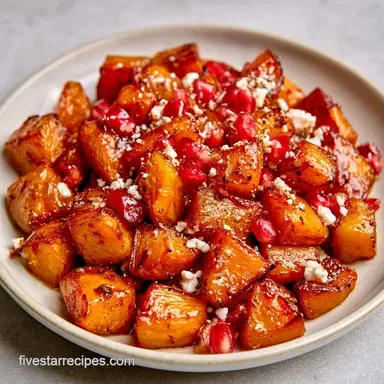
Roasted Butternut Squash Salad with Feta and Pomegranate
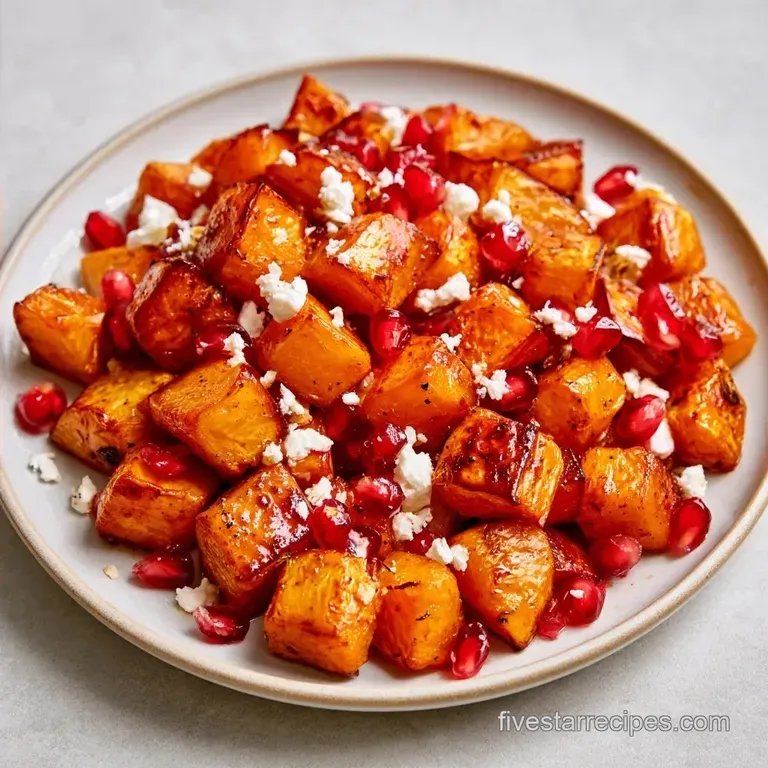
- Time: 15 min active + 30 min roasting
- Flavor/Texture Hook: Warm, mahogany roasted squash with salty feta and popping pomegranate seeds
- Perfect for: Fall dinner parties, healthy meal prep, or a vibrant side for roast chicken
The smell of roasting squash is, for me, the official start of autumn. It's that heavy, sweet aroma that fills the kitchen and tells you it's finally time to pull out the sweaters. In many cultures, the transition from the light, raw salads of summer to these hearty, root based bowls is a ritual.
It's about celebrating the harvest and using what the earth provides before the first hard freeze hits.
Growing up, the "harvest" meant piles of orange gourds on the porch and slow cooked vegetables. But the real magic happens when you stop treating squash as just a mash or a soup. When you roast it at a high temperature, it transforms.
It goes from being a bland, starchy vegetable to something with a complex, nutty depth that holds its own against bold flavors like feta and vinegar.
This Roasted Butternut Squash Salad is my take on that tradition. It isn't just a pile of greens; it's a study in contrast. You've got the heat of the squash hitting the cool arugula, the saltiness of the cheese cutting through the maple syrup, and the bright, acidic pop of pomegranate.
It's a dish that feels a bit fancy but takes almost no effort once the oven is doing the heavy lifting.
Roasted Butternut Squash Salad
The logic here is all about temperature and taste balance. Most salads feel "cold," but adding warm elements makes this feel like a full meal rather than just an appetizer.
Over High heat Roasting: Cooking at 200°C triggers the sugars in the squash to brown, creating a caramelized crust. This adds a savory depth that balances the sweet maple syrup in the dressing.
Acid Fat Contrast: The richness of the olive oil and feta can feel heavy on the tongue. The balsamic vinegar and pomegranate seeds provide the necessary acidity to cut through that fat, keeping the dish fresh.
Texture Layering: We mix soft roasted squash, peppery raw arugula, crunchy toasted pecans, and "popping" pomegranate seeds. This variety keeps your palate engaged with every bite.
| Method | Time | Texture | Best For |
|---|---|---|---|
| Fresh Roast | 45 min | caramelized & tender | Special dinners, best flavor |
| Pre cut/Frozen | 35 min | softer, less crust | Weeknight meals, speed |
Essential Recipe Specs
To get the results I've had, you need to hit a few specific marks. If the oven is too cold, the squash steams. If the cubes are too big, the outside burns before the inside softens.
First, keep your oven at exactly 200°C (400°F). This is the sweet spot for getting those brown edges without turning the squash into mush. Second, aim for cubes around 2cm. This size ensures they roast in exactly 25-30 minutes.
Finally, use a full 900g of squash to ensure you have enough substance to support the feta and nuts.
Chef: If you're using a convection oven, drop the temp to 180°C. The fan moves heat more efficiently, and 200°C might scorch the maple syrup in the dressing if you drizzle it on too early.
What Each Ingredient Does
I avoid "filler" ingredients. Every component of this Roasted Butternut Squash Salad serves a specific purpose, whether it provides a crunch, a salty kick, or a burst of color.
| Component | Purpose | Substitute Notes |
|---|---|---|
| Butternut Squash | Sweet, earthy base | Kabocha squash: denser and nuttier |
| Feta Cheese | Salty, creamy contrast | Goat cheese: tangier and softer |
| Balsamic Vinegar | Bright, acidic punch | Apple cider vinegar: milder, more fruity |
| Pomegranate Seeds | Tart, juicy bursts | Dried cranberries: sweeter, less pop |
For the Roasted Squash
- 1 medium butternut squash (approx. 900g), peeled and cubed The reason: Maintains its form better than pumpkin
- 2 tbsp extra virgin olive oil The reason: Ideal high smoke point for roasting
- 1/2 tsp kosher salt
- 1/4 tsp cracked black pepper
For the Roasted Butternut Squash Salad Dressing
- 3 tbsp balsamic vinegar The reason: Provides a rich, syrupy acidity
- 1 tbsp pure maple syrup The reason: Natural sweetness that complements the squash
- 2 tbsp extra virgin olive oil
- 1 small clove garlic, minced
- 1 tsp Dijon mustard The reason: Emulsifies the mixture to keep oil and vinegar combined
For the Salad Assembly
- 4 cups baby arugula The reason: Peppery flavor balances the maple sweetness
- 1/2 cup crumbled feta cheese
- 1/3 cup pomegranate seeds
- 1/4 cup raw pecans, toasted The reason: Adds a rich, buttery crunch
- 2 green onions, thinly sliced
Tools You'll Need
While you can make this with standard gear, a few key tools will make the process much easier.
A large rimmed baking sheet is essential. If the pan is too small, the squash will crowd together, creating steam that prevents a brown crust from forming. I always use parchment paper to ensure the maple syrup and natural sugars don't stick to the metal.
For the dressing, use a small lidded glass jar. Shaking the ingredients is far more efficient than whisking them in a bowl, as it forces the Dijon mustard and olive oil to emulsify. This creates a glossy coating that clings to the greens instead of settling at the bottom of the dish.
Lastly, use your biggest mixing bowl. This gives you ample space to toss the arugula without damaging the fragile leaves.
Bringing the Salad Together
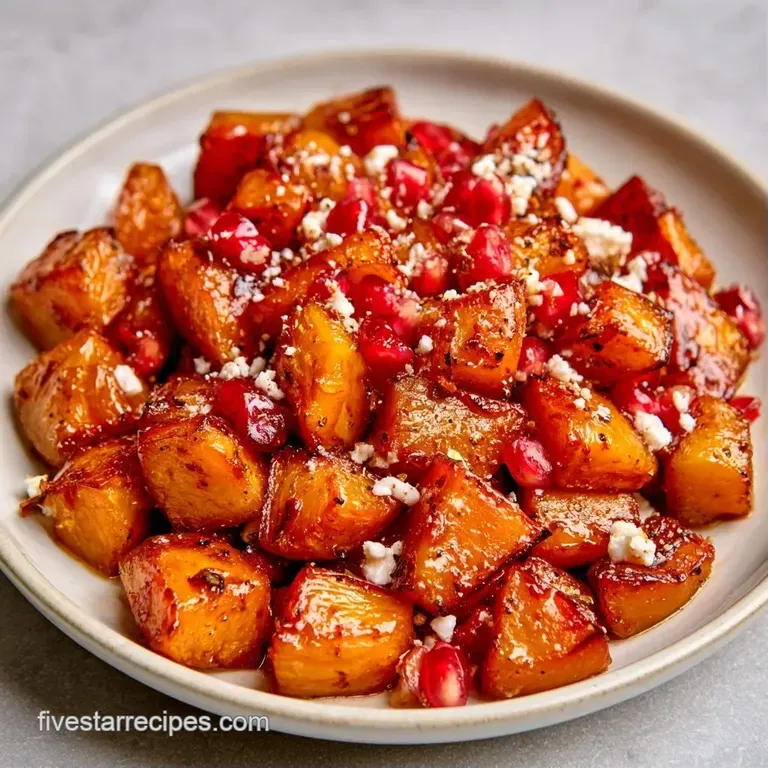
The flow here is simple: roast, whisk, assemble. I like to get the squash in the oven first so I can prep the dressing while the house starts to smell like autumn.
1. Achieving the Perfect Roast
Preheat your oven to 200°C (400°F). Toss the 900g of cubed butternut squash with 2 tbsp olive oil, salt, and pepper on a parchment lined sheet pan. Spread the pieces in a single layer.
Roast for 25–30 minutes, flipping them once halfway through, until the edges are mahogany colored and the center is tender.
2. Mixing the Balsamic Dressing
While the squash is roasting, pour the balsamic vinegar, maple syrup, minced garlic, and Dijon mustard into a jar. Add 2 tbsp of olive oil. Shake vigorously for 30 seconds until the dressing is cohesive and glossy.
3. Preparing the Greens
Place 4 cups of baby arugula in a large bowl. Drizzle about half of your dressing over the greens and toss gently with your hands or tongs. This ensures every leaf is coated before the heavier ingredients go in.
4. Folding in the Warmth
Carefully add the warm roasted squash to the arugula. Fold it in gently so you don't smash the cubes. The residual heat from the squash will slightly soften the arugula, which helps the dressing soak in.
5. Adding the Salt and Crunch
Sprinkle the 1/2 cup of crumbled feta and 1/4 cup of toasted pecans over the top. I avoid tossing these in too hard, as the feta can smear and make the salad look messy.
6. The Final Flourish
Scatter the 1/3 cup of pomegranate seeds and sliced green onions over the salad. These add the vibrant red and green colors that make the dish look gourmet.
7. The Last Drizzle
Drizzle the remaining balsamic dressing over the top of the assembled salad. This gives you fresh pockets of acidity in every bite.
8. Serving Immediately
Serve the salad while the squash is still warm. This temperature contrast is the hallmark of a great Roasted Butternut Squash Salad.
Stopping Common Salad Errors
Most issues with this dish come down to moisture control. If you've ever had a "soggy" salad, it's usually because the ingredients were too wet or the pan was too crowded.
One common issue is the squash turning out mushy. This happens when you use too much oil or crowd the pan, which traps steam. To fix this, give the squash breathing room on the tray. Another problem is a dressing that separates.
If your oil and vinegar aren't blending, you likely skipped the Dijon mustard or didn't shake the jar long enough.
Finally, if the arugula wilts too quickly, it's because you added the squash while it was boiling hot. Let the squash sit for 2-3 minutes after leaving the oven before folding it into the greens.
| Problem | Root Cause | Solution |
|---|---|---|
| Mushy Squash | Pan too crowded / steamed | Use two pans for a single layer |
| Separated Dressing | Lack of emulsification | Shake harder or add more Dijon |
| Wilted Greens | Squash too hot | Rest squash for 3 mins before mixing |
| Bland Flavor | Under salted squash | Salt the squash before roasting |
Fun Flavor Twists
Once you've got the base Roasted Butternut Squash Salad down, you can tweak the profiles. I often change the nuts or cheese depending on what's in the pantry.
For a Mediterranean vibe, swap the pecans for toasted pine nuts and use a bit of lemon zest in the dressing. If you're craving more greens, try this Fall Kale Salad for a heartier base. The kale holds up even better to the warm squash than arugula does.
If you want a vegan version, simply omit the feta or use a salty almond based ricotta. Swap the maple syrup for agave if you prefer a more neutral sweetness. For a "Harvest Orchard" twist, fold in some thinly sliced Granny Smith apples for an extra tart crunch.
You can also experiment with the Roasted Butternut Squash Salad dressing. Using a cider vinaigrette instead of balsamic makes the dish lighter and more fruity. Just keep the ratio of acid to fat the same to maintain that balance.
Decision Shortcut
- Extra zing? → add 1 tsp lemon zest
- Nuttier flavor? → toast pecans for 2 mins more
- Sweeter finish? → increase maple syrup by 1 tsp
| Ingredient | Budget Option | Premium Option | Impact |
|---|---|---|---|
| Pecans | Sunflower Seeds | Marcona Almonds | Texture/Richness |
| Feta | Store brand Crumbles | Barrel aged Greek Feta | Saltiness/Creaminess |
| Pomegranate | Dried Cranberries | Fresh Pomegranate | Tartness/Freshness |
Keeping Your Salad Fresh
Planning for a gathering or prepping meals? Avoid assembling the whole dish too early. While fresh components make the Roasted Butternut Squash Salad shine, you can still prepare things in advance.
Keep the roasted squash chilled in a sealed tub for as long as 4 days. Leave the dressing in its jar and place pomegranate seeds in their own small dish. When serving, enjoy the squash chilled or warm it up in a skillet for 2 minutes.
To keep arugula crisp, leave it in the original bag with a paper towel to soak up moisture. If you need something more durable, my Kale Pomegranate Salad is a fantastic lunch choice since kale stays fresh longer than arugula.
Minimize waste by saving the squash seeds! After cleaning them, mix with oil and salt, then roast at 175°C for 10-15 minutes to make a nutritious snack. Additionally, add the squash peels to your vegetable stock to enhance that autumnal taste.
Perfect Side Dish Pairings
This salad is vibrant enough to be a main, but it really shines as a side. Because it has both sweet and salty notes, it pairs well with lean proteins.
I love serving this alongside a lemon garlic roasted chicken. The citrus from the chicken complements the balsamic in the Roasted Butternut Squash Salad perfectly. If you're doing a vegetarian feast, pair it with a warm quinoa bowl or a slice of crusty sourdough bread to soak up the extra dressing.
For a holiday table, this is a great alternative to the traditional heavy sides. It provides a fresh, nutrient dense contrast to things like mashed potatoes or stuffing. Just make sure to serve it in a shallow bowl so the pomegranate seeds don't all sink to the bottom.
Kitchen Myths
Some people think roasting squash destroys all the vitamins. While some heat sensitive vitamins like Vitamin C drop, the fat from the olive oil actually helps your body absorb the beta carotene in the squash.
Another myth is that you have to peel the squash. While I recommend it for this specific salad to get a uniform texture, the skin is edible. If you leave it on, just expect a slightly chewier bite.
Finally, don't believe that "searing" the squash in a pan first is necessary for flavor. The high heat of the oven does all the work. Adding a pan sear step just adds unnecessary fat and extra dishes to your sink.
Recipe FAQs
Can you eat butternut squash raw in a salad?
No, it's too dense and starchy. Roasting transforms the texture and unlocks the natural sugars, making the vegetable far more palatable.
Which dressing works best for this salad?
A balsamic maple vinaigrette is ideal. The sharp acidity and woody sweetness balance the rich, caramelized notes of the roasted squash.
Is it true you can roast butternut squash with the skin on?
Not true. The skin remains tough and fibrous even after cooking, so peeling is necessary for a tender, consistent result.
How to soften butternut squash before cutting?
Microwave the whole squash for a few minutes. This softens the rind just enough to allow your knife to glide through the center safely.
What pairs well with roasted butternut squash?
Hearty proteins or savory boards work best. This salad adds a vibrant, acidic touch to a meat and cracker platter for a balanced appetizer spread.
Roasted Butternut Squash Salad