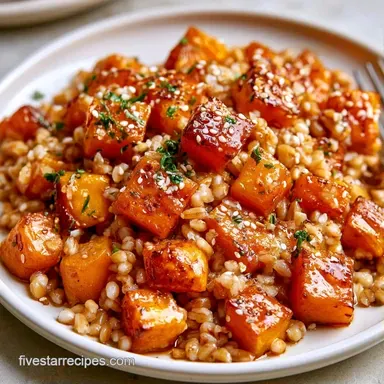
Fall Farro Salad with Butternut Squash
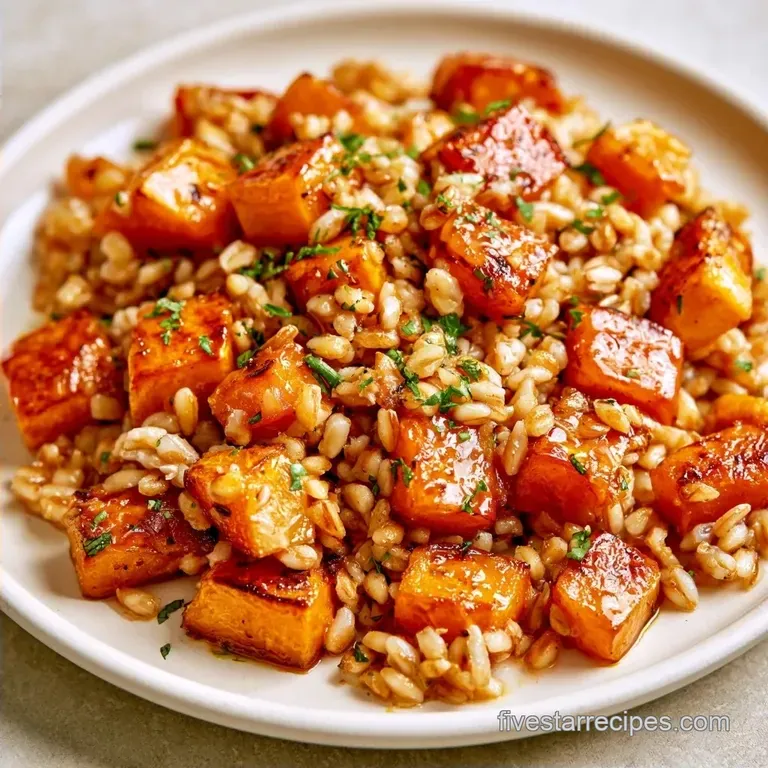
- Time: 15 min active + 30 min cooking
- Flavor/Texture Hook: Nutty grains contrasted by popping pomegranate seeds
- Perfect for: Vibrant side dishes or healthy meal prep
Ever noticed how some grain bowls taste like bland mush while others feel like a celebration of autumn? I’ve been there. My early attempts at these salads often turned into a tepid porridge because I simply boiled the farro and hoped for the best. The result was a soggy dish with zero personality.
The secret is in the preparation. By roasting the squash until the edges are deeply browned and toasting the grains in a dry pan, you build complex layers of flavor that boiling alone can't achieve. This recipe was born from that discovery.
It's vibrant, packed with nutrients, and actually stays crisp in the refrigerator.
You can expect a bowl that balances every note: the sweetness of maple, the tang of apple cider vinegar, and the earthy bite of farro. It's a reliable way to get your grains and greens in one go without it feeling like "health food."
A Vibrant Fall Farro Salad
This approach emphasizes a few key techniques to ensure the textures remain distinct. No specialty gear is needed just a saucepan and a sheet pan. The aim is to balance the creamy richness of goat cheese with the bright acidity of a homemade vinaigrette.
Because we're using pearled farro, the cooking process is quick. If you've tried a Butternut Squash Quinoa Salad recipe, you'll find that farro provides a more substantial, chewy "pop" that stands up better to the dressing.
The contrast between the warm roasted squash and chilled baby kale makes this Fall Farro Salad feel like a hearty meal. It's a wonderful chance to enjoy those seasonal autumn vegetables before the winter freeze hits.
Why the Toasting Matters
Instead of just boiling the grain, we treat it like a nut. Here is why that works:
- Dry Toasting: Heating the farro in a pan before adding broth creates a nutty aroma and firms up the outer shell of the grain.
- over High heat Roasting: Cooking the squash at 400°F (200°C) evaporates moisture quickly, which browns the edges instead of steaming the insides.
The Harvest Mix
Before we dive in, let's look at what these ingredients actually bring to the bowl.
| Ingredient | What It Does | Best Swap |
|---|---|---|
| Pearled Farro | Provides a chewy, nutty base | Barley (adds a softer texture) |
| Butternut Squash | Adds sweetness and creaminess | Sweet potato (slightly denser) |
| Apple Cider Vinegar | Cuts through the fat of the cheese | Lemon juice (brighter, less fruity) |
| Goat Cheese | Adds a tangy, creamy finish | Feta (saltier and firmer) |
For the full list, you'll need: - 1 cup (170g) pearled farro - 2 cups (480ml) vegetable broth - 3 cups (450g) butternut squash, peeled and cubed small - 2 tbsp (30ml) extra virgin olive oil (for roasting) - 1/2 tsp (3g) kosher salt - 1/4 tsp (1g) black pepper - 3 cups (85g) baby kale or arugula - 1/2 cup (60g) dried
Cranberries - 1/2 cup (70g) pomegranate seeds - 1/2 cup (60g) toasted pecans, roughly chopped - 1/2 cup (60g) crumbled goat cheese or feta - 3 tbsp (45ml) extra virgin olive oil (for dressing) - 2 tbsp (30ml) apple cider vinegar - 1 tbsp (15ml) pure maple syrup - 1 tsp (5g) Dijon mustard - 1 small clove garlic, minced
- 1/4 tsp (1.5g) salt
Chef: Use pearled farro specifically. Whole grain farro takes much longer to cook and requires soaking, which changes the timing of this whole meal.
Simple Tools Needed
You only need a few basic tools for this recipe. I suggest using a wide baking sheet for the squash to ensure the pieces have enough space, which prevents them from steaming.
For the dressing, I find a mason jar most convenient. Shaking the ingredients is quicker than whisking and makes cleaning up much easier. If you don't have one, a small bowl and a whisk will work perfectly.
Let's Get Cooking
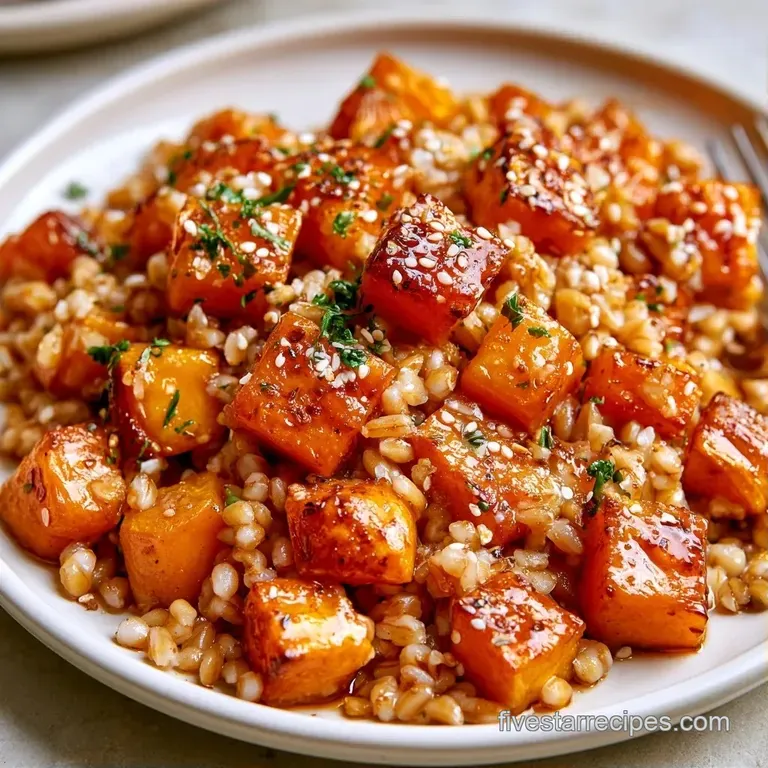
Follow these steps to keep your Fall Farro Salad from becoming a mushy mess.
- Preheat oven to 400°F (200°C). Toss cubed butternut squash with 2 tbsp olive oil, salt, and pepper on a baking sheet.
- Roast 20-25 minutes until edges are mahogany colored and tender.
- Place dry farro in a saucepan over medium heat. Stir constantly for 3-5 minutes until it smells nutty and looks golden brown.
- Add vegetable broth, bring to a boil, then reduce to a simmer.
- Cover and cook for 15-20 minutes until tender but still having a slight pop.
- Drain any excess liquid and let the grains cool slightly. Note: Cooling prevents the kale from wilting instantly.
- Combine apple cider vinegar, maple syrup, Dijon, minced garlic, and salt in a jar.
- Slowly pour in 3 tbsp olive oil while shaking the jar vigorously until the dressing is thick and glossy.
- In a large bowl, toss the cooled farro with the roasted butternut squash, baby kale, dried cranberries, pomegranate seeds, toasted pecans, and crumbled goat cheese.
- Drizzle the maple vinaigrette over the Fall Farro Salad and toss gently to coat evenly.
Fixing Common Issues
Mishaps can happen even with straightforward dishes. The most frequent struggle involves the grain's consistency. If the farro remains as hard as pebbles, it's likely undercooked. Conversely, a texture like oatmeal means it simmered in the broth for too long.
Be mindful of your greens. Tossing the dressing while the squash is piping hot will cause the kale to wilt instantly. Give the roasted components about 5-10 minutes to cool before the final mix.
Grain Texture Issues
Pearled farro needs a bit of "bite." If it turns out too soft, try cutting the simmer time by 2 minutes in your next batch.
Dull Flavor Profile
If the flavor seems muted, it's typically due to a lack of acidity. A small extra splash of apple cider vinegar can brighten the other ingredients.
Wilted Greens
Mixing in hot elements causes baby kale to shrink. Ensure the roasted squash has cooled slightly before you assemble the salad.
| Problem | Root Cause | Solution |
|---|---|---|
| Grains are too hard | Under simmered or whole grain used | Simmer 5 mins more or check if farro is "pearled" |
| Dressing separated | Oil added too quickly | Shake vigorously in a jar for 30 seconds |
| Bland taste | Not enough salt or acid | Add a pinch of salt or 1 tsp vinegar |
Changing Up the Flavors
This Fall Farro Salad is easy to adapt to your dietary preferences. To create a Vegan Fall Farro Salad, simply replace the goat cheese with toasted pumpkin seeds or a spoonful of vegan almond ricotta to maintain the creaminess without using dairy.
For extra protein, stir in chickpeas or grilled chicken. To keep the meal light while adding more volume, serve this alongside a Salad in 20 Minutes recipe.
You can also experiment with different fruits. While pomegranate and cranberries are traditional, diced apples or dried figs are wonderful additions to an Autumn Farro Salad.
| Goal | What to change |
|---|---|
| More Protein | Add 1 cup cooked chickpeas or grilled chicken |
| Nut Free | Swap pecans for toasted sunflower seeds |
| Extra Tangy | Increase apple cider vinegar by 1 tbsp |
Preservation Secrets
To keep this Fall Farro Salad fresh, store it in a glass airtight container in the fridge. It stays good for 3 to 4 days. The farro actually absorbs the dressing over time, which makes the flavor deeper on day two.
If you're prepping for the week, store the dressing in a separate jar. Only dress the salad right before eating to keep the kale from getting slimy.
For zero waste, don't toss the butternut squash peels. You can roast them with a bit of oil and salt at 400°F (200°C) for 10 minutes to make "squash chips" as a snack.
What to Pair It With
This Fall Harvest Farro Salad is substantial enough to serve as a main course, though it also makes a wonderful side. I personally enjoy pairing it with crusty sourdough bread or a bowl of creamy tomato soup.
Because the flavors are so well balanced, you don't need an elaborate accompaniment. A piece of seared halloumi or a roasted chicken breast can easily turn this into a complete dinner. If you're preparing for a gathering and want another light option, this Salad in 10 Minutes recipe is a perfect addition to the table.
Clearing Up Farro Misconceptions
Some believe that farro is too "heavy" to be used in a salad. In truth, its high fiber content makes it far more satisfying than standard lettuce, ensuring you won't be hunting for snacks an hour after your meal.
Another common myth is that soaking farro overnight is a requirement. While whole grain varieties benefit from a soak, pearled farro is processed for quick cooking and tastes great without the extra step.
Now you are all set to make a fantastic Fall Farro Salad. Just remember to toast the grains and let the squash cool down to ensure the dish holds together perfectly. Let's dive in!
Recipe FAQs
How do I prepare the maple vinaigrette?
Combine apple cider vinegar, maple syrup, Dijon, minced garlic, and salt in a jar. Slowly pour in the olive oil while shaking vigorously until the dressing is thick and glossy.
How can I keep the farro from getting mushy?
Toast dry farro in a saucepan over medium heat for 3-5 minutes until it smells nutty. This step creates a protective layer that preserves the chewy texture during simmering.
Is it true that farro always requires overnight soaking?
False. Pearled farro cooks quickly in about 15-20 minutes. It provides a satisfying pop without needing a long soak.
Can I substitute feta for goat cheese?
Use feta for a saltier, bolder tang. If you enjoy this balance of salty cheese and crisp fruit, see how we use similar flavors in our apple goat cheese salad.
Fall Farro Salad