Biscuits and Gravy: Velvety and Crisp

- Time:15 minutes active + 20 minutes cook = Total 35 minutes
- Flavor/Texture Hook: Shatter crisp biscuit tops with a peppery, silky sausage cream
- Perfect for: Slow Sunday brunches, holiday mornings, or a comforting "treat yourself" breakfast
- The Secret to Better Biscuits and Gravy
- Ingredient Deep Dive
- The Full Shopping List
- Tools for the Job
- Step by Step Cooking Guide
- Avoiding Common Kitchen Mistakes
- Troubleshooting Common Issues
- Adjusting the Batch Size
- Dispelling Kitchen Myths
- Keeping and Reheating Leftovers
- Plating for a Special Occasion
- High in Sodium
- Recipe FAQs
- 📝 Recipe Card
The sound of bulk pork sausage hitting a cold cast iron skillet is a specific kind of magic. It starts as a quiet sizzle, then builds into a rhythmic pop as the fat renders out, filling the whole kitchen with that savory, peppery aroma that just screams "weekend." I remember the first time I tried to rush this process by preheating the pan, and the meat just scorched on the outside while staying pale inside.
Total disaster.
Since then, I've treated this meal like a ritual. There is something about the contrast between a hot, fluffy biscuit and a thick, creamy gravy that makes any morning feel like a special occasion.
Whether you're hosting a crowd or just feeding the family, getting the texture right is what separates a basic meal from a gourmet experience.
We're going for a specific result here: biscuits that are tall and flaky, not flat and hockey puck like, paired with a sauce that is velvety and rich. This version of Biscuits and Gravy doesn't cut corners, but it's surprisingly fast once you have your mise en place ready.
Trust me, the extra few minutes spent keeping your butter cold is where the real win happens.
The Secret to Better Biscuits and Gravy
Most people treat the gravy like an afterthought, but it's actually a precision exercise in fat and flour. If you dump the milk in too fast, you get lumps. If you don't cook the flour long enough, the sauce tastes like raw paste.
The key is the "nutty" stage, where the flour and sausage fat form a roux that's fully cooked before the liquid ever touches the pan.
Then there's the biscuit struggle. The biggest mistake is overworking the dough. The second you start kneading it like bread, you develop gluten, which turns a flaky biscuit into a dense roll. We want "shaggy" dough.
It should look a bit messy and unrefined before it goes into the oven, which is exactly how you get those distinct, airy layers that soak up the gravy without disintegrating.
Right then, let's look at the mechanics of why this specific approach works. It's not just about following a list; it's about understanding how the ingredients behave under heat. When you combine a high temperature oven with cold fat, you're essentially creating tiny steam explosions inside the dough, which is what pushes those layers upward.
Why This Works
- Steam Leavening: Cold butter cubes melt during baking, creating pockets of steam that lift the dough for a flaky texture.
- Fat Rendering: Starting sausage in a cold pan allows the fat to melt slowly, ensuring a mahogany sear and plenty of base for the roux.
- Starch Gelatinization: Gradually whisking in milk allows the flour to hydrate evenly, creating a velvety consistency instead of clumps.
- Acidic Activation: The buttermilk reacts with the baking powder to provide an immediate lift and a subtle tang.
Since this is a dish that can be served in different styles, it helps to know which method fits your morning vibe.
| Method | Time | Texture | Best For |
|---|---|---|---|
| Oven Baked | 35 mins | Tall, flaky, airy | Formal brunches |
| Stovetop Fried | 25 mins | Dense, buttery, crisp | Quick week day meals |
| Casserole Bake | 60 mins | Soft, integrated, moist | Large crowds |
The logic here is similar to how a Chicken Pot Pie uses a thick sauce to hold its structure, though we're aiming for something more pourable here.
Ingredient Deep Dive
Before we get into the gear, let's talk about the components. Not all flour or milk is created equal when you're aiming for this level of quality.
| Ingredient | Science Role | Pro Secret |
|---|---|---|
| All Purpose Flour | Structure & Thickening | Chill it in the freezer for 10 mins for colder biscuits |
| Cold Butter | Flakiness Agent | Keep it in cubes, don't let it soften |
| Buttermilk | Tenderizer | Use full fat for a richer, more velvety crumb |
| Pork Sausage | Flavor Base & Fat | Use bulk sausage to maximize surface area for searing |
The Full Shopping List
Get everything on the counter before you start. There's nothing worse than realizing you're out of buttermilk while your oven is screaming at 425°F.
For the Biscuits:
- 2 cups (250g) all purpose flourWhy this? Standard protein content for a balanced lift
- 1 tbsp (12g) baking powderWhy this? Provides the essential chemical lift
- 1/2 tsp (3g) saltWhy this? Balances the richness of the butter
- 1/2 cup (115g) cold unsalted butter, cubedWhy this? Creates the steam pockets for flakes
- 3/4 cup (180ml) cold buttermilkWhy this? Adds tang and tenderizes the gluten
For the Gravy:
- 1 lb (450g) bulk pork breakfast sausageWhy this? High fat content is necessary for the roux
- 1/3 cup (40g) all purpose flourWhy this? Thickens the milk into a sauce
- 3 cups (710ml) whole milkWhy this? Fat content prevents the sauce from breaking
- 1 tsp (5g) coarse black pepperWhy this? Cuts through the heavy fat
- 1/2 tsp (3g) saltWhy this? Enhances the savory pork notes
Substitution Options
| Original Ingredient | Substitute | Why It Works |
|---|---|---|
| Buttermilk (3/4 cup) | Milk + 1 tbsp Lemon Juice | Mimics acidity. Note: Slightly less tangy |
| Pork Sausage (1 lb) | Turkey Sausage | Leaner option. Note: Requires 1 tbsp extra butter for the roux |
| Whole Milk (3 cups) | Half and Half | Extra richness. Note: Results in a much heavier, denser gravy |
If you have extra buttermilk on hand, you might want to try a Monkey Bread recipe for a sweet contrast to this savory meal.
Tools for the Job
You don't need a professional kitchen, but a few specific tools make this way easier. Honestly, don't bother with a blender or food processor for the biscuits; you'll overwork the dough in seconds.
- Cast Iron Skillet: This is non negotiable for the sausage. It holds heat evenly and creates that mahogany sear.
- Pastry Cutter: If you don't have one, two forks work, but a cutter is faster for getting the butter into "pea sized" lumps.
- Whisk: Essential for the gravy to ensure no flour clumps survive.
- Baking Sheet: Lined with parchment paper to prevent the bottoms from scorching.
- Biscuit Cutter or Glass: A 2.5 inch rim is standard for a nice, tall biscuit.
Step by step Cooking Guide
Let's crack on. Follow these exactly, and you'll avoid the common pitfalls of flat biscuits or lumpy sauce.
- Preheat oven to 425°F (218°C). Note: A hot oven is what makes the butter sizzle and lift the dough.
- Whisk flour, baking powder, and salt in a bowl.
- Cut in the cold butter using a pastry cutter until the mixture resembles coarse crumbs with some pea sized lumps remaining. Note: Do not over mix; those lumps are your insurance for flakiness.
- Stir in cold buttermilk just until a shaggy dough forms.
- Pat the dough onto a floured surface to 1 inch thickness, cut into circles, and bake for 12-15 minutes until the tops are golden.
- Place the bulk pork sausage in a cold cast iron skillet, then turn heat to medium high.
- Brown the meat, breaking it into small crumbles, until it reaches a mahogany colored sear and is fully cooked. Do not drain the fat.
- Sprinkle the flour over the browned sausage and stir constantly for 2 minutes until the flour smells nutty.
- Gradually whisk in the whole milk, one cup at a time, stirring frequently.
- Simmer on medium low until the gravy thickens; season with black pepper and salt.
Avoiding Common Kitchen Mistakes
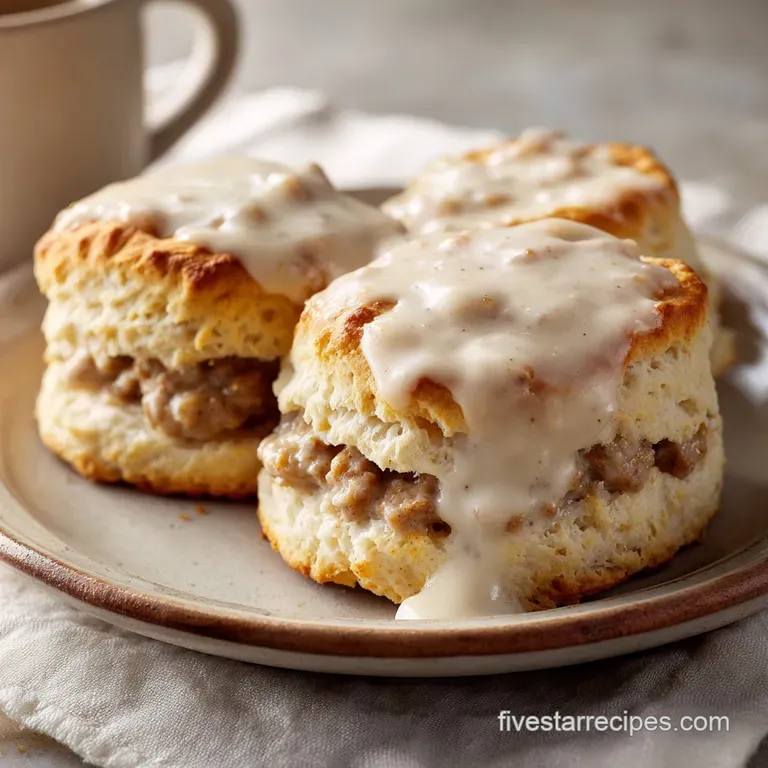
Even the best of us mess up the ratios sometimes. The most common issue is a sauce that feels "thin" or "pasty." If it's thin, you didn't simmer it long enough. If it's pasty, you didn't cook the flour roux long enough before adding the milk.
Troubleshooting Common Issues
| Issue | Solution |
|---|---|
| Why Your Gravy Is Lumpy | Lumps happen when the flour isn't fully integrated into the fat or when the milk is added too quickly. The flour clumps together and creates "flour balls" that refuse to break down. To fix this, use a |
| Why Your Biscuits Are Dense | This usually comes down to two things: overworking the dough or using warm butter. If you knead the dough, you develop gluten, which fights the baking powder. If the butter is warm, it absorbs into th |
| Why The Gravy Tastes Bland | Sausage varies in saltiness. If the gravy tastes flat, it's usually a lack of black pepper. This dish needs a surprising amount of pepper to cut through the fat of the pork and milk. |
Common Mistakes Checklist
- ✓ Butter is ice cold when it hits the flour
- ✓ Dough was patted, not rolled with a pin
- ✓ Flour was toasted in the fat for a full 2 minutes
- ✓ Milk was added gradually, not all at once
- ✓ Sausage was browned to a deep mahogany, not just grey
Adjusting the Batch Size
If you're cooking for a crowd or just yourself, you can't always just double the numbers. Baking is more of a science than a suggestion.
Scaling Down (Half Batch) Use a smaller 8 inch skillet for the gravy to keep the fat depth consistent. For the biscuits, use a smaller baking sheet and reduce the bake time by about 20%. If the recipe calls for an odd number of eggs in other versions, beat one and use half.
Scaling Up (Double or Triple) When doubling the sausage gravy, do not double the salt and pepper immediately. Start at 1.5x and taste as you go. For the biscuits, I highly recommend working in batches.
If you crowd the oven, the temperature drops, and you lose that initial steam blast, resulting in flatter Biscuits and Gravy.
Baking Adjustments for Large Batches If you are baking two sheets of biscuits at once, lower the oven temp by 25°F (to 400°F) and extend the time by 3-5 minutes. This ensures the middle tray doesn't stay raw while the top one burns.
Dispelling Kitchen Myths
There's a lot of bad advice floating around about Southern cooking. Let's clear a few things up.
Myth: You must roll the dough with a rolling pin. Truth: Rolling pins compress the layers. Patting the dough with your hands keeps the air in, which is how you get that shatter crisp exterior and soft interior.
Myth: Draining the sausage fat makes the gravy healthier. Truth: The fat is where the flavor and the thickening power live. If you drain the fat, you'll have to add butter back in to create a roux, which doesn't provide the same depth of flavor as the rendered pork fat.
Keeping and Reheating Leftovers
This dish is best fresh, but it holds up surprisingly well if you know how to handle it.
Storage Guidelines Keep the biscuits and the gravy in separate airtight containers. The biscuits will stay fresh in the fridge for 3 days, while the gravy can last up to 5 days. In the freezer, the gravy lasts 3 months; the biscuits last 2 months if wrapped tightly in foil.
Zero Waste Tips If you have leftover gravy, it makes a brilliant base for a savory pot pie or a thickener for a pork stew. If you have a few leftover biscuits, slice them in half, toast them with butter, and use them as a base for open faced breakfast sandwiches.
Any remaining sausage drippings can be frozen in an ice cube tray and used to sauté vegetables for dinner.
Plating for a Special Occasion
To make this feel like a gourmet meal, avoid just scooping everything onto a plate. Start by splitting the biscuits warm, so the steam rises. Place two or three biscuits slightly overlapping in the center of a wide, shallow bowl.
Ladle the gravy generously over the center, allowing it to pool around the base of the biscuits but leaving the tops exposed and crispy. Garnish with a sprinkle of fresh chopped chives or parsley to add a pop of color and a hit of freshness.
For a real "occasion" feel, serve it with a side of crisp, thick cut bacon and a bowl of fresh berries. The acidity of the fruit cuts through the richness of the Biscuits and Gravy, balancing the whole plate. This turns a rustic breakfast into a sophisticated brunch experience.
High in Sodium
1120 mg 1,120 mg of sodium per serving (49% 49% of daily value)
The American Heart Association recommends a daily limit of 2,300mg of sodium to help manage blood pressure and reduce the risk of heart disease.
Tips to Reduce Sodium
-
Swap the Sausage-25%
Replace the bulk pork breakfast sausage with low-sodium sausage or lean ground pork seasoned with sage and thyme to cut processed meat sodium.
-
Eliminate Added Salt-25%
Remove the 1 tsp of salt from both the biscuit dough and the gravy; the sausage already provides significant saltiness.
-
Modify Buttermilk-10%
Use homemade buttermilk (milk mixed with a splash of lemon juice) to reduce the sodium found in store-bought buttermilk.
-
Enhance with Aromatics
Add smoked paprika, garlic powder, or fresh parsley to the gravy to create a rich flavor profile without adding any sodium.
Recipe FAQs
Can I make the biscuits ahead of time?
Yes, you can bake them in advance. Reheat them in the oven at 425°F for a few minutes to restore the crisp exterior before serving with hot gravy.
Why are my biscuits coming out dense?
You likely overworked the dough or used warm butter. Over kneading develops too much gluten, while warm butter absorbs into the flour rather than creating steam pockets.
Why is my gravy lumpy?
The milk was added too quickly or the flour didn't integrate. This creates "flour balls" that refuse to break down, so whisk the milk in gradually, one cup at a time.
How to ensure the biscuits are flaky?
Cut in cold butter until pea-sized lumps remain. These cold fat pockets sizzle in the 425°F oven, creating the layers and lift required for flakiness.
Is it true I should drain the sausage fat before adding flour?
No, this is a common misconception. The fat is essential for cooking the flour into a roux, which thickens the gravy and provides the core flavor.
How to get the gravy to the right consistency?
Simmer the mixture on medium low after whisking in the milk. Stir frequently until the sauce thickens to your preference, then season with salt and black pepper.
How to keep the biscuits from flattening out?
Pat the dough to a full 1 inch thickness before cutting. Avoid pressing down on the cutter, as sealing the edges prevents the dough from rising upward.
Homemade Biscuits And Gravy