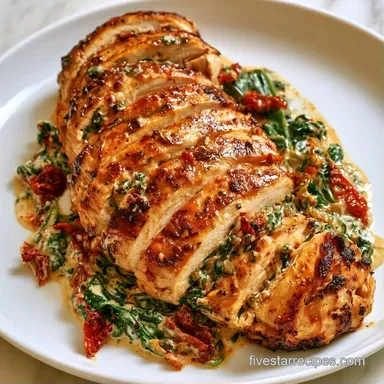
Creamy Tomato Stuffed Chicken with Spinach
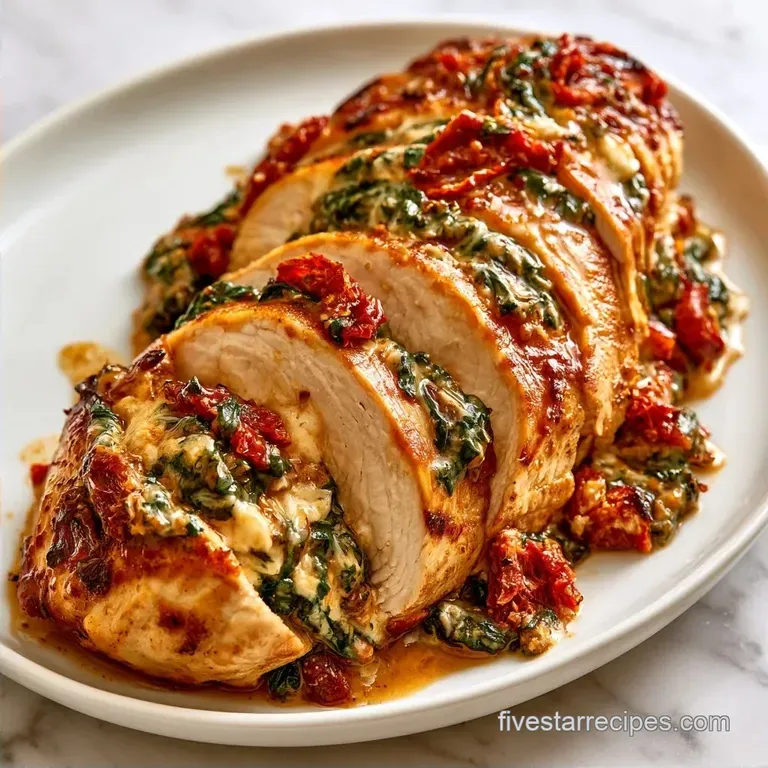
- Time:15 minutes active + 25 minutes cook
- Flavor/Texture Hook: Mahogany crust with a molten, savory center
- Perfect for: Date night or a high end weeknight dinner
Sizzling butter in a cast iron pan is the best sound in the kitchen, especially when a thick chicken breast hits the heat and starts to brown. But let's be honest, stuffed chicken is often a gamble.
You either end up with a charred exterior and a cold, raw center, or you overcook the meat into rubber just to make sure the cheese is melted.
I used to deal with those "filling leaks" where the cheese would run out and burn, leaving a mess in the pan and a hollow chicken breast. The trick is all in how you carve the pocket and the specific order of the pan sauce.
This version of Creamy Tomato Stuffed Chicken fixes those issues. We're using a sear then simmer technique that guarantees the chicken hits 165°F exactly when the sauce reaches a glossy, pourable consistency. It feels like something from a bistro but uses ingredients you probably already have.
The One Thing That Changes Everything
The Two Stage Cook: Searing first creates a crust, while simmering in sauce finishes the center without drying out the edges. This prevents the common "burnt outside, raw inside" disaster.
Pan Sauce Emulsion: Using the browned bits left in the pan (the fond) helps the cream and tomato paste bind together. If you love these kinds of rich bases, my Sauce in 20 Minutes recipe uses a similar approach to build deep flavor.
Filling Density: Mixing cream cheese with Parmesan and sun dried tomatoes creates a thick paste that holds its shape. This means the filling stays inside the pocket rather than liquefying and escaping immediately.
| Goal | What to change |
|---|---|
| Lower Fat | Swap heavy cream for evaporated milk |
| More Heat | Add 1/2 tsp red pepper flakes to filling |
| Extra Tang | Increase lemon juice in the sauce |
Recipe Specs
This dish relies on thermal equilibrium. You start with high heat to get the color, then drop to a simmer to let the heat penetrate the thickest part of the breast.
| Method | Time | Texture | Best For |
|---|---|---|---|
| Skillet Searing | 40 mins | Crispy/Molten | Dinner Party |
| Oven Finish | 50 mins | Tender/Soft | Meal Prep |
Shopping List Breakdown
For the best results, use chicken breasts that are similar in size. If one is huge and one is small, the small one will dry out before the large one is safe to eat.
For the Creamy Stuffing
- 115g cream cheese, softened Why this? Provides the base structure for the filling
- 60ml sun dried tomatoes, finely chopped Why this? Adds concentrated tartness and chew
- 15g fresh spinach, finely chopped Why this? Adds color and earthy balance
- 30g Parmesan cheese, freshly grated Why this? Adds a salty, umami punch
- 1 clove garlic, minced
- 1/2 tsp dried oregano
- 1/4 tsp salt
- 1/4 tsp black pepper
For the Chicken
- 4 (170g) boneless, skinless chicken breasts
- 30ml olive oil
- 30g unsalted butter
- 1 tsp Italian seasoning
- 1/2 tsp paprika
For the Pan Sauce
- 240ml heavy cream Why this? Creates a rich, clinging sauce
- 30ml tomato paste Why this? Deepens the color and acidity
- 120ml chicken broth Why this? Deglazes the pan and adds savory notes
- 2 cloves garlic, minced
- 1 tbsp fresh basil, chiffonade
| Ingredient | What It Does | Best Swap |
|---|---|---|
| Heavy Cream | Thickens sauce | Full fat coconut milk (adds nuttiness) |
| Cream Cheese | Binds filling | Ricotta (grainier, less stable) |
| Sun Dried Tomatoes | Flavor punch | Roasted red peppers (sweeter, less tart) |
Equipment Needed
Using a cast iron skillet is ideal for achieving a mahogany crust on the Creamy Tomato Stuffed Chicken, as it retains heat more effectively than stainless steel.
- 12 inch cast iron skillet
- Sharp chef's knife (for the pocket)
- Small mixing bowl
- Meat thermometer (essential for the 165°F mark)
- Tongs
The Cooking Process
Creating the Pocket
Place the chicken breasts on a cutting board. Cut a horizontal slit into the thickest area to form a pocket, stopping just before the opposite edge.
Mixing the Savory Filling
In a small bowl, combine the softened cream cheese, chopped sun-dried tomatoes, spinach, Parmesan, oregano, salt, and pepper. Stir until the mixture is a consistent, pale orange color.
Stuffing the Chicken
Spoon the cream cheese blend into each pocket. Press firmly to eliminate any air gaps so the filling doesn't shrink and leave a void.
Searing the Meat
Pat the chicken dry with paper towels. Season with paprika and Italian seasoning. Using medium high heat, warm some butter and olive oil in a pan. Sear for 3–5 minutes per side until a deep golden brown crust forms.
Starting the Sauce
Move the chicken to a plate. In that same pan, sauté minced garlic for 30 seconds until it smells fragrant but isn't brown.
Building the Base
Add the tomato paste. Cook for 1 minute until the paste darkens slightly, then whisk in the heavy cream and chicken broth.
The Final Simmer
Return the chicken to the pan. Simmer for 5–8 minutes until the sauce thickens and the chicken reaches 165°F.
Finishing Touches
Top with fresh basil chiffonade. Let the meat rest for 5 minutes before slicing to lock in the juices.
Avoiding Kitchen Disasters
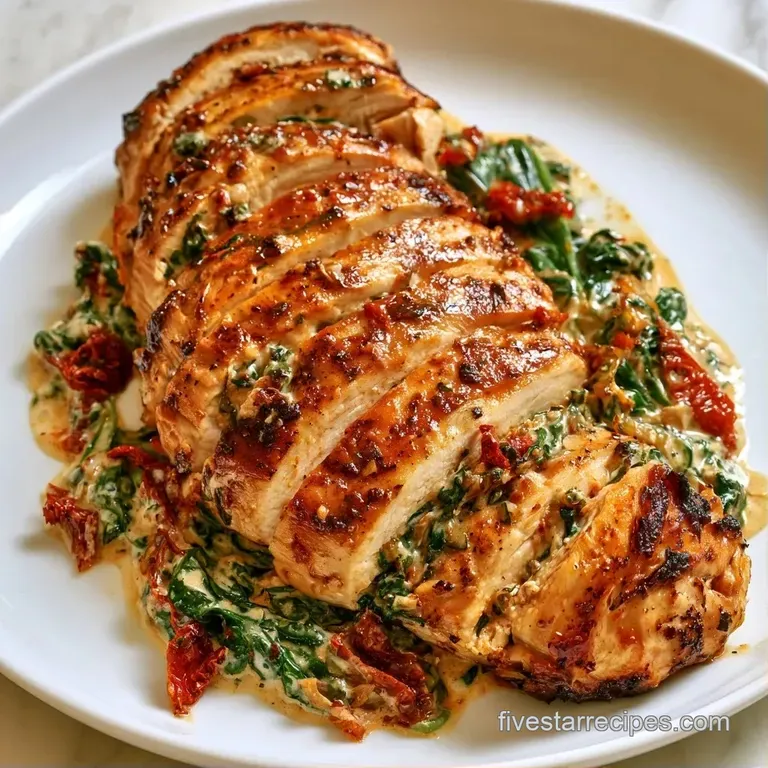
If the filling leaks, it's usually because the pocket was cut too wide or the cheese was too warm before stuffing. To stop this, you can use a toothpick to pin the opening closed.
Another issue is the sauce "breaking" or separating. This happens if the heat is too high during the simmering phase. Keep it at a gentle bubble, not a rolling boil.
Filling Leaks Out
The cheese escapes and burns in the pan, leaving the chicken empty.
Sauce Separates
The sauce looks grainy or has oil floating on top.
Chicken Is Dry
The exterior is dark but the meat feels tough.
| Problem | Fix |
|---|---|
| Filling Leaks | Pin the pocket with a toothpick |
| Sauce Separates | Lower heat to a gentle simmer |
| Chicken Is Dry | Reduce sear time and increase simmer |
Flavor Variations to Try
For a Greek inspired version, replace the sun-dried tomatoes with feta and kalamata olives. This pairing is particularly delicious when served alongside lemon oregano potatoes.
This recipe is nearly keto friendly as is. To further reduce the sugar, leave out the tomato paste and instead use a touch more heavy cream and a bit of lemon juice. For more low-carb inspiration, these Caprese Stuffed Mushrooms make an excellent side.
Pesto Infusion
Mix one tablespoon of basil pesto into your cream cheese mixture. It introduces a garlicky, nutty complexity that complements the tomato sauce.
Adding Some Spice
Mix some cayenne pepper into the outer seasoning. The heat helps balance the creamy richness of the Parmesan and cream.
| Original | Substitute | Why It Works |
|---|---|---|
| Heavy Cream | Greek Yogurt | Tangier, lower calorie. Note: Add at the end to prevent curdling |
| Parmesan | Pecorino Romano | Saltier, sharper flavor profile |
| Spinach | Kale | Heartier texture, holds up better to heat |
How to Store and Keep Fresh
Place any extra servings in an airtight container and refrigerate for up to 3 days. Don't worry if the sauce thickens while cooling; this is expected.
For reheating, steer clear of the microwave to prevent the chicken from getting rubbery. Instead, warm the chicken and sauce in a small pan on low heat. Stir in a tablespoon of water or chicken broth to bring back that silky consistency.
To minimize waste, save your fresh basil stems. Chop them finely to mix into your next filling or add them to a homemade stock. Any leftover cream cheese is excellent as a quick bagel spread or a thickener for vegetable soup.
Serving Suggestions
The way you plate this dish changes the whole vibe. Since the sauce is so rich, I recommend pairing it with something bright, like steamed asparagus or a crisp arugula salad with lemon vinaigrette.
Plating Levels
Simple: Place the chicken breast on a plate and spoon the sauce over the top. Serve with a side of steamed broccoli.
Polished: Slice the chicken on a bias (diagonal) to show off the molten filling. Arrange the slices overlapping each other and pool the sauce around the base.
Restaurant: Place a bed of mashed cauliflower or polenta in the center. Set the sliced chicken on top. Drizzle the sauce precisely around the edges and garnish with a single, perfect basil leaf and a sprinkle of flaky sea salt.
| Level | Key Tweak | Visual Effect |
|---|---|---|
| Simple | Spoon over | Homey, comforting |
| Polished | Bias slice | Professional, appetizing |
| Restaurant | Plated bed | High end, gourmet |
Common Misconceptions
Some people think that searing the meat "locks in the juices." This isn't actually true. Moisture loss happens regardless of whether you sear or not. The real reason we sear is for the flavor and the mahogany color that comes from the proteins browning.
Another myth is that you need to flour the chicken before searing to get a crust. While flour helps, it often burns in the butter and creates a gritty texture. Patting the meat bone dry with paper towels is far more effective for getting a clean, deep sear.
The final misconception is that the chicken must be cooked entirely in the oven. While possible, the skillet method gives you much more control over the sauce and the crust, resulting in a better contrast of textures.
High in Sodium
840 mg 840 mg of sodium per serving (37% 37% of daily value)
The American Heart Association recommends a daily limit of 2,300mg of sodium to maintain heart health and reduce the risk of hypertension.
Tips to Reduce Sodium
-
Swap the Broth-30%
Replace the standard chicken broth with low-sodium or no-salt added chicken broth to significantly lower the base sodium level.
-
Omit Added Salt-25%
Completely remove the 1/4 tsp of salt from the recipe, as the Parmesan and broth already contribute substantial sodium.
-
Rinse Sun-Dried Tomatoes-20%
Rinse the sun-dried tomatoes thoroughly under cold water to remove excess brine and surface salt before chopping.
-
Reduce Parmesan-15%
Use half the amount of Parmesan cheese or substitute with a small amount of nutritional yeast for a similar savory flavor.
-
Boost Aromatics
Increase the amount of fresh basil and garlic to add depth and complexity without adding any sodium.
Recipe FAQs
What goes into the filling for this creamy tomato chicken?
A blend of softened cream cheese, sun-dried tomatoes, spinach, and Parmesan. Stir in oregano, salt, and pepper for a savory, molten center.
How to prepare the cream sauce for stuffed breasts?
Sauté minced garlic in the pan, stir in tomato paste, then whisk in chicken broth and heavy cream. Simmer until the sauce thickens and becomes glossy.
Which technique prevents the cheese filling from leaking?
Create a lateral pouch in the plumpest section of the breast, making sure not to cut entirely through. Pack the stuffing tightly to eliminate any air pockets prior to searing.
Is it true that stuffed chicken always stays raw in the middle?
No, this is a common misconception. Searing the exterior first and then simmering in sauce ensures the center hits 165°F without overcooking the edges.
Which tool verifies the chicken is cooked through?
Use a meat thermometer to check for an internal temperature of 165°F. This is the only way to ensure safety and juiciness simultaneously.
Can I use a different meat for this stuffing technique?
This pocket stuffing technique is also great for thick fish fillets or pork chops. Once you've nailed this sear and-simmer process, try applying it to our grilled tenderloin.
Do I have to use a cast iron skillet to get a good crust?
Actually, no. Any heavy bottomed pan will work, though cast iron distributes heat most evenly for that mahogany sear.
Creamy Tomato Stuffed Chicken in 40 Min