Pecan Pie Cheesecake with Caramel Sauce
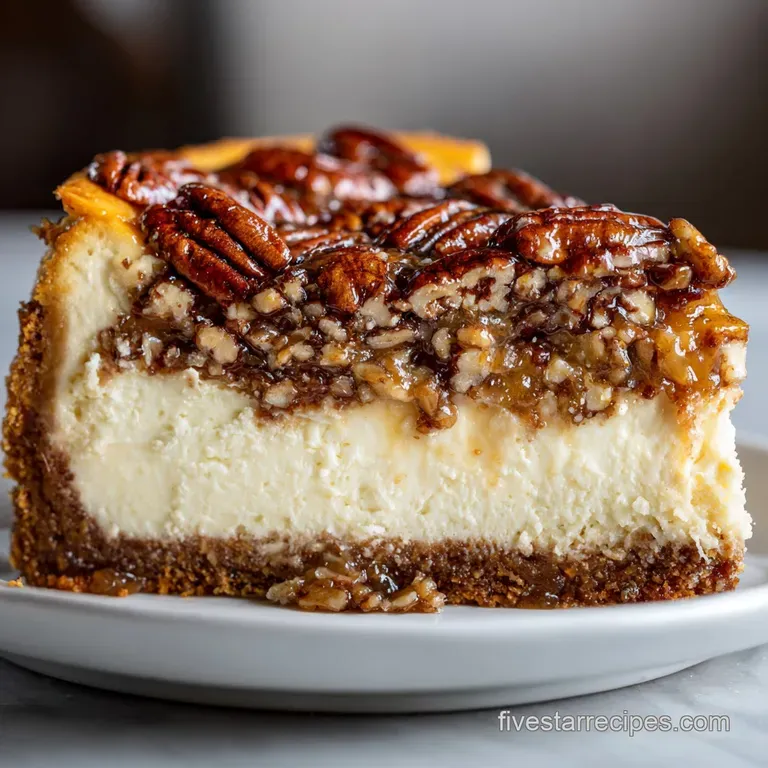
- Time: Active 30 mins, Passive 1 hours 15 mins, Total 1 hours 45 mins
- Flavor/Texture Hook: Silky cream cheese meeting mahogany, salt flecked caramelized pecans
- Perfect for: Holiday centerpieces or sophisticated dinner parties
- The Science of Achieving Texture in This Pecan Pie Cheesecake
- Technical Specifications for Achieving a Five Star Dessert
- The Alchemy of Flavor Analyzing Our Core Components
- Essential Laboratory Tools for Precision Baking Results
- A Step-by-Step Protocol for the Perfect Layered Bake
- Troubleshooting Your Bake Solving Common Structural Challenges
- Scaling the Recipe for Different Occasions
- Gourmet Adaptations and Seasonal Twists for Your Table
- Debunking Common Kitchen Misconceptions
- Preservation Strategies for Maintaining Optimal Texture and Flavor
- Elevating the Aesthetic with Precision Garnish Techniques
- Recipe FAQs
- 📝 Recipe Card
The Science of Achieving Texture in This Pecan Pie Cheesecake
The moment those pecans hit the hot butter in the pan, a specific chemical transformation begins. You'll smell it first - a deep, nutty aroma that signals the Maillard reaction is underway.
I remember the first time I attempted this Pecan Pie Cheesecake, I rushed the pecans and ended up with a topping that was sadly soft rather than snappy. It was a humbling moment in my kitchen, but it taught me that precision in temperature is the difference between a soggy mess and a gourmet masterpiece.
We aren't just making a dessert here; we are engineering a multi textured experience where the velvety cheesecake provides a neutral stage for the aggressive crunch of the toasted nuts.
This Pecan Pie Cheesecake recipe relies on the delicate balance of fat and sugar to maintain structural integrity. The rich dark brown sugar doesn't just add sweetness, it introduces molasses, which provides a hygroscopic quality - meaning it holds onto moisture to keep the cheesecake from drying out while it bakes.
You'll notice that we use a significant amount of full fat cream cheese (900g to be exact), which ensures a dense, New York style crumb that can support the heavy, mahogany colored pecan layer without collapsing. Trust me, skipping the full fat versions is the fastest way to a watery disaster.
- Protein Denaturation: Slow heating of the eggs ensures the protein network sets gently, preventing the "rubbery" texture associated with overbaked custards.
- Lipid Emulsification: Room temperature ingredients allow the fats in the cream cheese and sour cream to bond with the liquid in the eggs, creating a silky, homogenous batter.
- Starch Gelatinization: The small amount of flour or starch naturally present in the graham crumbs absorbs the butter, creating a rigid, waterproof barrier for the base.
- Sugar Caramelization: Heating the dark brown sugar and butter to exactly 115°C creates a semi hard caramel that coats the pecans without becoming a tooth shattering brittle.
| Method | Time | Texture | Best For |
|---|---|---|---|
| Fresh Toasted | 10 mins | Shattering crunch with deep nutty notes | High end gourmet presentation |
| store-bought Glazed | 0 mins | Softer, consistently sweet, less complex | Last minute assembly |
| Raw Pecans | 5 mins | Chewy, slightly bitter, lacks depth | Quick weeknight snacking only |
Choosing the right method for your pecans changes the entire profile of the dish. While the fresh toasted method requires more active monitoring, the complexity it adds to the homemade Pecan Pie Cheesecake is unmatched. If you are looking for a different profile entirely, you might consider the techniques used in my Cheesecake Brownie Cake recipe for a denser, more cocoa forward base.
Technical Specifications for Achieving a Five Star Dessert
Baking is a game of precision, and this decadent Pecan Pie Cheesecake is no exception. We are aiming for specific markers that tell us the chemistry is working in our favor. You'll need to watch for the "jiggle" - a specific movement in the center of the cake that indicates the proteins have set just enough to hold their shape while remaining creamy.
If it doesn't move at all, you've overbaked it; if it ripples like water, it needs more time.
Chef's Tip: Freeze your butter for 10 minutes before melting it for the crust. This subtle temperature drop allows the butter to incorporate more evenly with the crumbs without making them greasy.
- Checkpoint 1: The 150g Rule. Always weigh your graham cracker crumbs (170g) rather than relying on volume. Humidity can change how much a cup holds, but weight is constant.
- Checkpoint 2: The 15 Minute Rest. After the bake is complete, leave the cheesecake in the oven with the door cracked for exactly 15 minutes. This prevents the thermal shock that causes surface fissures.
- Checkpoint 3: The 4 Hour Chill. Do not attempt to slice this before it has spent at least 4 hours in the fridge. The lipid structure needs this time to fully solidify.
The Alchemy of Flavor Analyzing Our Core Components
The success of a layered Pecan Pie Cheesecake depends on the quality of your primary elements. Using dark brown sugar instead of light brown is a non negotiable for me because the extra molasses content provides that signature "pie" flavor that light sugar simply cannot replicate.
It creates a darker, more complex caramel that cuts through the tang of the cream cheese.
| Component | Science Role | Pro Secret |
|---|---|---|
| 900g Cream Cheese | Structural Base | Use blocks, never the "whipped" tub version to maintain density. |
| 4 Large Eggs | Binding Agent | Add them one at a time to ensure the emulsion doesn't "break." |
| Dark Brown Sugar | Flavor & Moisture | Pack it firmly into the cup to displace air for accurate measurement. |
For the Shattering Graham Crust
- 1.7 cups (170g) Graham Cracker Crumbs: These provide the structural foundation. Why this? They absorb butter without becoming soggy.
- Substitute: Digestive biscuits (same weight).
- 0.25 cup (50g) Dark Brown Sugar: Adds a hint of caramel to the base.
- Substitute: Granulated sugar (less depth).
- 6 tbsp (85g) Unsalted Butter, Melted: The glue that binds the crumbs.
- Substitute: Salted butter (reduce sea salt elsewhere).
- 0.5 tsp Ground Cinnamon: Provides a warm aromatic bridge to the pecans.
For the Velvety Cheesecake Base
- 32 oz (900g) Full Fat Cream Cheese: The primary structural component. Why this? Essential for the signature dense mouthfeel.
- Substitute: Mascarpone (will be much softer).
- 1 cup (200g) Dark Brown Sugar: Sweetens while adding moisture.
- 0.25 cup (60g) Sour Cream: Adds tang and breaks up the heavy fats.
- Substitute: Full fat Greek yogurt.
- 1 tbsp Vanilla Extract: Flavor enhancer.
- 4 Large Eggs: For setting the custard structure.
For the Mahogany Pecan Topping
- 1 cup (200g) Pecan Halves: The star texture. Why this? Toasting them unlocks essential oils and crunch.
- Substitute: Walnuts (slightly more bitter).
- 0.5 cup (115g) Unsalted Butter: The base for the caramel sauce.
- 0.5 cup (100g) Dark Brown Sugar: For the rich, syrupy coating.
- 0.25 cup (60ml) Heavy Cream: Creates a silky, pourable consistency.
- 1 tsp Vanilla Extract: For aroma.
- 0.25 tsp Sea Salt: To balance the intense sweetness.
Essential Laboratory Tools for Precision Baking Results
You don't need a professional kitchen, but a few specific tools will make this easy Pecan Pie Cheesecake much more manageable. A 9 inch (23cm) springform pan is non negotiable; trying to lift a cheesecake out of a standard cake pan is a recipe for heartbreak.
I also highly recommend using a stand mixer if you have one, as it incorporates less air into the batter than a hand mixer, which helps prevent the cake from rising and falling (and subsequently cracking).
If you are looking for a recipe that doesn't require an oven at all, you might be interested in my No Bake Strawberry Cheesecake recipe, which uses a different set of stabilizers to achieve its shape. However, for this traditional bake, a reliable oven thermometer is your best friend. Most home ovens are off by 5-10 degrees, which can be the difference between a silky custard and a curdled mess.
A step-by-step Protocol for the Perfect Layered Bake
1. The Foundation Phase
Combine the 170g of graham crumbs, 50g of brown sugar, cinnamon, and 85g of melted butter in a bowl. Press the mixture firmly into the bottom and 1 inch up the sides of your springform pan until the surface is even and compressed.
Bake at 180°C for 10 minutes to set the structure. Note: This pre bake prevents the crust from absorbing moisture from the filling.
2. The Creamy Batter Construction
Beat the 900g of room temperature cream cheese and 200g of brown sugar at medium speed until completely smooth and devoid of lumps. Add the sour cream and vanilla, mixing just until combined. Note: Overmixing at this stage incorporates air that will cause cracks later.
3. Incorporating the Bind
Add the 4 eggs one at a time, mixing on the lowest speed until each yellow streak vanishes into the white. Scrape the sides of the bowl frequently with a silicone spatula to ensure a homogenous mixture.
4. The Low and Slow Bake
Pour the batter over the cooled crust. Place the pan in a water bath (wrap the bottom in foil first!) and bake at 160°C for 60 to 75 minutes until the edges are puffed but the center still wobbles.
5. The Controlled Cooling
Turn off the oven and crack the door slightly. Let the cheesecake sit inside for 1 hour until the temperature drops gradually. This slow descent is critical for surface integrity.
6. The Refrigeration Stage
Transfer the cake to the counter to cool completely, then refrigerate for at least 4 hours. Note: Cold temperatures allow the fats to recrystallize, giving you clean slices.
7. Toasting the Pecans
Place the 200g of pecans in a dry skillet over medium heat. Toast for 5 minutes until they smell intensely nutty and look glossy. Remove from heat immediately to prevent scorching.
8. Crafting the Caramel
In a small saucepan, melt the 115g of butter and 100g of brown sugar. Whisk in the 60ml of heavy cream and sea salt until the mixture bubbles and thickens into a glossy sauce.
9. The Finishing Touch
Stir the toasted pecans into the warm caramel sauce. Pour the mixture over the chilled cheesecake, spreading it until every centimeter of the surface is covered in mahogany glaze.
10. The Final Set
Let the topping cool for 20 minutes before serving. This allows the caramel to thicken so it doesn't run off the sides when you release the springform ring.
Troubleshooting Your Bake Solving Common Structural Challenges
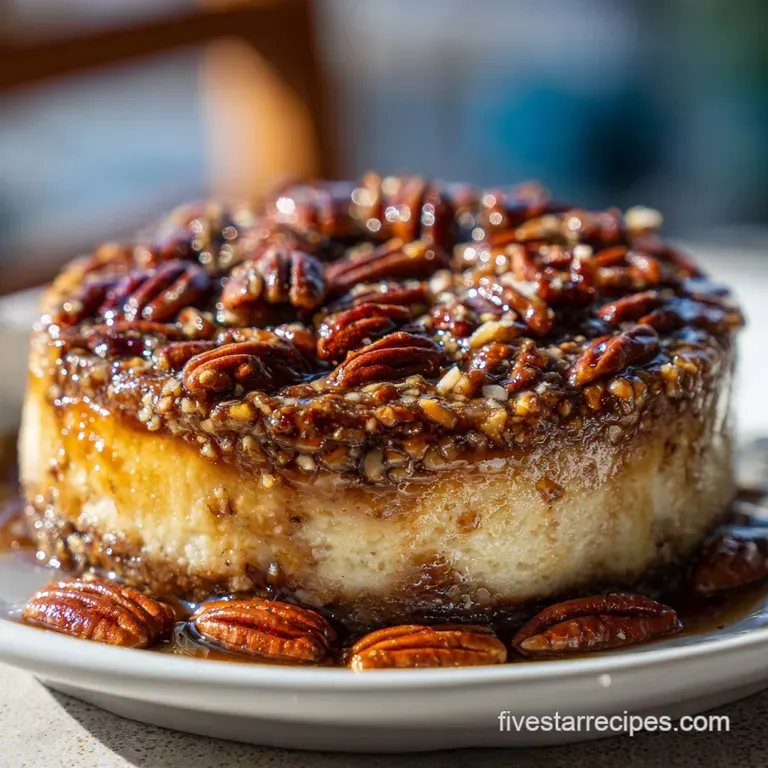
Even the best bakers encounter issues with a layered Pecan Pie Cheesecake. Usually, these problems stem from temperature fluctuations or ingredient preparation. I once forgot to bring my eggs to room temperature, and the batter looked like cottage cheese.
I had to warm the entire bowl over a pot of simmering water to save the emulsion!
1. The Infamous Surface Crack
Surface cracks usually occur because the cheesecake cooled too quickly or the eggs were overbeaten. When air is whipped into the batter, the cake rises like a souffle and then collapses, tearing the surface. A water bath is your best defense here, as it regulates the heat around the pan.
2. Sogginess from the Water Bath
If your crust comes out wet, your foil barrier failed. This is why I suggest using heavy duty aluminum foil and double wrapping the pan. If water does get in, you can sometimes save it by placing the finished cake on a wire rack in a warm oven (turned off) to help the base dry out.
3. Topping That Won't Set
If your caramel is too runny, you likely didn't boil the sugar and butter mixture long enough. It needs to reach a simmer to drive off excess moisture from the cream. Conversely, if it's too hard, you cooked it too long.
| Problem | Root Cause | Solution |
|---|---|---|
| Lumpy Batter | Cold cream cheese | Ensure cheese is soft enough to leave a finger indent before mixing. |
| Grainy Topping | Undissolved sugar | Whisk constantly over medium low heat until no crystals remain on the spoon. |
| Sunken Center | Opening oven door | Keep the door shut! Use the oven light to check the "wobble" instead. |
Common Mistakes Checklist
- ✓ Always use room temperature eggs to maintain the fat in-water emulsion.
- ✓ Don't skip the crust pre bake; it’s the only way to ensure a shattering texture.
- ✓ Tap the filled pan on the counter 5 times to release trapped air bubbles.
- ✓ Use a sharp, warm knife dipped in water for the cleanest slices possible.
- ✓ Avoid the "whipped" cream cheese tubs; the extra air ruins the structural density.
Scaling the Recipe for Different Occasions
When scaling this homemade Pecan Pie Cheesecake, physics plays a large role. If you want to make a half batch for a smaller gathering, you can use a 6 inch pan. You should reduce the bake time by about 20% and use 2 large eggs. For the topping, keep the ratios exactly the same as the math dictates.
For a massive 2x batch, I recommend baking two separate 9 inch cakes rather than one giant one. Large cheesecakes have a "thermal mass" problem where the outside overcooks before the heat can penetrate the center. If you must use a larger pan, lower your oven temperature by 15°C and prepare for a much longer bake time. If you're looking for a simpler way to feed a crowd, my Apple Hand Pies recipe is a great alternative that is already portioned for ten people.
| Servings | Pan Size | Bake Time | Ingredient Adjustments |
|---|---|---|---|
| 6 people | 6 inch Springform | 50 mins | Divide all ingredients by 2; use 2 eggs. |
| 12 people | 9 inch Springform | 75 mins | Use standard recipe as written. |
| 24 people | Two 9 inch Pans | 75 mins | Double all ingredients; bake on separate racks. |
Gourmet Adaptations and Seasonal Twists for Your Table
Once you've mastered the best Pecan Pie Cheesecake recipe, you can start playing with the flavor profile. The "base" is quite versatile, allowing for several sophisticated variations that can suit different palates.
1. Pecan Pie Cheesecake Bars
For a more casual gathering, you can bake this in a rectangular 9x13 pan. The "bars" version is easier to transport and provides a higher crust to filling ratio, which some people prefer for the extra crunch. You'll need to reduce the bake time to about 40 minutes since the batter is spread thinner.
2. Boozy Bourbon Twist
Add 2 tablespoons of high-quality bourbon to the caramel topping. The alcohol burns off, leaving behind notes of oak and vanilla that perfectly complement the toasted pecans. This version is a massive hit at adult dinner parties. If you enjoy the combination of nuts and richness, you might also like the flavors in this Chocolate Peanut Butter recipe.
3. Salted Chocolate Layer
Melt 100g of semi sweet chocolate and spread a thin layer over the cooled crust before adding the cheesecake batter. This creates a hidden "snap" of chocolate when you bite down, mimicking the flavors of a chocolate pecan pie.
Debunking Common Kitchen Misconceptions
There is a persistent myth that you must use a water bath to get a good cheesecake. While it definitely helps with temperature regulation, you can achieve a great result by baking at a very low temperature (around 140°C) for a longer period.
However, for a layered Pecan Pie Cheesecake, the water bath provides the insurance needed for that perfectly flat top.
Another misconception is that the "cracks don't matter because the topping covers them." While true for aesthetics, a crack often indicates that the internal texture has become dry or porous. We want that velvety, dense crumb, which only happens when the cake is handled gently.
Finally, don't believe the lie that you can use low-fat cream cheese. The lack of fat means the protein structure is too weak to support the weight of the pecans, resulting in a cake that slumps when sliced.
Preservation Strategies for Maintaining Optimal Texture and Flavor
Storing your Pecan Pie Cheesecake correctly is the only way to preserve that shattering crust. If you leave it uncovered in the fridge, the crust will absorb the moisture from the air and become soft.
- Storage: Keep the cheesecake in the fridge in an airtight container for up to 5 days. I recommend adding the pecan topping on the day you plan to serve it for the best texture, though it will keep for a few days once assembled.
- Freezing: This cake freezes beautifully without the topping. Wrap the chilled cheesecake base in plastic wrap, then foil. It will stay fresh for up to 3 months. Thaw it overnight in the fridge before adding the fresh caramel pecans.
- Zero Waste: If you have leftover pecan topping, it’s incredible swirled into morning oatmeal or drizzled over vanilla bean ice cream. Don't let those caramelized nuts go to waste!
Elevating the Aesthetic with Precision Garnish Techniques
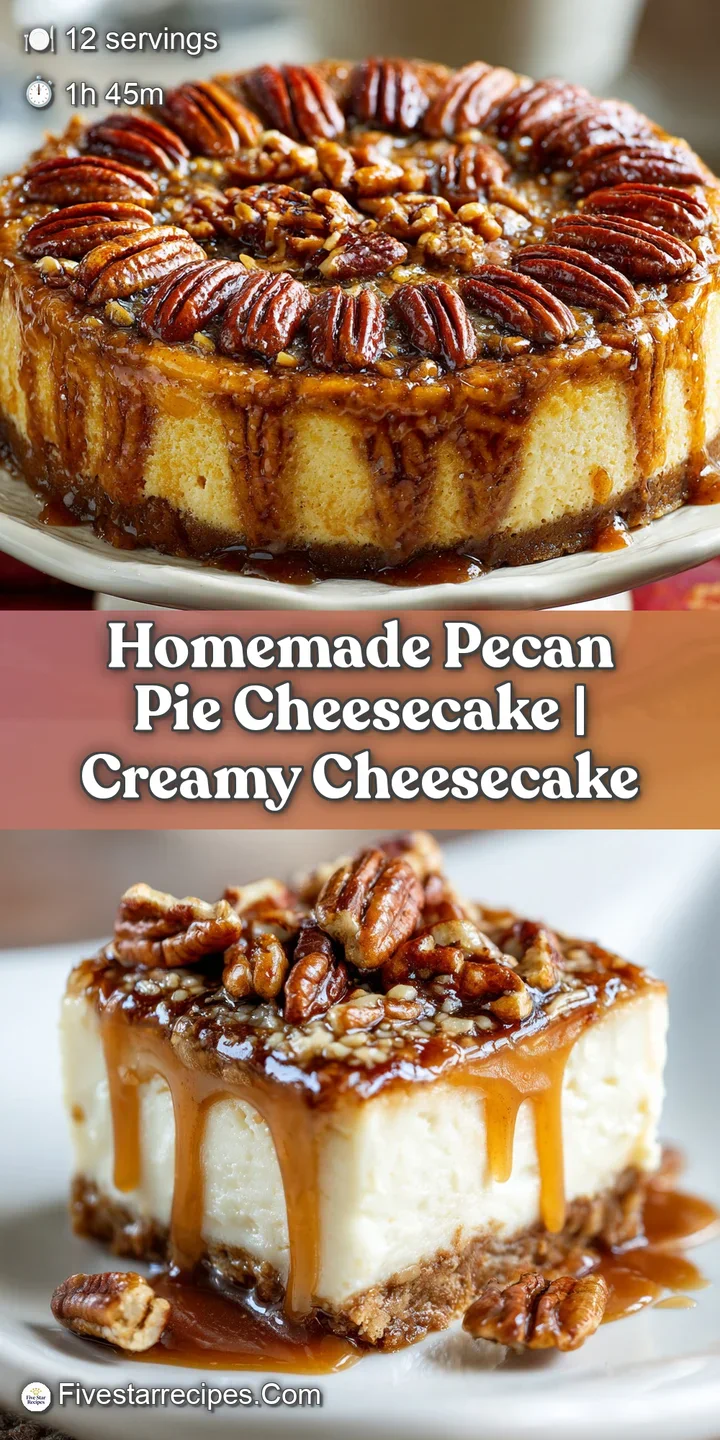
Presentation is where your Pecan Pie Cheesecake transforms from a home cooked treat to a five star showstopper. I like to save a few extra large, perfectly intact pecan halves to place in a ring around the edge of the cake.
It provides a visual cue of what’s inside and looks much more intentional than a random scatter.
A light dusting of flaky sea salt (like Maldon) over the finished caramel topping not only looks beautiful but provides tiny "explosions" of flavor that balance the sugar. For a truly gourmet touch, serve each slice with a small dollop of unsweetened whipped cream. The lack of sugar in the cream allows the richness of the cheesecake and the intensity of the pecans to remain the focus. If you love the look of fruit based desserts as well, you should see how the topping is handled in my Apple Crisp Pie recipe.
When you finally pull that springform ring away and see the clean, white sides of the cheesecake topped with a thick, glistening layer of mahogany pecans, you'll know the precision was worth it.
Every step, from the room temperature eggs to the slow cooling process, contributes to a dessert that is as structurally sound as it is indulgent. Happy baking!
Recipe FAQs
What is the essential chemical barrier to prevent a soggy crust?
The small amount of flour or starch in the graham crumbs absorbs the butter, creating a rigid, waterproof base layer. This barrier physically separates the moist filling from the crust during baking.
How to stop the cheesecake surface from cracking after baking?
Turn off the oven and leave the cheesecake inside with the door cracked for 15 minutes. This controlled, slow reduction in temperature prevents thermal shock, which is the primary cause of surface fissures.
Must I use full fat cream cheese for this recipe?
Yes, absolutely use full fat. Reduced fat versions contain more water, which prevents the essential New York style dense crumb structure from setting properly.
How to achieve a shattering, not chewy, pecan topping texture?
Toast the pecans separately for 10 minutes until they reach a deep nutty aroma before mixing them into the caramel sauce. This unlocks essential oils and removes moisture for maximum crunch.
Is it true that I must use dark brown sugar instead of light brown sugar?
Yes, dark brown sugar is mandatory for authentic flavor. The higher molasses content provides the necessary hygroscopic quality and deep caramel notes that light brown sugar lacks.
How long must the finished cheesecake chill before slicing cleanly?
A minimum of 4 hours is required in the refrigerator. The lipid structure needs this time to fully solidify, ensuring the velvety texture supports the heavy pecan layer when cut.
What is the target temperature for the caramel base before adding cream?
Heat the butter and brown sugar until it reaches exactly 115°C. This specific temperature ensures the caramel creates a semi hard coating for the pecans without becoming brittle.
Pecan Pie Cheesecake Recipe
Ingredients:
Instructions:
Nutrition Facts:
| Calories | 713 kcal |
|---|---|
| Protein | 9.5 g |
| Fat | 57.2 g |
| Carbs | 44.6 g |
| Fiber | 2.1 g |
| Sugar | 38.2 g |
| Sodium | 382 mg |
