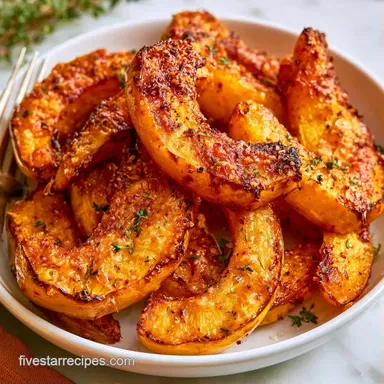
Parmesan Roasted Acorn Squash with Thyme
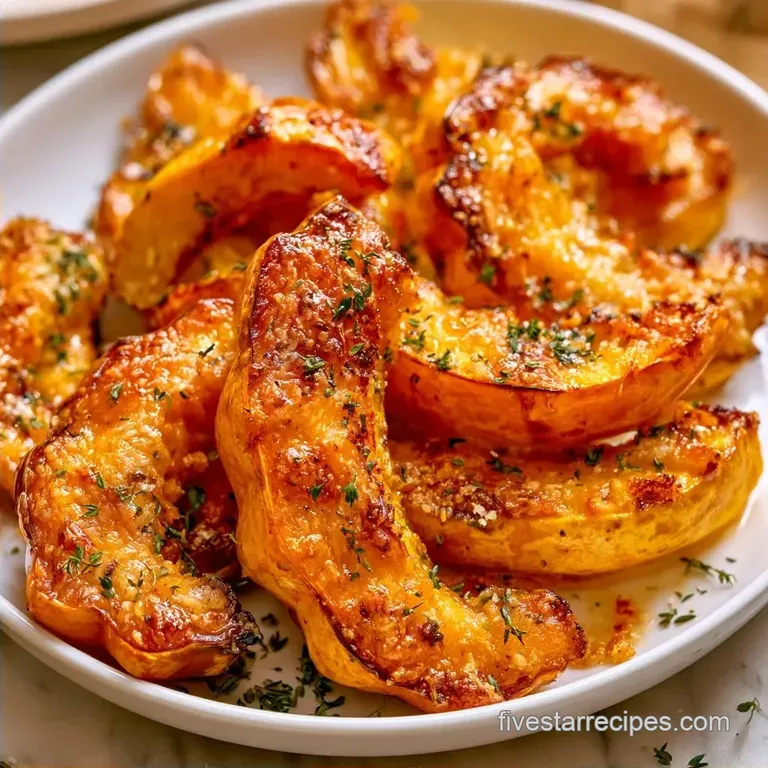
- Time: 10 min active + 25 min roasting
- Flavor/Texture Hook: Salty Parmesan crust with a tender, sweet interior
- Perfect for: Quick weeknight sides or holiday meal prep
The scent of browned cheese and caramelized squash filling the kitchen is incredible. I used to find this dish tricky, frequently ending up with pale, soggy slices that felt more steamed than roasted. My mistake was always the same: overcrowding the pan in a rush to finish.
Once I started giving each piece enough breathing room, the results shifted completely. You get deep mahogany edges that crisp up beautifully, contrasting with a soft, tender middle.
This Parmesan Roasted Acorn Squash is a simple victory for anyone seeking a vibrant, nutrient dense side that doesn't require hours of prep. It's a salty sweet combination that adds a sophisticated, chef like touch to any weeknight dinner.
Parmesan Roasted Acorn Squash Guide
The goal here is a high contrast result. We want the cheese to brown deeply without overcooking the squash to the point of collapse. By keeping the slices at a consistent 1 inch thickness, we ensure they cook evenly across the whole tray.
If you're short on time, the prep is minimal. Most of the work happens in the oven. Just remember to use parchment paper. It stops the cheese from welding itself to your baking sheet, which saves you a scrubbing headache later.
For a different approach to the same vegetable, you might like an Air Fryer Acorn Squash if you want an even faster turnaround. But for that classic, oven browned crust, the roasting method is the way to go.
Why These Techniques Work
- High Heat: 200°C triggers the browning process quickly, ensuring the cheese crisps before the squash turns to mush.
- Air Circulation: Leaving gaps between slices prevents steam from building up, which keeps the edges crisp.
- Skin Retention: Keeping the skin on acts like a natural scaffold, so the wedges don't fall apart during tossing.
| Goal | What to change |
|---|---|
| More Crunch | Increase Parmesan by 10g |
| Softer Texture | Reduce heat to 180°C |
| Faster Cook | Slice wedges to 0.5 inch |
What Each Ingredient Does
| Component | Purpose | Substitute Notes |
|---|---|---|
| Acorn Squash | Sweet, nutty base | Butternut squash: Sweeter, but lacks the natural bowl shape |
| Parmesan | Salty, crisp crust | Pecorino: Saltier and sharper flavor profile |
| Olive Oil | Heat conductor | Melted butter: Richer flavor, but burns faster |
| Dried Thyme | Earthy balance | Dried rosemary: Stronger, piney notes |
The Pantry List
- 1 medium (approx. 900g) acorn squash, seeded and sliced into 1 inch wedges
- 30ml extra virgin olive oil
- 50g grated Parmesan cheese Why this? Provides the salty, crisp crust
- 2g dried thyme
- 2g garlic powder
- 3g kosher salt
- 1g cracked black pepper
The Tool Kit
While you don't need professional equipment, a few key tools will simplify the process. A very sharp knife is essential for slicing through the squash's hardy skin with ease and safety.
A generous mixing bowl is ideal for tossing the wedges, providing enough space to keep the cheese coating intact. To finish, a heavy duty baking sheet and parchment paper are necessary for achieving that perfect mahogany crust.
Step by step Flow
- Preheat the oven to 200°C and line a baking sheet with parchment paper.
- Cut the acorn squash into even 1 inch wedges, leaving the skin on. Note: Keeping them the same size ensures they cook evenly.
- Use a large bowl to toss the squash slices with 30ml olive oil until well coated.
- Add 50g Parmesan, 2g thyme, 2g garlic powder, 3g salt, and 1g pepper.
- Mix again until every slice is thoroughly covered in the cheese mixture.
- Spread the wedges in a single layer on the pan, making sure they aren't touching.
- Roast for 20–25 minutes until the edges turn a deep mahogany color.
- Remove from the oven once the cheese has become a crispy, golden brown crust.
Chef Note: If you notice the cheese browning too rapidly at about 15 minutes, move the oven rack down one level.
Fixing Common Roast Issues
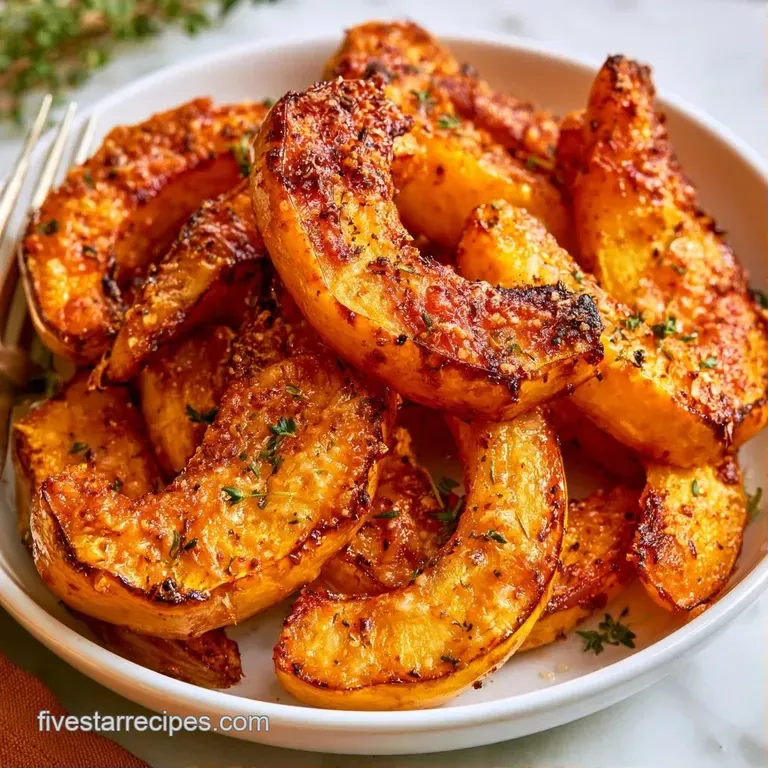
When things go wrong with Parmesan Roasted Acorn Squash, it's usually a matter of moisture or heat. If the slices are pale, your oven might be running cold, or you've crowded the pan.
Burnt cheese is another common hiccup. Since Parmesan has a lower burning point than some other hard cheeses, it can go from golden to black quickly if the oven has "hot spots."
Preventing Soggy Slices
Ensure there is at least a 2cm gap between each wedge. If they touch, they steam instead of roast, leaving you with a soft texture rather than a crisp one.
Fixing Burnt Cheese
If the crust is too dark but the squash is hard, cover the pan loosely with foil for the last 5 minutes. This protects the cheese while the center finishes.
Avoiding Uneven Cooking
Rotate your baking sheet 180 degrees halfway through the 25 minute cook time. This accounts for uneven heat distribution in most home ovens.
| Problem | Root Cause | Solution |
|---|---|---|
| Soggy texture | Overcrowded pan | Increase space between slices |
| Burnt cheese | Oven hot spots | Rotate pan halfway through |
| Hard center | Slices too thick | Keep wedges at exactly 1 inch |
Adjusting the Batch Size
Making a double batch of Parmesan Roasted Acorn Squash requires more than just more squash. You'll need two separate baking sheets. If you try to fit two squashes on one tray, you'll end up with that steaming problem we talked about.
When scaling up, don't double the salt and garlic powder exactly. I find that 1.5x the seasoning is usually enough for a 2x batch to avoid it becoming overly salty.
For a smaller batch, use a smaller rimmed baking sheet to keep the oil from spreading too thin. Reduce the roasting time by about 5 minutes since there's less mass in the oven.
Squash Misconceptions
Some people think you have to peel acorn squash. You don't. The skin is edible and holds the wedge together, which is vital for this specific roast.
Another myth is that you need to parboil squash to save time. This actually ruins the recipe. Adding extra moisture before roasting makes it impossible to get that crisp Parmesan crust.
Storing Your Leftovers
Store any leftovers in a sealed container and keep them chilled for as long as 4 days. While the cheese may lose its crispness, the taste stays delicious.
Avoid using a microwave to reheat, as this results in a rubbery texture. To restore the crunch, heat the slices in a toaster oven or standard oven at 200°C for 5 minutes.
To minimize waste, save the seeds. Once cleaned and coated with a touch of salt and remaining oil, roast them at 180°C for 10 minutes for a healthy, nutrient rich treat.
Changing the Flavor
To customize the flavors of this Parmesan Roasted Acorn Squash, consider adding a pinch of smoked paprika to the seasoning for a woodsy depth. For those who prefer a spicy kick, a dash of cayenne pepper works perfectly.
You can also replace the thyme with sage, a classic autumnal pairing for squash. Stick with dried herbs, as fresh alternatives can burn more easily at 200°C.
For a dairy-free alternative, substitute the Parmesan with nutritional yeast. It delivers a similar salty, nutty punch and browns quite well, although the texture is slightly less "shattering."
Serving and Pairing
This side dish is a real standout, though it pairs best with a protein to offset the sweetness. Roast chicken or seared pork chops are excellent choices. For a more filling spread, serve it alongside this Acorn Squash for 4 recipe to lean into a full squash celebration.
To provide a refreshing counterpoint, serve the hot wedges with a tangy mixed green salad. The citrusy brightness cuts right through the decadence of the roasted cheese.
When plating, lean the wedges against each other to create some elevation. A garnish of fresh parsley adds a vibrant green contrast to the dark, mahogany edges.
Recipe FAQs
How do you roast acorn squash with Parmesan cheese?
Toss 1 inch wedges with olive oil, Parmesan, thyme, garlic powder, salt, and pepper before roasting.
Tip: Use parchment paper to prevent the cheese from sticking to the pan.
At what temperature should you roast acorn squash?
Roast at 400°F (200°C).
Tip: Ensure the oven is fully preheated for an immediate sear.
Is it true that you must peel acorn squash before roasting?
Actually, the skin is completely edible and helps ensure the wedges keep their shape.
Tip: Thoroughly scrub the exterior before slicing to remove any dirt.
Which spices pair best with roasted acorn squash?
Dried thyme and garlic powder provide a savory balance to the natural sweetness.
Tip: Add extra cracked black pepper for a bit of heat.
Why does my squash come out soft instead of crisp?
Crowding the pan causes the vegetables to steam rather than roast.
Tip: Keep a gap between each slice to allow hot air to circulate.
What is the best way to serve this side dish?
Serve these wedges warm alongside a protein or as part of a vegetable platter.
Tip: If you enjoy assembling a classic platter, these roasted slices make a great warm addition.
Parmesan Roasted Acorn Squash