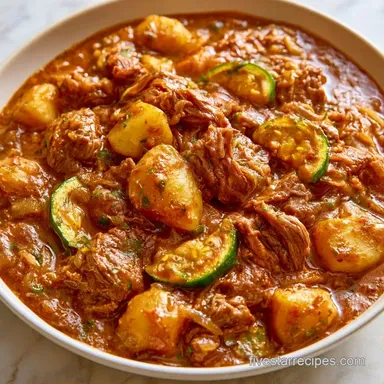
Doenjang Jjigae

- Time: 10 min active + 15 min cooking + 3 min rest
- Flavor & Texture: Earthy, salty, and rich
- Perfect for: Weeknight dinner
Savory Soybean Paste Stew
The smell of fermented soybeans and garlic bubbling in a heavy pot is pure comfort. It is a warm, savory bowl that hits all the right notes when you need something grounding.
Many people think you need hours of simmering or a long list of rare dried seafood to get that deep, restaurant-style flavor. In reality, the starchy water from rinsing your rice does the heavy lifting for you.
This soybean paste stew is a staple for a reason. It balances the funk of the paste with fresh zucchini and tender beef, making it a satisfying meal that doesn't take all night to prepare.
Why the Broth Thickens
- Rice Water: The starch in the water helps the broth cling to the vegetables and gives the soup a richer body than plain water.
- Staggered Cooking: Adding the potatoes early and the zucchini late helps everything cook through without turning into a mushy puree.
What Each Ingredient Does
| Ingredient | What It Does | Best Swap |
|---|---|---|
| Doenjang | Provides the fermented, salty base | Miso (approximate, start with less) |
| Rice Water | Adds body and carries flavor | Plain water (thinner result) |
| Gochugaru | Adds a smoky, mild heat | Paprika and a pinch of cayenne (approximate) |
| Beef Sirloin | Adds richness and protein | Firm tofu or mushrooms (for vegetarian) |
Ingredients and Swaps
- 2 cups (480ml) rice water Why this? Natural starch thickens the broth.
- 2 tbsp (30g) reduced-sodium doenjang Why this? Primary source of umami and salt.
- 1 tsp (5g) minced garlic
- 1 tsp (5g) gochugaru Why this? Essential Korean chili flakes for color and heat.
- 4 oz (115g) beef sirloin, thinly sliced
- 1/2 cup (60g) potato, cubed small
- 1/4 cup (40g) onion, diced
- 1 cup (150g) zucchini, halved and sliced
- 5 oz (140g) firm tofu, cubed
- 2 stalks (15g) green onion, chopped
- 1/2 cup (30g) shiitake mushrooms, sliced
From Prep to Plate
1. Preparing the Base
Bring rice water to a gentle simmer over medium heat in a ttukbaegi or heavy-bottomed pot. To ensure a smooth broth without salty lumps, dissolve 2 tbsp (30g) reduced-sodium doenjang by submerging it in the water using a small fine-mesh strainer.

2. Adding the Hearty Ingredients
Stir in 4 oz (115g) sliced beef sirloin, 1/2 cup (60g) cubed potatoes, and 1/4 cup (40g) diced onions. Raise the heat slightly and simmer for 5 to 7 minutes, cooking until the potatoes are fork-tender and the beef is rich brown. Ensure the meat reaches 145°F (63°C) at its core.
Allow the beef to rest for 3 minutes to maintain tenderness.
3. Adding the Finishing Vegetables
Mix in 1 tsp (5g) gochugaru, 1 tsp (5g) minced garlic, and 1/2 cup (30g) sliced shiitake mushrooms. Incorporate the 1 cup (150g) sliced zucchini and 5 oz (140g) cubed tofu, simmering for another 3 to 5 minutes until the zucchini is translucent but still holds its shape.

4. The Final Touch
Remove the pot from the heat. Stir in 2 stalks (15g) chopped green onions, allowing the remaining heat to soften them slightly. This ensures the greens stay vibrant.
If Something Goes Wrong
If your soybean paste stew feels off, it is usually a simple fix with the seasoning.
Too Salty
Fermented pastes vary in saltiness. If it is too strong, don't just add water, as that dilutes the richness. Instead, toss in an extra cube of potato to absorb some of the salt.
Broth Too Thin
If the soup looks more like a tea than a stew, simmer it for another 3 minutes without a lid. This reduces the liquid and concentrates the flavors.
Mushy Vegetables
This happens if the zucchini or tofu boils too long. Always add your softer vegetables in the last few minutes of cooking.
| Problem | Fix |
|---|---|
| Overly salty broth | Add more potato cubes |
| Thin consistency | Simmer uncovered for 3 mins |
| Mushy zucchini | Reduce final simmer time |
Different Flavor Profiles
If you want a version without meat, this works great as a doenjang jjigae vegetarian option. Just swap the beef for extra shiitake mushrooms or sliced king oyster mushrooms for a similar chew.
For those who like a bit more heat, you can increase the gochugaru or add a few sliced Thai chilies. If you want something with a sharper, fermented kick, try this Korean Kimchi Stew.
An authentic soybean paste stew often uses different proteins. You can use clams or shrimp for a seafood version, but keep in mind that seafood cooks much faster than beef, so add them in the final step with the zucchini.
Keeping It Fresh
Store any leftovers in an airtight container in the fridge for up to 3 days. When you're ready to eat it again, gently warm it on the stovetop over medium-low heat until it is steaming and reaches 165°F (74°C) throughout.
If the broth has thickened too much in the fridge, just stir in 2 tbsp (30ml) of water to loosen it up.
I don't recommend freezing this. The tofu becomes spongy and the zucchini loses its structure, leaving you with a weird texture upon thawing.
To avoid waste, you can use the veggie scraps from your zucchini and onion prep to make a quick stock, which you can then use as the base for your next batch of stew.
Great Side Pairings

This stew is heavy on umami, so it needs something neutral to balance it out. A bowl of steamed white rice is the classic choice.
I also like serving it with a side of fresh kimchi or a simple plate of steamed eggs. The mildness of the eggs cuts through the saltiness of the paste, making the whole meal feel balanced. If you have some toasted seaweed sheets, those are great for wrapping small bites of the tofu and beef.
Questions Readers Ask
Is doenjang the same as miso paste?
No, though they are similar. Doenjang is typically saltier and has a more pungent, fermented aroma than Japanese miso.
Why is doenjang stew considered healthy?
It is rich in probiotics and nutrients. The fermented soybean paste supports gut health, while the beef and tofu provide a balanced source of protein.
What are the ingredients for doenjang jjigae?
The base uses rice water and doenjang. Other essential components include beef sirloin, tofu, zucchini, potato, onion, shiitake mushrooms, gochugaru, garlic, and green onions.
How to make doenjang jjigae?
Simmer rice water and dissolved doenjang in a pot. Add beef, potatoes, and onions first, then stir in gochugaru, garlic, mushrooms, zucchini, and tofu before finishing with green onions.
Doenjang Jjigae