Berry French Toast Casserole: Baked with Cream Cheese
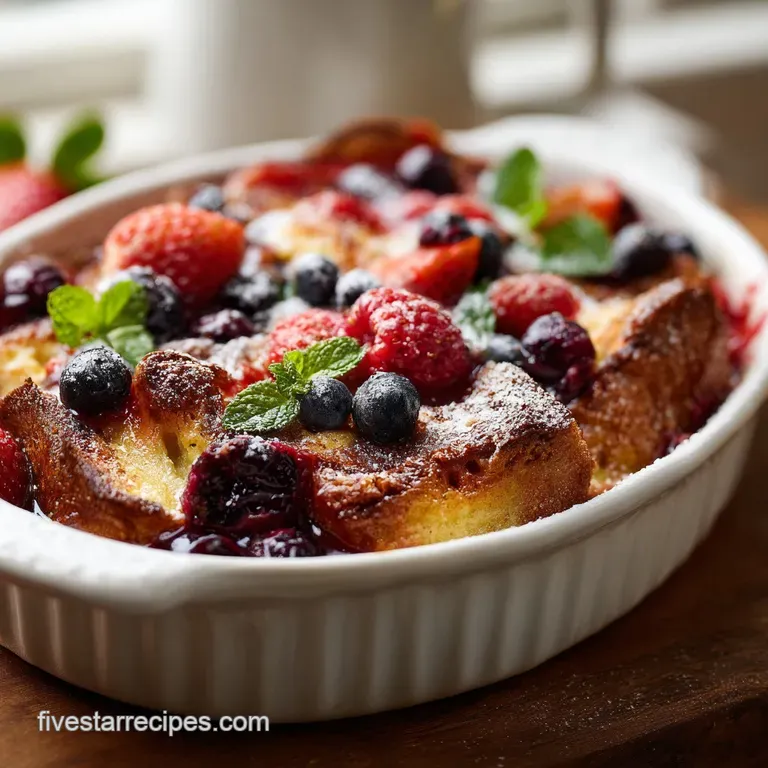
- Time:15 minutes active + 4 hours 50 mins resting and baking = Total 5 hours 5 mins
- Flavor/Texture Hook: Velvety custard center with a gold, crunch heavy topping and tart berry bursts.
- Perfect for: Holiday mornings, elegant brunch hosting, or stress free family breakfasts.
- Elegant Berry French Toast Casserole for Special Brunch
- Recipe Specifications and Performance Benchmarks
- The Building Blocks of Flavor and Texture
- Equipment Needed for Professional Results
- Bringing It Together with Precision
- Pro Tips and Avoiding Pitfalls
- Dietary Adaptations and Scaling Secrets
- How to Store and Keep Fresh
- How to Serve and Enjoy
- Recipe FAQs
- 📝 Recipe Card
Elegant Berry French Toast Casserole for Special Brunch
The kitchen is completely silent at 6:30 AM, save for the soft hum of the refrigerator and the distant chirp of a morning bird. I pull the heavy ceramic dish from the chill, and even through the foil, the scent of cinnamon and vanilla hits me.
It is that specific, comforting aroma of a plan coming together while you slept. There is no frantic whisking, no flour on the countertops, and certainly no standing over a hot griddle flipping individual slices while everyone else enjoys their coffee.
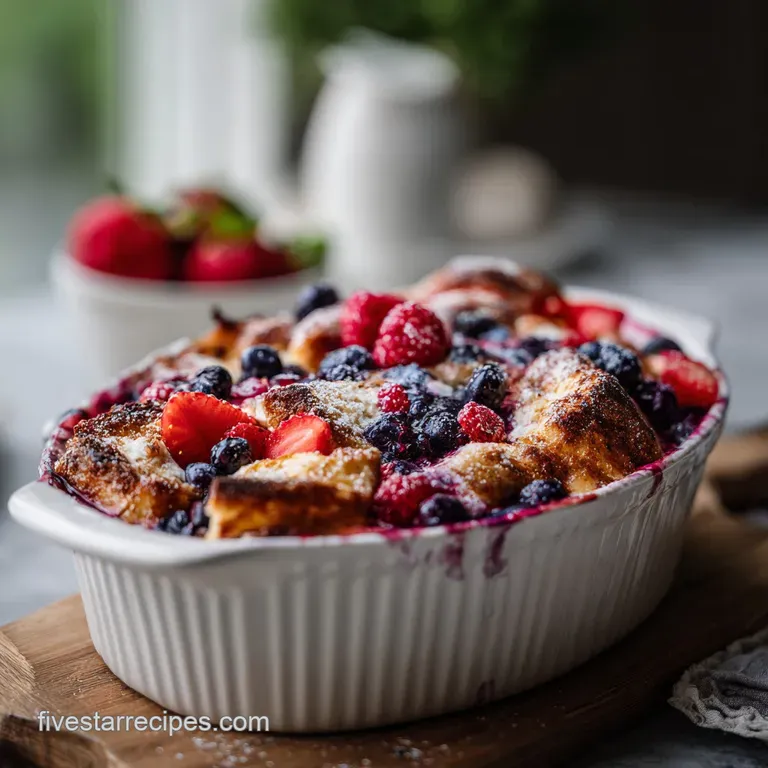
When this dish hits the oven, the air transforms. The berries begin to soften and bleed their deep violets and crimsons into the golden brioche, while the cold cubes of unsalted butter in the topping begin to sizzle and melt into the brown sugar.
It creates this magnificent, bubbly architectural wonder that puffs up high before settling into a dense, decadent bread pudding texture. You aren't just making breakfast; you are orchestrating a morning experience that feels far more difficult than it actually is.
The beauty of this specific method lies in the contrast. Most casseroles are one note just soft bread and liquid. By using chilled cream cheese and a high fat custard base, we achieve a texture that mimics a gourmet cheesecake crossed with a traditional French toast.
We are going for something that feels intentional and structured, not just a soggy pan of leftovers. Trust me, once you see those berries "shatter" their skins and release that glossy juice, you will never go back to the basic version.
Recipe Specifications and Performance Benchmarks
Starch Saturation: The brioche acts like a porous sponge. Because we use a 1 lb loaf cut into specific 1 inch cubes, the surface area is maximized, allowing the custard to travel to the very center of each piece during the 4 hours of chilling.
Fat Stabilization: Using both whole milk and heavy cream creates a high fat environment that prevents the eggs from curdling or becoming "rubbery." The fat coats the protein strands in the eggs, ensuring the final result is silky and velvety rather than eggy or sulfurous.
Moisture Barrier: The 6 oz of chilled cream cheese acts as a structural "glue" and a flavor barrier. As it bakes, it doesn't fully melt into the custard; instead, it stays in soft, tangy clumps that provide a much needed break from the sweetness of the maple syrup.
The Cold Start Topping: Keeping the 1/2 cup of unsalted butter cold is the secret to the crunch. When cold fat hits a hot oven, the water inside the butter evaporates instantly, creating tiny steam pockets that leave behind a flaky, crisp crust.
| Thickness | Internal Temp | Rest Time | Visual Cue |
|---|---|---|---|
| 2.5 inches | 165°F | 10 mins | Center doesn't jiggle when shaken |
| 3 inches | 170°F | 15 mins | Top is deep mahogany gold |
| 2 inches | 160°F | 5 mins | Berries are bubbling at the edges |
Choosing the right method for your morning schedule is vital. While a quick soak version exists for emergencies, the classic overnight approach produces a vastly superior crumb structure.
When you allow the bread to sit in the liquid for the full 4 hours (or overnight), the proteins in the flour have time to relax, resulting in a melt in-the mouth consistency that a 30 minute soak simply cannot replicate.
| Method | Time | Texture | Best For |
|---|---|---|---|
| Overnight Soak | 5 hours 5 mins | Dense, custardy, pudding like | Formal brunch and holidays |
| Quick Soak | 1 hour 15 mins | More bready, firmer bite | Spontaneous weekend mornings |
| Slow Cooker | 4 hours | Soft, moist, no crisp top | Keeping warm for a crowd |
The Building Blocks of Flavor and Texture
Success in baking often comes down to the quality of your primary elements. For this Berry French Toast Casserole, the bread is the foundation. I always reach for a 1 lb brioche loaf because its high egg and butter content gives it a natural richness.
If you use a standard white sandwich bread, the casserole will likely collapse and become unpleasantly mushy. Brioche has the structural integrity to stand up to the heavy custard.
| Component | Science Role | Pro Secret |
|---|---|---|
| Brioche Bread | Structural Matrix | Use bread that feels slightly stale to maximize liquid absorption. |
| Large Eggs | Protein Binder | Whisk until no streaks remain to prevent "fried egg" bits in the bake. |
| Heavy Cream | Emulsion Stabilizer | High fat prevents the custard from "weeping" moisture after cooling. |
| Mixed Berries | Acidic Contrast | Use a mix of tart raspberries and sweet blueberries for flavor depth. |
The berries aren't just for color; they provide the necessary acidity to cut through the 28.4 g of fat per serving. I find that a combination of blueberries, raspberries, and blackberries works best. The raspberries tend to break down and create a sauce like consistency, while the blueberries stay whole and "pop" when you bite into them. If you are looking for a different profile, you might enjoy my Blueberry French Toast Casserole Recipe which focuses purely on that single fruit intensity.
- 1 lb brioche bread: Cut into 1 inch cubes. Why this? High fat content ensures a rich, buttery crumb that won't disintegrate. (Substitute: Challah)
- 2 cups mixed berries: Blueberries, raspberries, blackberries. Why this? Provides natural sweetness and essential acidity. (Substitute: Frozen mixed berries)
- 6 oz cream cheese: Chilled and cubed. Why this? Creates tangy pockets of texture throughout the dish. (Substitute: Neufchâtel)
- 1 tbsp lemon zest: Freshly grated. Why this? Brightens the heavy fats and enhances the fruit notes. (Substitute: Orange zest)
- 2 cups whole milk: Room temperature. Why this? The base hydration for our custard. (Substitute: Oat milk)
- 1 cup heavy cream: For richness. Why this? Provides the velvety mouthfeel characteristic of gourmet bakes. (Substitute: Half and half)
- 6 large eggs: The glue. Why this? Sets the casserole and provides structure. (Substitute: 1.5 cups liquid egg substitute)
- 1/2 cup pure maple syrup: For sweetening. Why this? Adds complex woodsy notes unlike plain white sugar. (Substitute: Honey)
- 2 tsp vanilla extract: Flavor enhancer. Why this? Bridges the gap between the fruit and the custard. (Substitute: Almond extract)
- 1 tsp ground cinnamon: For warmth. Why this? The classic aromatic for any French toast dish. (Substitute: Pumpkin pie spice)
- 1/4 tsp sea salt: To balance. Why this? Heightens all other flavors and prevents cloying sweetness. (Substitute: Kosher salt)
- 1/2 cup all purpose flour: For the topping. Why this? Provides the bulk for the streusel crunch. (Substitute: GF all purpose blend)
- 1/2 cup light brown sugar: Packed. Why this? Molasses notes create a deep caramelization on top. (Substitute: Coconut sugar)
- 1/2 cup unsalted butter: Cold and cubed. Why this? Essential for a flaky, "shatter" texture in the crust. (Substitute: Cold coconut oil)
Equipment Needed for Professional Results
You don't need a professional kitchen to master this, but a few specific tools make the process much smoother. A 9x13 inch ceramic or glass baking dish is non negotiable. Ceramic is my preference as it holds heat more evenly, which helps the center of the casserole cook at the same rate as the edges.
If you use a dark metal pan, you risk burning the bottom before the custard has fully set.
A sturdy pastry cutter is also a lifesaver for the streusel. You want to work quickly to ensure the butter stays cold. If you don't have one, two forks will work, but try to avoid using your hands as the warmth from your fingers will melt the butter, resulting in a greasy topping rather than a crumbly one.
Finally, a microplane for that lemon zest is essential. You want tiny, fine wisps of zest that distribute evenly, not large chunks of bitter peel.
Chef's Tip: To get the cleanest cubes of brioche, use a serrated bread knife and a light sawing motion. If you press down too hard with a chef's knife, you'll crush the air pockets, making the bread less effective at soaking up the custard.
Bringing It Together with Precision
- Prepare the vessel. Grease a 9x13 inch baking dish generously with butter. Layer half of the bread cubes in the dish, followed by half of the berries and half of the cream cheese cubes. Repeat with the remaining bread, berries, and cream cheese. Note: Layering ensures every bite has fruit and tang.
- Whisk the custard. In a large mixing bowl, whisk together the eggs, milk, heavy cream, maple syrup, vanilla, cinnamon, and salt until well combined and smooth. Whisk until no streaks of egg white remain.
- Initiate the soak. Pour the custard mixture evenly over the bread layers. Cover the dish tightly with foil and refrigerate for at least 4 hours, or preferably overnight. Note: This is the most critical stage for texture development.
- Prep the oven. When ready to bake, preheat the oven to 350°F (175°C). In a small bowl, combine flour, brown sugar, and cold butter using a pastry cutter until coarse crumbs form.
- The final assembly. Remove the foil and sprinkle the streusel topping over the soaked bread. Ensure the edges are well covered as they tend to crisp the best.
- Bake to perfection. Bake for 45–50 minutes until the center is set and the top is golden brown and puffed.
- The jiggle test. Give the pan a gentle shake; the center should have a slight, firm wobble but should not look liquid or sloshy.
- Rest before serving. Let the casserole sit for at least 10 minutes. Note: This allows the steam to redistribute and the custard to fully firm up.
Pro Tips and Avoiding Pitfalls
The most common issue people face is a "soggy" center. This usually happens for one of two reasons: the bread wasn't dry enough, or the oven temperature was inconsistent. If your bread is very fresh, I recommend tossing the cubes on a baking sheet and drying them in a 300°F oven for 10 minutes before assembling.
This creates more "room" in the bread's structure for the custard to move in.
Why Your Casserole is Soggy
A soggy middle is often the result of rushing the bake or using a dish that is too deep. When the heat can't reach the center efficiently, the eggs don't coagulate properly. Always ensure you are using a 9x13 dish; if you use a smaller, deeper pan, you must increase the bake time by at least 15 minutes and cover the top with foil halfway through to prevent burning.
| Problem | Root Cause | Solution |
|---|---|---|
| Liquid at bottom | Underbaked or insufficient soak time | Bake 10 mins longer; ensure 4 hour minimum chill. |
| Topping is greasy | Butter was too warm when mixing | Use butter straight from the fridge; chill streusel before adding. |
| Bread is dry/tough | Not enough custard or wrong bread type | Ensure all cubes are submerged; use high fat Brioche/Challah. |
Common Mistakes Checklist
- ✓ Always use cold butter for the streusel to ensure a "shatter" texture.
- ✓ Never skip the salt; it is the only thing balancing the 24.5 g of sugar.
- ✓ Pat your berries dry after washing to prevent excess purple liquid from "bleeding" into the bread.
- ✓ Preheat your oven for at least 20 minutes to ensure a steady 350°F environment.
- ✓ Let the casserole rest for 10 minutes after baking; cutting it too soon will cause the custard to collapse.
Dietary Adaptations and Scaling Secrets
If you are cooking for a larger crowd, doubling this recipe is straightforward, but you must use two separate 9x13 dishes rather than one giant one. Casseroles rely on surface area for even cooking.
If you try to bake a double batch in a deep hotel pan, the edges will be overdone and rubbery before the center even begins to set.
Scaling for the Occasion
When scaling up, you don't necessarily need to double the spices. Use 1.5x the cinnamon and vanilla to avoid overpowering the delicate flavor of the berries. For a smaller family of four, you can easily halve the ingredients and use an 8x8 inch square baking dish.
Reduce the bake time by about 20%, starting to check for doneness at the 35 minutes mark.
Flavor and Diet Swaps
- dairy-free: Use full fat coconut milk instead of heavy cream and a high-quality vegan butter substitute for the topping. The coconut adds a lovely tropical note that pairs perfectly with the berries.
- gluten-free: Replace the brioche with a sturdy gluten-free loaf. Since GF bread is often denser, increase the milk by 1/4 cup to ensure it doesn't end up too dry.
- Decadent Drizzle: For an extra layer of indulgence, a small dollop of Vanilla Buttercream Frosting melted slightly and drizzled over the top serves as a gourmet "glaze" that replaces standard maple syrup.
How to Store and Keep Fresh
Leftovers of this Berry French Toast Casserole are a rare sight in my house, but they actually keep remarkably well. Store any remaining portions in an airtight container in the refrigerator for up to 3 days.
When reheating, avoid the microwave if possible, as it will turn the once crispy streusel into a soft, damp mess. Instead, pop a slice into the toaster oven or a 350°F conventional oven for 10 minutes until the edges sizzle again.
For long term storage, you can freeze the baked casserole. Wrap individual slices in plastic wrap and then foil, and they will stay fresh for up to 2 months. To serve from frozen, thaw in the fridge overnight and reheat as directed above.
To reduce waste, save any leftover brioche crusts or scraps and pulse them in a food blender to make sweet breadcrumbs for future dessert toppings!
How to Serve and Enjoy
Presentation is where this dish truly ascends to gourmet status. I follow a strict "rule of three" for color balance. To contrast the deep purples of the berries and the golden brown of the crust, I always add a heavy dusting of "snow" (powdered sugar), a few sprigs of "mint green" for freshness, and a final scattering of "fresh gold" in the form of extra lemon zest or a light drizzle of honey.
The Perfect Brunch Pairing
This dish is quite rich, so I like to serve it alongside something savory and bright. A side of thick cut, salty bacon or a light arugula salad with a lemon vinaigrette provides a necessary counterpoint to the sweet, custardy interior. If you're looking for another crowd pleaser to add to the table, my Cottage Cheese Lasagna is a fantastic savory partner for a large brunch spread.
Debunking Kitchen Myths
One of the biggest misconceptions is that you should use "fresh" bread for French toast. In reality, fresh bread is too full of moisture to absorb the custard properly. It's like trying to soak up a spill with a wet sponge.
You want "stale" or dry bread because the dehydration creates empty microscopic "rooms" within the crumb that the custard can then occupy. Another myth is that more eggs make it better.
Over egging results in a sulfurous smell and a rubbery texture; the ratio of 6 large eggs to 3 cups of liquid is the golden standard for a silky finish.

Recipe FAQs
What are common mistakes when making French toast casserole?
Failing to pat berries dry is a frequent error. Excess water on the berries can cause them to bleed into the bread, making the dish look messy instead of vibrant.
How to prevent soggy French toast casserole?
Ensure you let the dish rest for 10 minutes after removing it from the oven. Cutting into the casserole too soon causes the custard to collapse, leading to a mushy texture rather than a set, golden bake.
Should French toast casserole be cooked covered or uncovered?
Bake the dish uncovered. You need the direct heat of the oven to properly brown the streusel topping and cook the center through to the required golden brown finish.
What is the best bread for French toast casserole?
Brioche is the superior choice for this recipe. Its high butter and egg content provides a rich, sturdy structure that absorbs the custard without falling apart.
Is it necessary to preheat the oven for the full 20 minutes?
Yes, this is essential for a steady 350°F environment. Proper preheating ensures the custard sets evenly and the streusel topping bakes to the correct consistency.
How to achieve the perfect streusel texture?
Use cold butter and a pastry cutter to create coarse, sandy crumbs. If you enjoyed mastering this technique, you can apply similar logic to our classic panna cotta to ensure consistent texture throughout your dessert preparations.
Can I skip the salt in the custard?
No, never skip the salt. It is the only component that balances the sweetness of the maple syrup and brown sugar, preventing the dish from tasting one-dimensionally sugary.
Berry French Toast Casserole
Ingredients:
Instructions:
Nutrition Facts:
| Calories | 462 kcal |
|---|---|
| Protein | 11.2 g |
| Fat | 28.4 g |
| Carbs | 42.1 g |
| Fiber | 2.1 g |
| Sugar | 24.5 g |
| Sodium | 315 mg |
