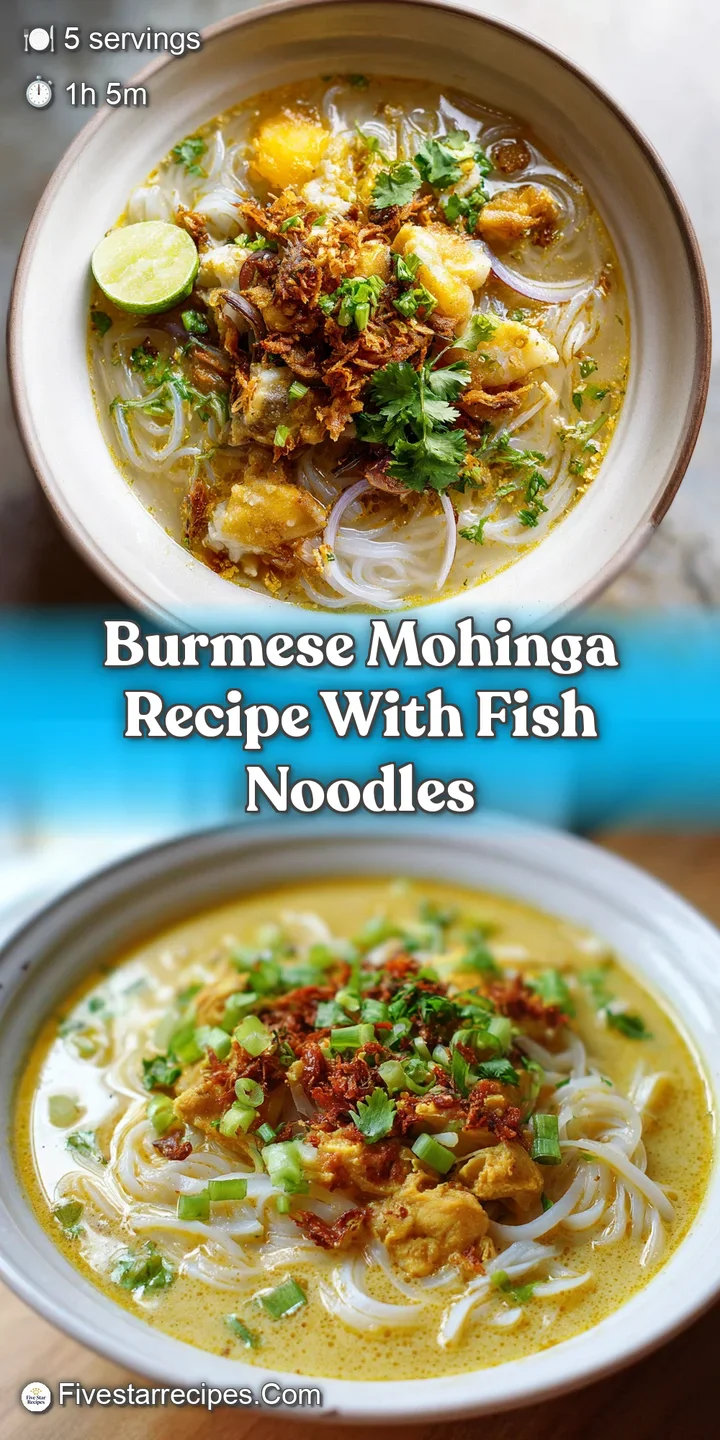
Burmese Food Recipe Mohinga with Fish and Rice Noodles
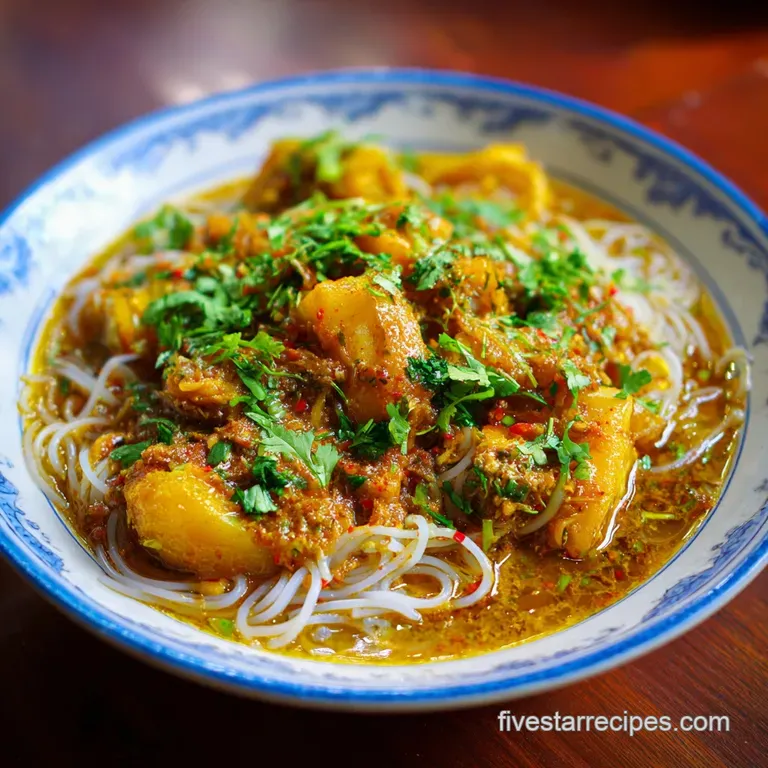
- Time: Active 20 minutes, Passive 45 minutes, Total 1 hour 5 minutes
- Flavor/Texture Hook: Umami rich and velvety
- Perfect for: Elegant weekend brunches or a sophisticated cultural dinner party
- Experience the Soul of Yangon with This Burmese Food Recipe Mohinga with Fish and Rice Noodles
- Mastering Timing for Your Sophisticated Dinner Gathering
- The Component Analysis of an Umami Masterpiece
- Curated Tools for a Flawless Broth
- The Choreography of a Balanced Fish Stew
- Precision Fixes for Common Culinary Hurdles
- Adapting Flavors Without Compromising Tradition
- Preserving the Integrity of Your Broth
- Artful Presentation for an Occasion Ready Meal
- High in Sodium
- Recipe FAQs
- 📝 Recipe Card
Experience the Soul of Yangon with This Burmese Food Recipe Mohinga with Fish and Rice Noodles
The sizzle of minced lemongrass hitting a hot pan is my favorite culinary alarm clock. I remember the first time I attempted this Burmese Food Recipe Mohinga with Fish and Rice Noodles in my own kitchen; the aroma was so intoxicating it drifted out the window, drawing a neighbor to my door wondering if I'd opened a private bistro.
It’s a dish that demands respect but rewards you with a complexity that few other soups can match. We aren't just making a soup; we're crafting a centerpiece that feels like a special occasion in every spoonful.
Forget the watered down versions you might find in a hurried cafe. This is about the velvety texture of the broth and the specific "snap" of the rice vermicelli. I’ve spent years tweaking the ratio of chickpea flour to rice powder to ensure the liquid gold base has enough body to coat a spoon without feeling heavy.
Trust me, once you see those whole shallots softening in the turmeric stained broth, you'll realize this isn't just breakfast in Myanmar it's a masterclass in balance.
Toasting for Structural Integrity
Starch Gelatinization Control: Toasting the chickpea flour and rice powder before hydrating them denatures specific proteins, which prevents the broth from becoming unpleasantly gluey while providing a toasted, nutty aromatic profile.
This ensures a velvety mouthfeel that stays fluid rather than setting like a thick gravy.
Chef's Tip: Freeze your shrimp paste for 10 minutes before measuring; it makes it much easier to scrape off the spoon and into the pan without the sticky mess.
Chef's Tip: Griddle your banana stem slices in a dry pan for 2 minutes before adding them to the soup to lock in their crunch and prevent them from turning grey.
Mastering Timing for Your Sophisticated Dinner Gathering
When you are preparing this for guests, timing is everything to ensure the noodles don't lose their integrity. Mohinga is remarkably stable, making it ideal for hosting, provided you follow these specific checkpoints for the catfish and broth consistency.
| Thickness of Fish | Internal Temp | Rest Time | Visual Cue |
|---|---|---|---|
| 0.5 inch fillet | 145°F | 2 minutes | Opaque and flakes with a fork |
| 1.0 inch fillet | 145°F | 4 minutes | Center is firm and white |
| Shredded in Broth | N/A | 5 minutes | Fish melds into the base |
The beauty of this dish lies in the assembly. You can have the aromatic broth simmering on the stove while you prepare the garnishes, creating a ritualistic serving experience for your diners. Much like the preparation for a Slow Cooker Beef recipe, the depth of flavor only improves if the base is allowed to mature for a few hours before the final assembly.
The Component Analysis of an Umami Masterpiece
Selecting the right elements for your Burmese Food Recipe Mohinga with Fish and Rice Noodles is what separates a home cook from a master of the craft. Every ingredient serves a structural or aromatic purpose.
| Ingredient | Science Role | Pro Secret |
|---|---|---|
| 1 lb Catfish Fillets | Lean Protein Base | Poach in turmeric water to neutralize "muddy" notes |
| 0.5 cup Chickpea Flour | Primary Thickener | Sift after toasting to avoid stubborn lumps in the broth |
| 3 stalks Lemongrass | Aromatic Top Note | Use only the tender white cores for maximum oil release |
| 1 tsp Shrimp Paste | Fermented Depth | Sauté directly in the oil to mellow the pungent aroma |
If you cannot find catfish, a firm white fish like tilapia or snapper provides a similar texture. If you're looking for a different coastal vibe for another night, you might enjoy the textures in a Crispy Coconut Shrimp recipe. The key is maintaining that balance between the earthiness of the turmeric and the saltiness of the 3 tbsp fish sauce.
Curated Tools for a Flawless Broth
To achieve the silkiness required for an authentic Burmese food recipe, your equipment must be up to the task. A heavy bottomed Dutch oven, such as a Le Creuset, is essential for maintaining a steady simmer without scorching the chickpea flour.
You'll also need a fine mesh sieve to ensure your rice powder and chickpea flour integrate into the 1.5 liters of water seamlessly.
A high-quality microplane for the 2 inch piece of ginger and a sharp chef's knife for the 3 stalks of lemongrass will make the prep work fly by. Don't underestimate the power of a good whisk; it’s your best friend when incorporating the thickening agents into the simmering fish stock.
The Choreography of a Balanced Fish Stew
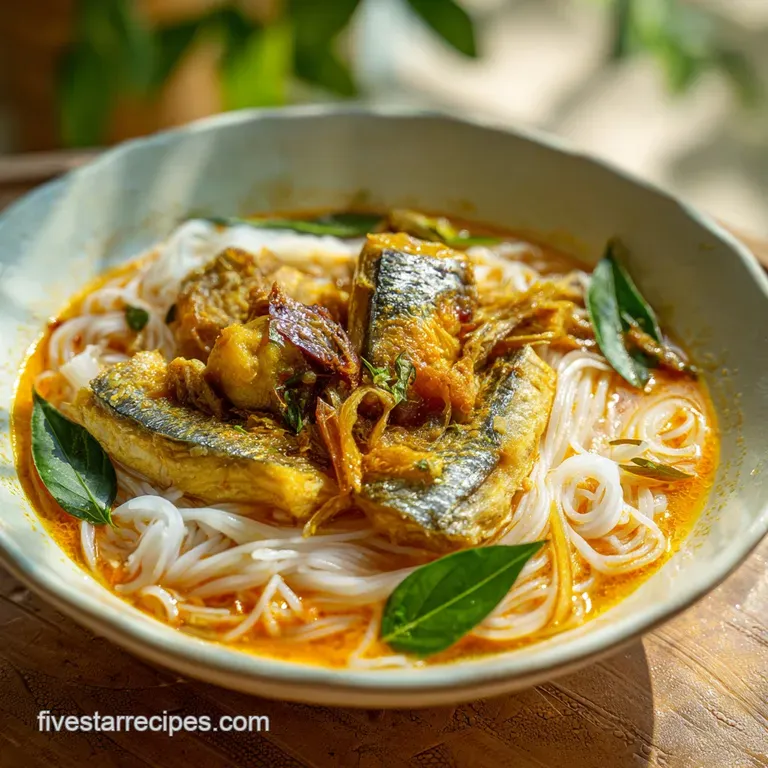
- Poach the catfish. Place 1 lb fresh catfish fillets in a pot with 1.5 liters water and a pinch of turmeric. Simmer for 10 minutes until the fish flakes easily. Note: This creates your base stock.
- Prep the fish. Remove the fish, strain the broth, and flake the meat into small pieces, discarding any stray bones.
- Toast the thickeners. In a dry pan, toast 0.5 cup chickpea flour and 0.25 cup rice powder over medium heat until a nutty aroma fills the room.
- Create the paste. In a blender or mortar, pound 3 stalks lemongrass, 4 cloves garlic, 2 inch piece ginger, 2 minced shallots, 1 tbsp turmeric, and 1 tbsp paprika into a fine paste.
- Sauté aromatics. Heat a splash of oil in your Dutch oven and fry the paste with 1 tsp shrimp paste until the oil separates and turns red.
- Integrate the broth. Slowly whisk the toasted flours into the reserved fish stock, then pour this into the sautéed aromatics.
- Simmer the base. Add the flaked fish and 15 whole shallots. Simmer for 30 minutes until the broth thickens and shallots are tender.
- Add textures. Stir in 1 cup sliced banana stem and 3 tbsp fish sauce. Cook for another 5 minutes until the stems are slightly softened but still crisp.
- Prepare noodles. Boil 1 lb thin rice vermicelli noodles according to package directions, then drain and rinse with cold water.
- Assemble the bowl. Place a portion of noodles in a bowl, ladle the hot broth over them, and garnish with sliced hard boiled eggs, cilantro, lime, and chili flakes.
Precision Fixes for Common Culinary Hurdles
Preventing a Lumpy Broth
The most common mistake is dumping the chickpea flour directly into the hot liquid. This causes the starches to hydrate instantly on the outside, creating "flour bombs" with dry centers. Always slurry your flours with a cup of room temperature water before whisking them into the main pot.
Neutralizing Excessive Salinity
If the 3 tbsp of fish sauce feels overwhelming, don't panic. The addition of the sliced hard boiled eggs and a generous squeeze of lime juice at the end acts as a chemical foil, cutting through the salt and balancing the palate.
| Problem | Root Cause | Solution |
|---|---|---|
| Gritty Texture | Rice powder not toasted enough | Simmer for an extra 10 minutes to soften grains |
| Thin Broth | Under measured chickpea flour | Whisk in a small amount of cornstarch slurry |
| Bitter Aftertaste | Scorched turmeric or paprika | Add a pinch of sugar to round out the flavor profile |
Common Mistakes Checklist:
- ✓ Always toast your chickpea flour until it changes color; raw flour tastes like beans.
- ✓ Don't skip the shrimp paste; it provides the essential "funk" that defines the dish.
- ✓ Use only the white parts of the lemongrass; the green tops are too woody for this paste.
- ✓ Rinse your rice noodles in cold water after boiling to stop the cooking process and prevent mushiness.
- ✓ Keep the whole shallots intact; they should be little bursts of sweetness in the savory broth.
Adapting Flavors Without Compromising Tradition
If you find yourself missing an ingredient, there are ways to pivot while keeping the essence of the Burmese Mohinga recipe intact.
| Original Ingredient | Substitute | Why It Works |
|---|---|---|
| Banana Stem | Sliced Jicama or Celery | Provides a similar crunch and holds up well in hot broth |
| Catfish | Red Snapper | Maintains a firm flake and absorbs the aromatic spices |
| Rice Powder | Toasted Cream of Wheat | Offers a similar thickening power and grainy texture |
For those who want to experiment with a lighter version, you can reduce the chickpea flour by half for a thinner, more consommé style soup. This is quite similar to the lighter broth styles found in some Simple 20 Minute Shrimp recipe variations, where the protein remains the star.
Preserving the Integrity of Your Broth
Storing Mohinga requires a bit of care because the noodles will absorb every drop of broth if left together. Always store the fish broth and the rice noodles in separate containers. The broth will stay fresh in the fridge for up to 3 days, and the flavors actually marry and deepen overnight.
To reheat, gently warm the broth on the stovetop over medium low heat. Do not let it reach a rolling boil, as this can break down the delicate fish flakes and make the soup cloudy. For the noodles, a quick 30 second dip in boiling water will revive their texture perfectly.
You can also freeze the broth base (without the banana stem or noodles) for up to 2 months.
Artful Presentation for an Occasion Ready Meal
When serving this for a special dinner, presentation is paramount. I like to set out the garnishes in small, curated ceramic bowls so guests can customize their own heat and acidity levels.
Start with a nest of noodles, pour the vibrant yellow broth over the top, and ensure at least three whole shallots make it into every bowl.
Top with the sliced hard boiled eggs in a fan shape, a sprinkle of fresh cilantro, and a dusting of dried chili flakes. The contrast between the bright herbs and the deep gold of the soup is visually stunning.
This dish isn't just a meal; it's a conversation starter that brings the vibrant flavors of Southeast Asian street food right to your sophisticated dinner table.
High in Sodium
985 mg of sodium per serving (43% of daily value)
The American Heart Association recommends limiting sodium intake to about 2,300mg per day for overall cardiovascular health.
Tips to Reduce Sodium in This Recipe
-
Reduce or Eliminate Fish Sauce-20%
Fish sauce is a significant source of sodium. Try reducing the amount used, starting with using 2 tablespoons instead of 3, or consider substituting with a low-sodium soy sauce alternative, using only 1 tbsp.
-
Omit Shrimp Paste-15%
Shrimp paste is another concentrated source of sodium. Consider omitting it entirely or replacing it with a pinch of dried mushroom powder for umami flavor.
-
Dilute with Water-10%
Increase the amount of water by 0.5 liters to dilute the sodium concentration in the broth. This can reduce the overall sodium content without significantly affecting the flavor profile.
-
Enhance with Lime
Use plenty of fresh lime juice to brighten the dish. The acidity can help compensate for the reduced saltiness, enhancing the overall flavor. Add lime juice gradually until desired taste is achieved.
-
Spice It Up!
Experiment with sodium free herbs and spices to boost flavor. Consider adding more ginger, garlic, lemongrass, turmeric, paprika, chili flakes and cilantro to enhance the taste without adding sodium.
Recipe FAQs
What are the ingredients in a mohinga?
The core ingredients include: Fish (usually catfish), rice noodles, chickpea flour for thickening, rice powder, and a strong aromatic base of lemongrass, ginger, garlic, and shallots.
What is the best fish to use for mohinga?
Catfish is traditionally best for its rich flavor. If catfish is unavailable, a firm white fish like red snapper or tilapia works well as they hold their texture when simmered in the broth.
What is Burmese's national dish?
Yes, Mohinga is widely considered the national dish of Myanmar. It is a highly significant cultural staple, often eaten for breakfast but enjoyed throughout the day.
What is the difference between laksa and mohinga?
Mohinga is thicker and relies on chickpea flour for body, while Laksa is generally creamier and coconut milk based. Mohinga features lemongrass and fish sauce heavily, whereas Laksa often emphasizes chili and galangal.
How do I prevent the broth from becoming overly thick or gluey?
Whisk the toasted chickpea flour and rice powder into a slurry first. This ensures the starches hydrate evenly when added to the hot stock, preventing clumps and maintaining that essential velvety, pourable texture.
How do I achieve the deep, earthy color characteristic of authentic mohinga?
Sauté the ground aromatic paste with turmeric and paprika until the oil separates. This process, called 'breaking the oil,' deepens the color and mellows the raw spice flavor, much like establishing flavor depth in our Honey Garlic Glazed recipe.
What can I substitute for banana stem if I cannot find it?
Jicama or celery are excellent substitutes for texture. They retain a satisfying crunch when simmered briefly, contrasting nicely with the soft flaked fish. If you're experimenting with texture in another dish, this principle of adding textural contrast is key, much like achieving a crisp crust in our Warm Homemade Apple recipe.
Mohinga Fish Noodle Soup
Ingredients:
Instructions:
Nutrition Facts:
| Calories | 568 kcal |
|---|---|
| Protein | 31.4 g |
| Fat | 6.8 g |
| Carbs | 94.2 g |
| Fiber | 5.3 g |
| Sugar | 3.1 g |
| Sodium | 985 mg |
