Greek Cucumber Salad: Crisp and Fresh
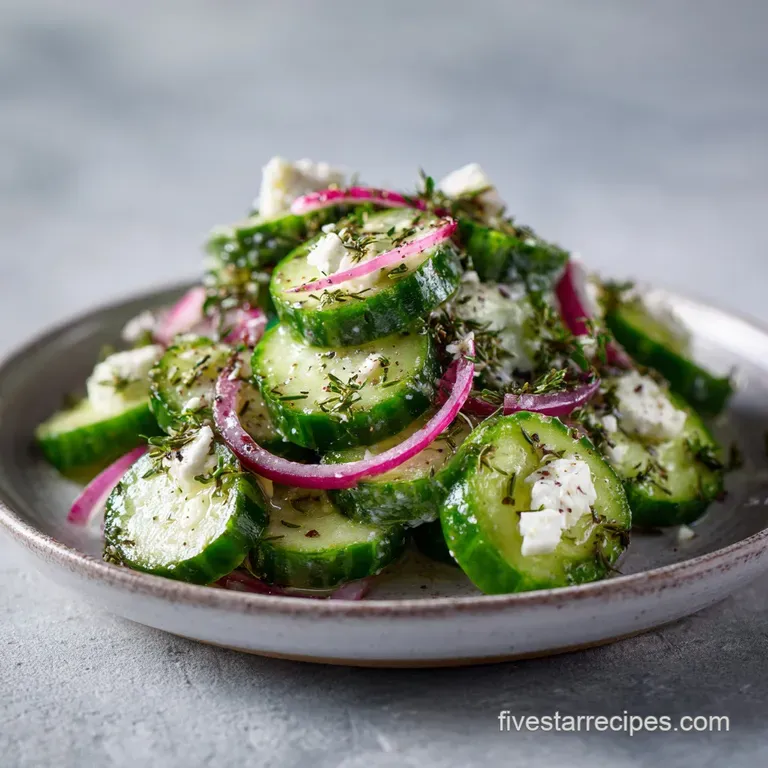
- Time:10 minutes prep + 5 minutes resting = 15 minutes total
- Flavor/Texture Hook: A shatter crisp crunch paired with velvety feta and a tangy, herb forward finish.
- Perfect for: over High heat summer cookouts, quick weekday meal prep, or a light Mediterranean side dish.
- How to Make a Crisp Greek Cucumber Salad
- Why This Greek Cucumber Salad Stays Vibrant
- Comparing Fast vs Classic Preparation Methods
- Component Analysis for the Best Greek Cucumber Salad
- Gathering Your Fresh Mediterranean Garden Essentials
- Equipment Needed for This Quick Summer Salad
- Key Steps for Assembling Your Refreshing Salad
- Common Mistakes and How to Troubleshooting Wateriness
- Creative Twists and Ingredient Substitutions for Variety
- Scaling the Recipe for Any Crowd
- Debunking Greek Salad Myths
- Make-Ahead and Smarter Leftover Storage Tips
- Serving Suggestions for the Ultimate Summer Feast
- Recipe FAQs
- 📝 Recipe Card
How to Make a Crisp Greek Cucumber Salad
Have you ever wondered why the salad you get at a tiny taverna in Santorini tastes like sunshine, while the one from the deli down the street tastes like a wet paper towel? It isn't just the view of the Aegean. There's a specific, almost hidden logic to how these simple ingredients interact.
The first time I tried to make this at home, I just threw everything into a bowl and called it a day. Within twenty minutes, my beautiful veggies were swimming in a pool of gray water, and the feta had turned into a sad, mushy paste.
The secret, I eventually learned, isn't about adding more ingredients. It's about managing the water that's already there. Cucumbers are basically water balloons disguised as vegetables.
If you don't give that water somewhere to go before you add the oil and vinegar, it will come out anyway, diluting your dressing and ruining that satisfying "shatter" when you bite into a slice. This recipe uses a quick five minute salt and drain method that changes the entire structural integrity of the dish.
You are going to love how the sharp bite of the red onion plays against the creamy, salty blocks of feta. We're skipping the lettuce entirely because traditional Greek salads focus on the density and snap of the produce.
By the time you're finished, you'll have a bowl full of vibrant colors and textures that hold up surprisingly well, even if you’re taking it to a backyard BBQ in the middle of July. Let's get into the details of why this actually works so well.
Why This Greek Cucumber Salad Stays Vibrant
- Osmotic Extraction: Salting the cucumbers for five minutes draws out surface moisture, which prevents the vinaigrette from becoming watery and bland.
- Emulsion Stability: Whisking the lemon juice and red wine vinegar with the olive oil before adding them to the bowl ensures the fat coats the vegetables evenly rather than sliding off.
- Cellular Integrity: Leaving the skins on English cucumbers provides a structural "skeleton" that keeps the slices firm even after they’ve been tossed in acid.
- Sulfur Mitigation: Slicing the red onions thinly and pairing them with acidic vinegar softens their aggressive bite, turning them sweet and tangy.
Comparing Fast vs Classic Preparation Methods
| Method | Prep Time | Texture Result | Best For |
|---|---|---|---|
| Fast (No Salting) | 10 minutes | Softer, more liquid in bowl | Immediate consumption only |
| Classic (Salting) | 15 minutes | Maximum crunch and snap | Parties and meal prep |
| Marinated (Overnight) | 10 mins + 8 hrs | Very soft, pickled flavor | Use as a sandwich topper |
Taking that extra five minutes to let the cucumbers sit in a colander is the bridge between a "home cook" salad and a "chef level" side dish. It’s a tiny investment that pays off in the form of a dressing that actually clings to the vegetables. If you’re looking for more ways to use up garden produce, this Mediterranean Chickpea Salad uses a similar acid balancing technique to keep things fresh.
Component Analysis for the Best Greek Cucumber Salad
| Ingredient | Science Role | Pro Secret |
|---|---|---|
| English Cucumber | Provides the structural base | Look for firm, heavy fruits; avoid any with soft "shoulders." |
| Extra Virgin Olive Oil | Acts as a flavor carrier and fat source | Use a "finishing" oil with peppery notes to cut through the feta's richness. |
| Red Wine Vinegar | Breaks down vegetable fibers for better flavor absorption | Higher quality vinegars have a more complex, less "metallic" tang. |
| Feta Cheese | Adds creamy fat and necessary salinity | Buy it in a block and crumble it yourself to maintain bigger, velvety chunks. |
Gathering Your Fresh Mediterranean Garden Essentials
When it comes to the ingredients for a Greek Cucumber Salad, there is nowhere to hide. Because we aren't cooking anything, the quality of your produce is the main event. Start with those 2 Large English Cucumbers (approx. 600g).
I specifically recommend English (or hothouse) cucumbers because their skins are thin and their seeds are almost non existent. If you have to use regular garden cucumbers, you'll need to peel them and scrape out the watery seeds with a spoon first.
Next, grab 1 pint Cherry Tomatoes (approx. 300g). I love halving these because they release just enough juice to mingle with the dressing without turning the whole salad into a soup. For the punch, you'll need 0.5 Medium Red Onion (approx. 60g) and 1 Green Bell Pepper (approx.
120g). The green pepper is non negotiable for that authentic, slightly bitter crunch that balances the sweet tomatoes.
Don't forget the brine! 0.5 cup Kalamata Olives (approx. 75g) bring a deep, fermented saltiness that you just can't get from table salt. For the dressing, gather 0.25 cup Extra Virgin Olive Oil, 2 tbsp Red Wine Vinegar, 1 tbsp Fresh Lemon Juice, and 1 tsp Dried Oregano.
We'll round it out with 1 clove Garlic, 0.5 tsp Sea Salt, 0.25 tsp Cracked Black Pepper, and 4 oz Feta Cheese (115g). Finish with 2 tbsp Fresh Parsley or Mint for that final herbal lift.
Ingredient Substitutions
| Original Ingredient | Substitute | Why It Works |
|---|---|---|
| Red Wine Vinegar | Lemon Juice (extra) | Increases the citrus notes while maintaining the necessary acidity. |
| Kalamata Olives | Green Cerignola Olives | Less intense and more buttery, but still provides a fermented punch. |
| Feta Cheese | Halloumi (cubed) | Provides a similar salt profile but with a much firmer, squeakier texture. |
| English Cucumber | Persian Cucumbers | Same thin skin and small seeds; use 4-5 small ones instead of 2 large. |
Equipment Needed for This Quick Summer Salad
You don't need a professional kitchen to pull this off, but a few specific tools make the prep much smoother. A high-quality chef's knife is your best friend here. Since we are slicing cucumbers into half moons and finely dicing onions, a sharp blade ensures you’re cutting the cells of the vegetables rather than crushing them (which leads to more liquid loss).
A large colander is essential for the "sweating" step. You want something with enough surface area that the cucumber slices aren't stacked ten layers deep. This allows the air to circulate and the moisture to drop away freely.
You'll also want a clean lint free kitchen towel or heavy duty paper towels to pat the cucumbers dry. This might seem like an extra step, but it’s the difference between a velvety dressing and a diluted one.
Finally, a glass jar with a tight fitting lid is my favorite way to make the vinaigrette. Shaking the oil and vinegar together in a jar creates a much tighter emulsion than whisking in a bowl. Plus, if you have extra dressing, you can just pop the jar straight into the fridge.
A large, wide mixing bowl is better than a deep, narrow one for the final assembly, as it allows you to toss the ingredients gently without smashing the feta or the tomatoes.
Key Steps for Assembling Your Refreshing Salad
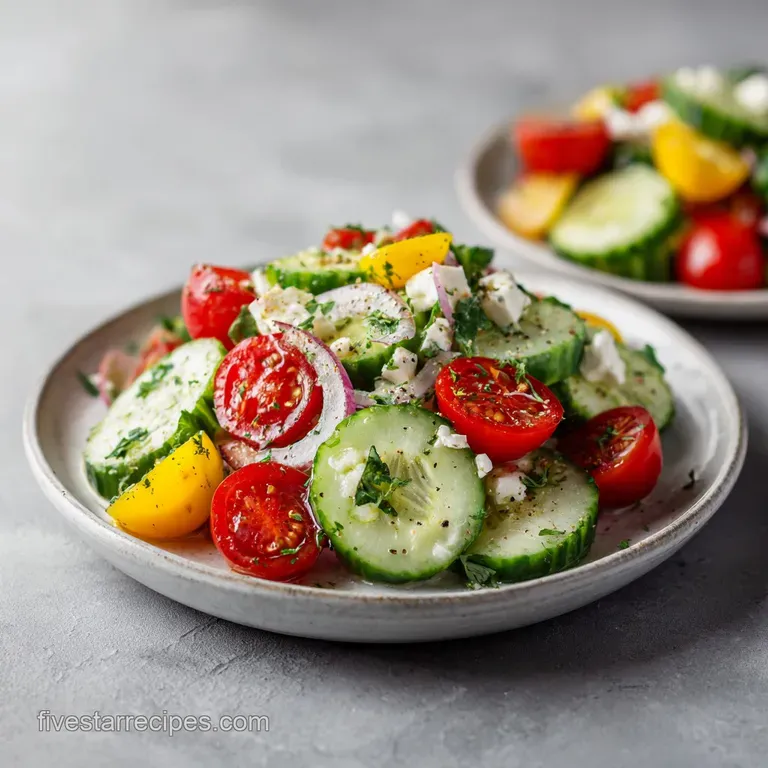
- Slice the English cucumbers into 1/4 inch thick half moons. Note: Keeping the thickness consistent ensures a uniform crunch in every mouthful.
- Place the slices in a colander over the sink and sprinkle with a pinch of salt. Wait 5 minutes until you see beads of water forming on the surface.
- Pat the cucumbers dry with a clean kitchen towel until the surface no longer feels slick.
- Whisk the olive oil, red wine vinegar, lemon juice, dried oregano, and minced garlic in a small jar until the liquid looks creamy and unified.
- Chop the green pepper into 1 inch pieces and halve the cherry tomatoes.
- Add all the vegetables (cucumbers, tomatoes, onion, olives, and pepper) into your large mixing bowl.
- Pour the vinaigrette over the vegetables and toss gently using large spoons or clean hands.
- Fold in the feta cheese and cracked black pepper until the cheese is lightly coated but still holds its shape.
- Garnish with fresh parsley or mint just before the bowl hits the table for maximum aroma.
Chef's Tip: If your red onion feels particularly "hot" or pungent, soak the slices in a bowl of ice water for 10 minutes before adding them to the salad. This washes away the sulfurous compounds that cause that lingering aftertaste.
Common Mistakes and How to Troubleshooting Wateriness
The most frequent complaint with any cucumber based dish is that it becomes "soupy" after sitting for just half an hour. This usually happens because the salt in the dressing continues to pull water out of the vegetables long after you've served it.
If you find a puddle at the bottom of your bowl, it means the "sweating" step was skipped or the cucumbers weren't dried thoroughly.
Why Your Salad Is Bland
If the salad looks beautiful but tastes like nothing, you likely need more acid, not more salt. The fats in the olives and feta can coat your tongue, dulling the other flavors. A tiny extra splash of red wine vinegar or a squeeze of fresh lemon right before eating will "wake up" the vegetables.
| Problem | Root Cause | Solution |
|---|---|---|
| Soggy cucumbers | Residual surface moisture | Pat dry with a towel after salting; do not skip this. |
| Bitter aftertaste | Pithy cucumber skin | If using standard cucumbers, peel them entirely; English ones stay unpeeled. |
| Muddled flavors | Over mixing | Fold the feta in last and very gently to prevent it from dissolving. |
Common Mistakes Checklist
- ✓ Using "table" olives instead of Kalamata (you need that fermented tang).
- ✓ Cutting the cucumbers too thin (they will lose their snap within minutes).
- ✓ Adding the dressing too early for a party (keep it on the side until the guests arrive).
- ✓ Forgetting to mince the garlic finely (nobody wants a giant chunk of raw garlic).
- ✓ Using dried parsley instead of fresh (fresh herbs provide the essential "green" aroma).
Creative Twists and Ingredient Substitutions for Variety
Once you've mastered the basic Greek Cucumber Salad, you can start playing with the ratios to suit your mood. If you want something even lighter and more cooling, you can lean into a "creamy" version. Simply whisk two tablespoons of plain Greek yogurt into your vinaigrette.
This creates a hybrid between a traditional Greek salad and a Tzatziki, which is incredible with grilled pita bread.
For a heartier meal, I often turn this into a "grain bowl" base. Adding a cup of cooked, cooled farro or quinoa transforms it from a side dish into a protein packed lunch. The grains soak up the extra vinaigrette beautifully. If you're looking for another variation that uses similar bright flavors, check out this Refreshing Cucumber and Tomato Salad, which focuses on a simpler lemon heavy profile.
Making it Plant Based/Vegan
To make this vegan friendly, you can swap the feta for a high-quality almond based feta or simply use extra firm tofu that has been marinated in lemon juice and salt. Alternatively, double up on the Kalamata olives and add half an avocado.
The avocado provides the creamy fat that the feta usually offers, though you'll want to add it at the very last second so it doesn't brown.
Scaling the Recipe for Any Crowd
When you're scaling this recipe down for a solo lunch, it’s remarkably simple. Just use one cucumber and half of all the other ingredients. However, because you're using less volume, the vinaigrette can be tricky to emulsify.
I recommend making a full batch of the dressing anyway; it stays perfectly in the fridge for up to a week and tastes great on almost anything.
Scaling up for a big party (like doubling or tripling the recipe) requires a bit more care. When you double the vegetables, don't automatically double the salt for the "sweating" step. Use just enough to lightly coat the slices.
If you use too much salt here, you’ll end up with salty cucumbers that no amount of rinsing or drying can fix.
For a massive bowl (serving 12 or more), I recommend keeping the components separate. Store the salted and dried cucumbers in one container, the other veggies in another, and the dressing in a jar. Toss everything together about ten minutes before you plan to eat.
This ensures the first person in line gets the same crunch as the last person.
Debunking Greek Salad Myths
One of the biggest misconceptions is that a Greek salad requires a bed of Romaine or Iceberg lettuce. In Greece, "Horiatiki" (village salad) is almost never served with leafy greens. Adding lettuce actually dilutes the intensity of the vinaigrette and makes the salad wilt much faster.
If you want greens, stick to fresh herbs like mint or parsley.
Another myth is that you must peel the cucumbers. For this specific Greek Cucumber Salad, the skin is where all the texture lives! As long as you are using the thin skinned English variety, the peel is totally edible and provides a beautiful dark green contrast to the red tomatoes.
Only peel if you find the skin exceptionally thick or waxy, which is common with standard supermarket "slicing" cucumbers.
Finally,, don't believe that you need "Italian Dressing" or a bottled vinaigrette. The beauty of this dish is the simplicity of the oil and vinegar. Bottled dressings often contain sugar and thickeners that mask the fresh taste of the vegetables.
A 3 to-1 ratio of oil to acid is the golden rule that has stood the test of time for a reason.
make-ahead and Smarter Leftover Storage Tips
Because we salt the cucumbers, this salad actually has a better shelf life than most. You can store leftovers in an airtight container in the refrigerator for up to 2 days. The cucumbers will soften slightly over time, but they won't turn into mush.
In fact, some people prefer the flavor on day two because the onions have fully mellowed out and the feta has absorbed the oregano oil.
Zero Waste Tip: Don't throw away the liquid left at the bottom of the bowl! That "salad water" is a mixture of cucumber juice, tomato seeds, olive oil, and vinegar. It is incredibly flavorful.
I like to dip crusty bread into it, or even use it as a starter liquid for a gazpacho or a marinade for grilled chicken.
If you have leftover feta that isn't in the salad, keep it submerged in its original brine. If you bought a dry block, make your own brine by dissolving a teaspoon of salt in a cup of water. This prevents the cheese from drying out or developing a "funky" fridge smell.
Fresh herbs like parsley and mint should be stored like a bouquet of flowers in a small glass of water in the fridge door to keep them from wilting.
Serving Suggestions for the Ultimate Summer Feast
This salad is the ultimate team player. It’s light enough to serve alongside a heavy protein but flavorful enough to stand on its own with some good bread. I almost always serve this with grilled lemon garlic chicken or lamb souvlaki.
The acidity of the salad cuts right through the charred, fatty notes of the meat, acting as a palate cleanser between bites.
If you’re doing a vegetarian spread, pair this with some warm pita bread and a big scoop of hummus or baba ganoush. You can also serve it alongside a warm dish like spanakopita (spinach pie). The contrast between the hot, flaky pastry and the cold, crisp cucumber salad is a classic Mediterranean experience.
For a casual lunch, I love stuffing this salad directly into a pita pocket. The feta and dressing soak into the bread, making every bite juicy. No matter how you serve it, make sure the salad is chilled.
A lukewarm cucumber salad is a missed opportunity get that bowl into the fridge for at least 15 minutes before serving to ensure the vegetables are at their absolute peak of refreshment.
Recipe FAQs
What is a Mediterranean cucumber salad called?
It is commonly known as Horiatiki or Greek Salad. While often served as a side, it features the same crisp, vibrant profile found in our creamy appetizer pairings.
What is the secret ingredient in cucumber salad?
The secret is the salt sweating step. By salting the cucumbers and letting them sit in a colander for 5 minutes, you draw out excess moisture that would otherwise water down your dressing.
What to put in Greek Cucumber Salad?
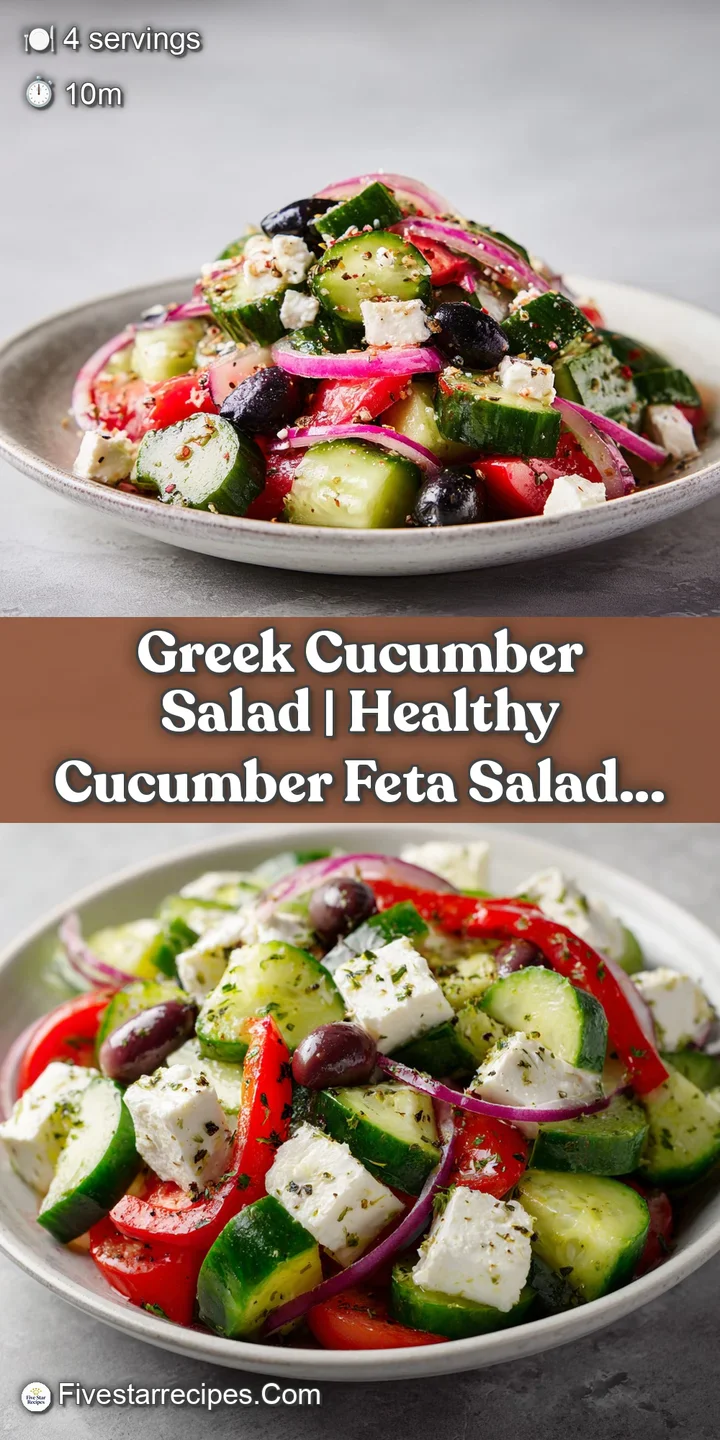
Combine sliced English cucumbers, halved cherry tomatoes, thinly sliced red onion, Kalamata olives, and green bell pepper. These ingredients provide the signature crunch and flavor balance essential for a classic Greek salad.
What is a 6 ingredient Greek salad?
A basic version typically includes cucumbers, tomatoes, red onions, olives, feta, and olive oil. You can enhance these foundational items with red wine vinegar, lemon juice, dried oregano, garlic, and fresh herbs to round out the dish.
How to prevent my cucumber salad from becoming watery?
Pat the cucumbers thoroughly dry with a clean kitchen towel after the initial 5-minute salt sweating process. Ensuring they are completely surface dry before adding the vinaigrette is the most effective way to keep the salad crisp.
Is it true that I should add the feta cheese at the very beginning?
No, this is a common misconception. You should always fold the feta cheese in at the end to prevent the crumbles from dissolving or turning the dressing cloudy before serving.
How to make the dressing coat the vegetables evenly?
Whisk the olive oil, vinegar, lemon juice, oregano, and garlic until the mixture is fully emulsified before pouring it over the salad. A stable, whisked emulsion ensures the dressing clings to the vegetables rather than sliding off to the bottom of the bowl.
Greek Cucumber Salad
Ingredients:
Instructions:
Nutrition Facts:
| Calories | 291 kcal |
|---|---|
| Protein | 5.9 g |
| Fat | 24.2 g |
| Carbs | 12.8 g |
| Fiber | 3.1 g |
| Sugar | 6.2 g |
| Sodium | 715 mg |
