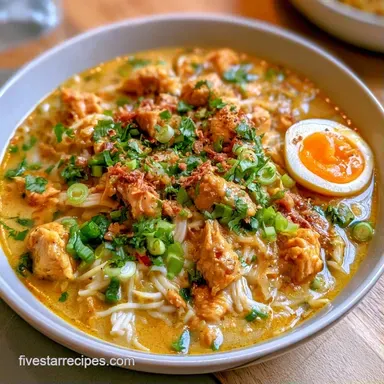
Authentic Burmese Mohinga with Catfish

- Time: 20 min active + 60 min cooking
- Flavor & Texture: Savory, umami-rich, and thick
- Perfect for: A comforting dinner or a weekend brunch
Authentic Burmese Mohinga
Catfish is the star here. Its high fat content and distinct savoriness create a base that lighter fish simply can't match. While other fish might disappear into the broth, catfish holds its own, providing a rich backbone that carries the lemongrass and ginger.
This soup is all about contrast. You have the soft, slippery rice noodles meeting a dense, aromatic broth and the crunch of fresh garnishes. It's a meal that feels substantial but stays balanced.
You can expect a process that relies on layering. We toast the thickeners, sear the fish, and then simmer everything together to build a complex profile.
Recipe Specs
This recipe yields 6 servings. It requires a bit of patience during the simmering phase to get the fish just right, but the result is a professional grade meal at home.
Precision Checkpoints:
- Toasting: Rice and chickpea powders must toast for 3-5 minutes until they smell nutty.
- Fish Temp: Catfish is done when it hits an internal temperature of 145°F.
- Simmer: The initial fish infusion needs exactly 15 minutes to extract flavor without overcooking the fillets.
Ingredients and Swaps
For the broth base, the catfish and aromatics are non-negotiable for the flavor profile. However, the banana stem can be a bit harder to find depending on your local market.
| Component | Purpose | Substitute Notes |
|---|---|---|
| Catfish | Umami base | Swai or Tilapia. Note: Lacks the same richness, may taste leaner |
| Chickpea Flour | Thickness | Besan. Note: Identical result |
| Banana Stem | Texture/Fiber | Sliced bamboo shoots. Note: More woody texture, less sweet |
| Rice Powder | Body/Nuttiness | Finely ground raw rice. Note: Must be toasted first |
The Shopping List
- 1½ lb catfish fillets, skinless Why this? High fat for deep umami
- 3 stalks lemongrass, bottom 4 inches only, thinly sliced
- 2 tbsp reduced-sodium fish sauce
- 1 tsp turmeric powder
- 2 tbsp neutral oil
- 4 cloves garlic, peeled
- 2 medium shallots, peeled
- 1 tbsp fresh ginger, minced
- 3 tbsp toasted rice powder
- 2 tbsp chickpea flour
- 8 cups low-sodium vegetable or fish stock
- 1 cup sliced banana stem
- 1 tbsp coconut oil, melted
- 1 tsp salt
- 1 lb thin rice vermicelli noodles
- 6 large hard-boiled eggs
- 2 limes, cut into wedges
- 1/4 cup fresh cilantro, chopped
- 2 stalks green onion, thinly sliced
Fresh vs. Shortcut Components
| Item | Fresh Option | Shortcut Option | Impact |
|---|---|---|---|
| Banana Stem | Freshly sliced | Canned/Jarred | Canned is softer, lacks the crisp snap |
| Aromatics | Fresh paste | store-bought paste | Fresh has a brighter, more citrusy punch |
Essential Kitchen Gear
You'll need a large heavy bottomed pot to prevent the flour from scorching at the bottom. A blender or food processor is necessary for the aromatic paste. A fine mesh sieve is also a must to ensure the broth is smooth.
Cooking step by step
Preparing the Paste
Combine the sliced lemongrass, garlic, shallots, and ginger in a blender until smooth, then set the mixture aside in a bowl.
In a small dry skillet over medium heat, toast the chickpea flour and rice powder for 3-5 minutes. Stir frequently until they turn a pale golden brown and smell nutty. Remove from the heat immediately to prevent burning.

Simmering the Fish
Warm the neutral oil in a large pot over medium heat. Sauté the turmeric and aromatic paste for 4-6 minutes until the raw scent is gone and the mixture is fragrant.
Add the catfish fillets to the pot, searing for 2 minutes per side until a light golden crust forms. Pour in the stock and let it simmer gently for 15 minutes. Use a thermometer to verify the fish has reached an internal temperature of 145°F.

Extracting the Essence
Gently remove the cooked fish from the pot and allow it to cool for a few minutes. Using two forks, flake the fish into small pieces, discarding any bones.
Pass the broth through a strainer into a fresh pot to remove the lemongrass fibers and ensure a smooth consistency. Return the flaked fish to this liquid.

Finalizing the Broth
Mix the toasted rice and chickpea powders with a small amount of warm broth to create a smooth slurry, then stir this into the main pot.
Add the sliced banana stem and simmer for another 10 minutes until the stem is tender. Stir in the salt and reduced-sodium fish sauce.

Assembling the Bowl
Cook the rice vermicelli noodles according to the package instructions and drain. Boil 6 large eggs until the yolks are fully set, then peel and halve them.
Divide the noodles among six bowls and ladle the hot fish soup over the top. Garnish each serving with half a hard-boiled egg, thinly sliced green onions, and a sprinkle of cilantro. Serve with lime wedges on the side.
Avoiding Common Pitfalls
The most common issue is a broth that feels too thin or a fish scent that is too aggressive. Since we use flours for thickening, adding them directly to the hot pot usually results in clumps.
Fixing a Thin Broth
If the liquid feels watery, don't dump flour in. Mix 1 tbsp of chickpea flour with 2 tbsp of water in a cup first. Stir this slurry in during the last 5 minutes of simmering.
Reducing Fish Scent
If the catfish scent is too strong, add an extra squeeze of lime or a pinch more ginger. The acidity cuts through the oiliness of the fish.
Preventing Noodle Sogginess
Don't let the noodles sit in the pot. Always boil them separately and ladle the soup over them right before serving.
| Problem | Fix |
|---|---|
| Clumpy broth | Mix flour with warm liquid before adding |
| Overpowering fish smell | Increase lime juice or fresh ginger |
| Mushy noodles | Drain noodles fully and serve immediately |
Ways to Customize
I like a bit more heat in my bowl, so I often add a teaspoon of chili flakes or a dollop of sambal oelek. If you want a different protein, shrimp works well, but you'll need to reduce the simmering time significantly to avoid rubbery seafood.
For those who want a different texture, try adding fried tofu puffs. They act like sponges and soak up the broth. If you're looking for a version with fewer calories, you can swap the catfish for a firm white fish and reduce the oil used for sautéing.
Storing and Reheating
Store the broth and the noodles in separate airtight containers. If you put the noodles in the soup, they will absorb all the liquid and turn into mush by the next morning.
The broth lasts up to 4 days in the fridge or 3 months in the freezer. If you freeze it, let it thaw in the fridge overnight.
To reheat, put the broth on the stove over medium heat and stir until it reaches 165°F (74°C) in the center. If it has thickened too much while chilling, stir in 1/4 cup of water or stock to loosen it. To refresh the noodles, dip them in boiling water for 30 seconds before adding the hot soup.
Plating Your Dish

Since this is a hearty soup, the presentation can range from a casual family meal to something more refined. The key is the placement of the egg and the greens.
Plating Levels
| Style | Approach | Tweaks |
|---|---|---|
| Simple | One-bowl heap | Everything in, lime on the side |
| Polished | Organized layers | Noodles first, broth over, egg centered |
| Restaurant | Deconstructed | Noodles coiled, egg halved precisely, micro-greens |
For a restaurant look, I suggest using a wide, shallow bowl. Coil the noodles in the center, pour the broth around the edges, and place the egg half right on top. Finish with a very thin drizzle of coconut oil for a glossy look.
The Texture Logic
Preparing an authentic Mohinga comes down to how you manage the starches in the pot.
Toasted Flours: Toasting the rice and chickpea powders eliminates the raw bean taste and introduces a nutty depth. This prevents the broth from becoming overly thick, like a gravy.
Slurry Method: Stirring the powder into warm liquid before adding it to the pot avoids clumps. This ensures the thickener blends seamlessly for a silky, rich consistency.
High in Sodium
1133 mg of sodium per serving (49% of daily value)
To support cardiovascular wellness, the American Heart Association suggests that most adults cap their daily sodium intake at 2,300 mg.
Tips to Reduce Sodium
-
Swap the Stock
Substitute low-sodium stock for homemade unsalted stock or water infused with extra lemongrass and ginger for a natural, salt-free base.
-
Limit Fish Sauce
Decrease the amount of reduced-sodium fish sauce or use coconut aminos instead to keep the savory umami depth with less salt.
-
Omit Added Salt
Leave out the teaspoon of salt entirely, as the stock and fish sauce already provide significant sodium.
-
Amplify the Citrus
Increase the fresh lime juice; the acidity brightens the flavors and mimics saltiness, making the dish feel fully seasoned.
-
Boost Fresh Aromatics
Incorporate more fresh ginger, garlic, and cilantro to build a bolder flavor profile that relies less on salt.
Questions Readers Ask
What does mohinga taste like?
It has a savory, umami flavor with notes of lemongrass, ginger, and toasted rice. The broth is hearty and aromatic due to the blend of aromatics and fish.
Is mohinga similar to pho?
It is a fish-based noodle soup, but it differs from pho by using chickpea flour and toasted rice for thickening. The flavor profile is more earthy and pungent than a clear pho broth.
Which ingredients are in the broth?
The base consists of catfish, lemongrass, garlic, shallots, ginger, and turmeric. It is thickened with toasted rice powder and chickpea flour, then seasoned with fish sauce and salt.
How do I thicken the soup if it's too thin?
Whisk more toasted rice powder and chickpea flour into a small amount of warm broth to make a slurry. Stir this mixture into the main pot and simmer until the desired consistency is reached.
Can I substitute the banana stem?
Yes, you can use a different crunchy vegetable to maintain the texture. However, the flavor will vary from the traditional version.
Where should I store the leftovers?
Keep the broth and noodles in separate airtight containers in the refrigerator. This prevents the noodles from absorbing the liquid and becoming mushy.
Mohinga with Catfish